Monastero Santa Rosa Hotel & Spa
Conca dei Marini - Via Roma 2
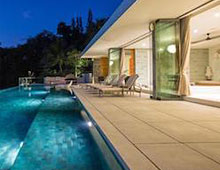
This luxurious adult-only hotel is perched on a cliff with panoramic views of the Gulf of Salerno.
Book now
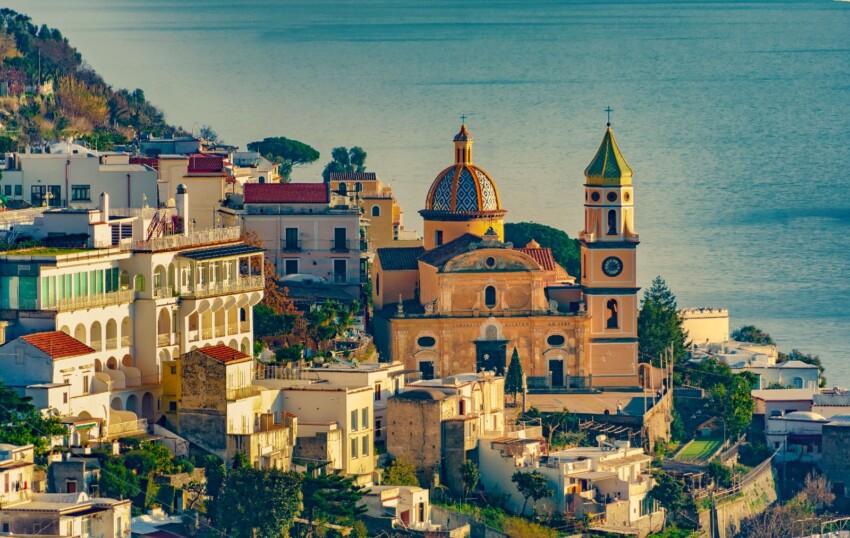
The charming village of Conca dei Marini is a wonderful bay nestled into the cliffs and surrounded by intensely blue waters. The town owes its name to its distinctive shell-like geographical formation. Its origins appear to date back to ancient Roman times, when Conca dei Marini is thought to have played a significant role during the Second Punic War.
Following the fall of the Roman Empire, Conca dei Marini came under the sphere of influence of the Amalfi Maritime Republic and progressively strengthened its commercial and maritime activities. With the end of the Amalfi Republic, Conca dei Marini experienced the various successive rulers that dominated the Amalfi Coast, from the Normans through to the rule of the Aragonese.
Like other villages along the Coastline, Conca dei Marini is a seafaring town whose economy is based on fishing, agriculture and tourism. The locality is home not only to one of the coast’s most renowned beaches, Marina di Conca beach, but also the famous Emerald Grotto, which enchants all visitors with its splendid green-hued water.
Conca dei Marini has been renowned since ancient times for its tonnara, a fishing system using trap nets which, during seasonal migrations, are able to catch tuna and other large fish. This small village is also where the celebrated sfogliatella di Santa Rosa was born—a typical Campania pastry created in the eighteenth century under Austro-Hungarian rule by a nun from the Monastery of Santa Rosa.
The evocative atmosphere of this village, its azure waters and local culinary tradition have made Conca dei Marini the preferred destination over the years for various famous figures such as Sophia Loren, the Agnelli family, Jacqueline Kennedy and royalty from both the Netherlands and England.
Conca dei Marini is a village that stretches for roughly three kilometres along the Amalfi Coast, and its oldest buildings were arranged on two levels. The first level of the buildings served as storage where fishermen kept their fishing equipment, whilst on the second floor were the living quarters. Over time, residents of Conca began building homes higher up the hillside and connecting the various parts of the town through typical “little staircases”.
The current town centre hosts shops and boutiques selling local artisan products and restaurants serving excellent local dishes. Don’t miss the famous “pomodori a piennolo”, a Conca speciality with a distinctive flavour conferred by how close these tomato crops are to the sea.
Built on the ruins of an earlier pagan temple, the Church of Saint John the Baptist (also known as the Church of Sant’Antonio) features a baroque-style façade. Inside, the church has two beautiful lateral chapels, one dedicated to the Madonna del Carmine, the other to Blessed Bonaventura, where you can still admire numerous frescoes. The bell tower has a cusped vault covered in majolica tiles. Built on a high rocky outcrop overlooking the sea, the church’s external belvedere is one of the finest panoramic viewpoints in the entire town.
Founded in 1681 and situated in Grado, the highest district of Conca dei Marini, the Convent of Santa Rosa da Lima is a former Dominican monastery now converted into a luxury hotel. Perched on a cliff overlooking the coast below, the convent remained in use until 1912, when its last nun passed away, bequeathing all her possessions to the municipality.
It was in this convent in the eighteenth century that a nun, almost by accident, used leftover semolina pasta from the kitchen to invent the famous sfogliatella Santa Rosa, a pastry also known as the “little nun”. The sfogliatella Santa Rosa, named in honour of the saint who founded the convent’s order, is a pastry shell filled with custard cream and decorated with amarena cherries. For many years, on 30 August—the saint’s feast day—the nuns would distribute this little pastry to all the families in town.
The Convent of Santa Rosa da Lima is situated within a complex that also houses the Church of Santa Maria di Grado. This religious building, constructed in the ninth century, was destroyed by a series of disasters and rebuilt in the following century.
The church has a single nave topped by a barrel vault, while the presbytery zone is topped by a tiled dome on the exterior. There are three chapels along each side, and housed within the Church is the head of Saint Barnabas, one of the most venerated saints of the Coast.
The Emerald Grotto, just over 30 metres deep and 24 metres high, was discovered in 1932 by fisherman Luigi Buonocore. It owes its name and fame to its emerald-coloured waters. Thanks to sunlight penetrating inside, the water takes on an intense green hue with various shades.
Access to the Grotto, which features impressive stalactites, can be gained by land via a lift or by sea through boats. Every year during the Christmas season, a nativity scene made of Vietri ceramics is arranged on the grotto floor, and on 25 December, a group of divers adds the Baby Jesus figure. Musical and entertainment performances are occasionally held inside the grotto.
Surrounded by lush Mediterranean scrub vegetation, Cape of Conca is a rocky promontory plunging into the sea that hosts an ancient Saracen Tower, also known as the White Tower. The tower was built by the King of Naples, Pedro de Toledo, to protect the coast and watch for potential pirate raids. The path leading to the tower is among the most spectacular and beautiful on the entire Coast, and walking it allows you to admire beautiful coves and panoramic vistas.
We have no definitive information about the origins of the Church of Saint Pancras, but the first records date to a document from 1370. Unfortunately, the church was plundered in the mid-sixteenth century by pirates and consequently remained closed and in a state of decay for a long time.
Today the church has a three-aisle layout, ending in three apses, with lateral aisles hosting three small chapels each. Surrounded by a splendid olive grove, from outside the religious building you can enjoy a magnificent panorama of the Coast stretching from the Capri stacks to Positano.
Marina di Conca is the main beach of Conca dei Marini and the shoreline most frequented by both tourists and locals. This beach, surrounded by high cliffs, is composed of small pebbles whilst the sea is turquoise with pebbly but fauna-rich seabeds.
Along the road from Amalfi towards the centre of Conca dei Marini lies the small and peaceful beach of Marinella di Conca. About twenty metres long and accessible only by sea, this beach is characterised by small pebbles and wonderfully clear waters.
Finally, the town is characterised by two particular beaches called ‘O Runghetiello first beach and ‘O Runghetiello second beach. ‘O Runghetiello first beach is a small cove roughly 8 metres long that can only be reached by boat. This is a very peaceful beach exposed to the south-west where the sun arrives during the early afternoon hours.
‘O Runghetiello second beach, by contrast, is separated from the first by a chain of rocks and reefs but, given its size, is a busier beach than the first, though access is also by sea only. The beach is about twenty metres long and composed of small pebbles whilst the seawater is truly marvellous and inviting for a swim.
In the following map you can see the location of the main places of interest mentioned in this article.
Conca dei Marini offers a wide choice of accommodation with excellent value for money. You can find not only intimate family-run bed and breakfasts but also luxury hotels with sea-view rooms and small private beach clubs.
If you’re based in Naples, Conca dei Marini can be easily reached by car by taking the A3 Salerno-Reggio Calabria motorway for approximately 30 km until the Castellammare di Stabia exit. Once you exit, proceed on the SS145 until you take the Agerola/Amalfi Coast exit, then continue on the SS366 towards Conca dei Marini for about 28 km. From other towns along the Amalfi Coast, Conca dei Marini can be reached by driving along the scenic SS 163 road or by taking one of the SITA bus company services.
For those wishing to arrive by train, you must reach Sorrento Central Station and then take a bus or private car from there to Conca. Alternatively, there’s Salerno station, though there are no direct buses to Conca from there—you’ll first need to reach Amalfi and then take another bus to Conca dei Marini.
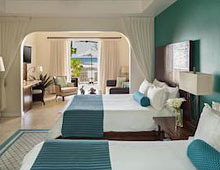 Hotel
Hotel 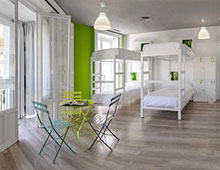 Budget accommodations
 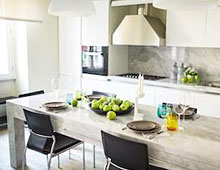 Apartments
  Family Hotel
 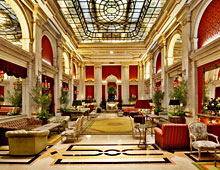 Luxury Hotel
  Resorts