Hotel Bougainville
Positano - Via Cristoforo Colombo 25
Book now
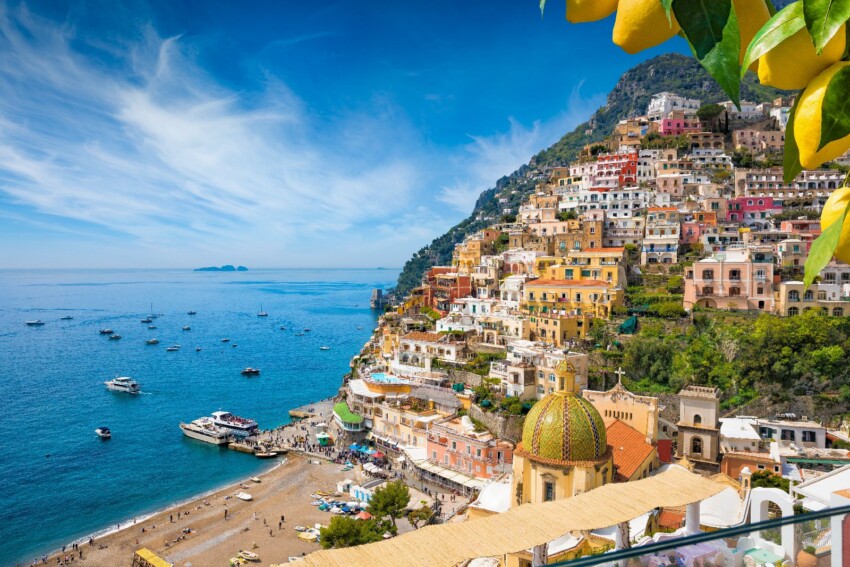
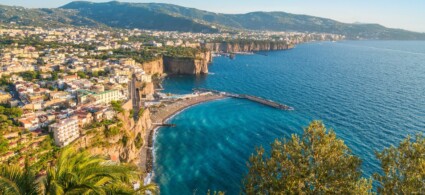
Built predominantly vertically on a cliff plunging into the sea, Positano is an absolute must-visit during a tour of the Amalfi Coast. With colourful houses, staircases, boutiques and narrow alleyways infused with the fragrance of lemon blossoms, Positano is a town waiting to be discovered.
Visitors from around the world come to Positano to stroll through its streets, pop into a boutique to have a pair of custom-made sandals crafted, and dine at a restaurant boasting spectacular views over the coastline. The town’s current urban layout appears to date from the mid-13th century, when, following a raid by Pisan forces, Positano decided to fortify itself with narrow streets, defensive structures and watchtowers.
According to ancient legend, the name “Positano” comes from an event dating back to the 12th century, when a ship carrying a Byzantine representation of the Madonna and Child found itself off the coast and was struck by a terrible sea storm. The story goes that the terrified sailors heard a strange voice emanating from the Madonna’s image saying “Posa, posa”—meaning “Stop, stop”. Frightened, the sailors decided to anchor in this small fishing village, and handed over the Virgin to the locals, who built a temple in her honour near the beach.
Positano is less a city to visit than a place to experience and savour at a leisurely pace, allowing you to fully appreciate its character. Beyond the famous Church of Santa Maria Teresa dell’Assunta, the town’s symbol, it’s wonderful to wander through its distinctive winding alleyways and climb the “staircases” that connect the lower part of town, where the beaches are, with the higher sections.
A destination renowned for its universally recognised beauty, which has made Positano famous internationally and a favourite among tourists worldwide.
The Church of Santa Maria dell’Assunta dates back to the 10th century, though it underwent significant restoration during the 18th and 19th centuries, giving it its current appearance. The building is considered one of Positano’s defining symbols, and its dome stands out among the houses thanks to yellow and green majolica tiles that echo Positano’s signature colours: the yellow of the sun and the green of vegetation.
The interior is in classical style with columns topped by Ionic capitals, and above the high altar hangs the famous Byzantine icon of the Madonna and Child mentioned in the legend that gave the town its name.
The ancient Romans too were captivated by the beauty of the Gulf of Naples coastline and chose this area to build many of their luxurious villas. Recently, beneath the Church of Santa Maria Teresa dell’Assunta, the remains of a Roman villa were discovered, buried under ash from the famous eruption of Vesuvius in AD 79, which also devastated Pompeii and Herculaneum.
Following the discovery, excavations were carried out to open an archaeological site allowing the public to view the finds. The Archaeological Museum, currently located 11 metres underground, houses two crypts and a room from the Roman villa. The ongoing excavations have uncovered villa walls adorned with brilliant frescoes and domestic artefacts.
Surprisingly, the town is actually divided into twelve districts, one for each church. Called the “vertical pyramid of the Amalfi Coast”, Positano is best explored on foot—to truly discover its essence, you must wander through its narrow lanes, climbing and descending numerous staircases.
Here you’ll find restaurants, art galleries, buildings carved into the rock, and breathtaking coastal vistas. Take time to browse the colourful ceramics shops, linen boutiques and small artisan workshops still crafting handmade sandals. The originality and skill of Positano’s tailors and craftspeople gave rise in the 1950s to a veritable trend still known worldwide as “Positano Fashion“.
The Saracen Towers were built during the 16th century as defensive structures to watch for pirate attacks. Towers line the entire coast, but the most famous ones here at Positano are Torre Campanella, the main tower, Torre Sponda, Torre Trasita and Torre Fornillo. Once enemies were spotted from the towers, sentries would alert the population, who would retreat to the upper part of town or the woodlands surrounding the centre, now the hamlets of Montepertuso and Nocella.
One of the most celebrated trekking routes thanks to its panoramic views over the coastline is the Path of the Gods3, named after a legend telling that this was the route taken by Greek gods seeking to rescue Odysseus from the sirens on the island of Li Galli. The trail starts in Agerola, a small town nestled in the hills of the Amalfi Coast, and ends at Nocelle, a hamlet of Positano.
Considered among the world’s most beautiful routes, the itinerary winds between the Amalfi and Sorrento coasts and actually features two routes: a “higher” and a “lower” one. The upper trail begins in Agerola and concludes at Santa Maria del Castello4 and is the more challenging as it’s uphill, whilst the lower route is more popular with tourists and has minimal elevation gain. Both routes, approximately 10 km long, offer spectacular panoramic views of the coast and gulf, extending all the way to Capri and its rock formations.
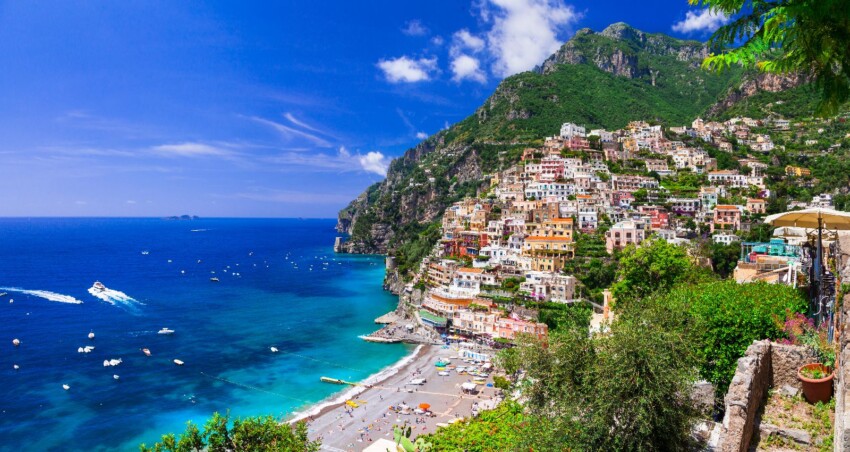
Marina Grande or Spiaggia Grande5 is Positano’s main beach, featuring equipped beach clubs and a small public beach area. This zone is also something of a hub for Positano’s social life and a meeting point for many tourists enjoying a coastal holiday.
Alternatively, Positano also offers the Via Laurito6, named after the many laurel plants found there, which has both public and private beach sections. Being a small cove, it can get quite crowded. The Fornillo Beach7, meanwhile, is quieter and less chaotic. This beach, characterised by small pebbles, has private clubs and free beach areas, and is accessible via a small road from Positano’s pier at the far end of Marina Grande.
Don’t miss the Arienzo Beach8, known as the “beach of three hundred steps” for the number of stairs required to reach it. From the top of the staircase you can admire some of the Amalfi Coast’s most luxurious villas.
In the following map you can see the location of the main places of interest mentioned in this article.
Positano is highly sought-after, with accommodation prices considerably higher than neighbouring towns. Especially if you’re planning to visit during July and August, it’s wise to book well in advance to secure better options within your budget and avoid everything being fully booked.
Positano is remarkably compact, so finding somewhere to stay isn’t difficult, though several factors warrant consideration, such as budget and location. The historic centre is in the “upper” part of town where you’ll find restaurants, boutiques and hotels with breathtaking panoramic views.
The area around Marina Grande beach, the town’s main beach, is one of the most popular and expensive zones. Staying here is convenient as you won’t need to navigate the winding staircases and narrow streets of the historic centre each time, and you’re close to the ferry terminal connecting Positano to the islands and other coastal towns.
For those preferring quieter, less touristy areas, we recommend Nocelle and Montepertuso, which offer more affordable options than the centre and are ideal for trekking enthusiasts.
For an unforgettable holiday, rent a sea-view villa in Positano—waking to breathtaking panoramic views is truly romantic and enchanting!
Given traffic congestion and limited car parks, the best way to reach Positano is by sea, taking one of the hydrofoils or ferries departing from Naples‘ Molo Beverello, which dock at the Spiaggia Grande port, also stopping at the island of Capri. In summer, sea connections are also available to other Campania destinations including Salerno, Amalfi, Maiori, Minori and Sorrento.
For those using public transport, buses operated by SITA connect Positano to other coastal towns.
If coming from Naples, you can reach Positano by train: from Naples Central Station at Piazza Garibaldi, take the Circumvesuviana line or the scenic Campania Express to Sorrento, then board the SITA bus service to Positano. The nearest airport is Naples Capodichino, which isn’t directly connected to Positano, so you’ll need to continue by sea or overland using the methods above.
For those arriving by car, remember that Positano is best explored on foot and that finding a parking space during summer can be extremely difficult and expensive. Naples is over an hour’s drive from Positano; to reach it, take the A3 motorway, then the SS145, and finally the SS163.
What's the weather at Positano? Below are the temperatures and the weather forecast at Positano for the next few days.
 Hotel
Hotel  Budget accommodations
  Apartments
  Family Hotel
  Luxury Hotel
  Resorts