1 Alcione Residence
Positano - Via C. Colombo 135
High above the Tyrrhenian Sea, the Alcione is set in Positano centre, 60 km from Naples-Capodichino Airport.
Book now
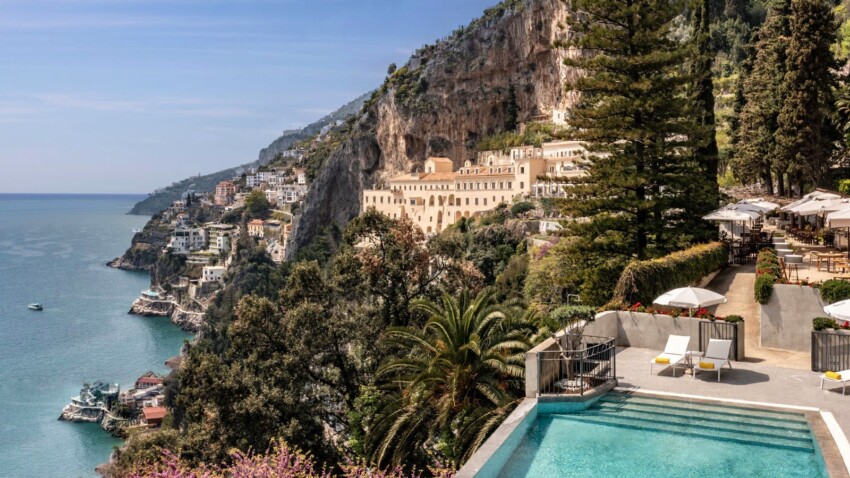
Choosing where to stay on the Amalfi Coast is a decision that shapes your entire travel experience far more significantly than at any other Italian destination.
The terrain’s vertical layout—with houses clinging to rock faces, streets that are often staircases, and transport dependent on traffic and ferry schedules—means your accommodation’s location determines how much you walk, how long you wait, how much you spend on taxis, and how easily you can reach nearby attractions.
The coast offers an enormous range of accommodation: five-star luxury hotels with infinity pools overlooking the sea and Michelin-starred restaurants, boutique hotels housed in historic palaces, villas and apartments with terraces and kitchenettes, family-run B&Bs with home-cooked breakfasts, farm stays among the lemon groves of the inland areas, and simple pensions in the less touristy villages.
Accommodation on the Amalfi Coast is distributed very unevenly across its 55-kilometre coastline: the highest concentration is in Positano and Amalfi, where the number of hotels per resident ranks among Italy’s highest, whilst eastern villages like Cetara and Vietri offer more modest but authentically local options. Luxury establishments are almost all housed in historic buildings or built on terraced cliffsides with direct views of the Tyrrhenian Sea; mid-range and budget properties are often located in the upper parts of towns, accessible on foot or by hotel shuttles.
The choice between luxury and comfort also depends on when you visit: in July and August, prices reach their peak and booking months in advance is essential; in May, June and September, the same properties cost significantly less, the weather is just as lovely, and crowds are manageable. Winter is the season of authenticity: many properties close between November and March, but those that remain open offer exceptional prices and an incomparable atmosphere—villages recover their identity as maritime communities far from mass tourism.
Positano is the choice for those wanting to experience the most iconic image of the Amalfi Coast: pastel-coloured houses tiered up the rock face, the majolica bell tower of the Church of Santa Maria Assunta, Spiaggia Grande and Spiaggia del Fornillo at the village’s base, and fashion boutiques lining Via dei Mulini.
The accommodation offer is the most extensive and varied along the entire coast: from five-star resorts to apartments with terraces and kitchenettes, ideal for longer stays. Rooms in upmarket hotels almost invariably feature Vietri majolica floors, painted barrel ceilings, and private terraces overlooking the gulf.
The physical characteristic of Positano to keep in mind is that the village is almost entirely vertical: staircases with hundreds of steps link the main road to the sea, and lower accommodation is more convenient for the beach but requires climbing back up; higher accommodation offers better views but greater distance from the water.
Private water shuttles are one of the defining features of Positano’s most exclusive properties: some hotels have their own boat ferrying guests between the beach and village, avoiding the staircases.
Family-run B&Bs on the village’s upper streets offer significantly better value than beachfront hotels, with generous breakfasts and private little terraces. Holiday homes and apartments are mainly found in the upper part of the village and in the hamlets of Nocelle and Montepertuso, accessible only on foot or by shuttle—ideal for those wanting to self-cater and live in Positano as temporary residents.
Positano is perfect for those wanting to stay in the coast’s most glamorous and photographed village, with excellent summer sea connections to Amalfi, Sorrento and Capri, and year-round bus service. However, it is the most expensive area on the entire coast, with high-season prices reaching levels comparable to major European capitals: those with a tight budget would be better off staying in Praiano or Minori and visiting Positano for the day.
Amalfi is the coast’s most convenient logistical hub: as the main transport hub by sea and land, it allows you to reach almost all coastal destinations by ferry or hydrofoil without depending on buses or cars. The Cathedral of Sant’Andrea and its piazza, a gathering point for visitors from around the world, is just steps from most hotels.
The accommodation offer is wide and varied: alongside historic hotels housed in the town centre’s ancient palaces, some preserving medieval cloisters and roof gardens overlooking the harbour, there are apartments and holiday homes on side streets, B&Bs in buildings above the waterfront, and family pensions in the old town’s alleyways. Prices average lower than Positano whilst remaining in the mid-to-upmarket bracket during peak season.
Amalfi’s position allows you to use the town as a base for exploring the entire coast without hiring a car: Travelmar ferries connect Amalfi to Positano, Minori, Maiori, Cetara and Salerno during the tourist season; SITA buses reach Sorrento and Salerno year-round. Upmarket properties are among the coast’s finest.
Those seeking more economical accommodation will find the best opportunities on streets behind the Cathedral and in the Atrani hamlet, reachable on foot in ten minutes along the waterfront.
Amalfi is the most sensible choice for those travelling without a car and wanting to maximise mobility. The town centre’s liveliness—restaurants, bars, shops, the morning fish market—guarantees authentic village life even outside peak tourist hours. The twin village of Atrani, separated from Amalfi only by a tunnel, is a quieter alternative with slightly lower prices and the same transport access.
Ravello sits at 365 metres altitude above Amalfi and Minori, reachable from both via a scenic 6-kilometre road. Nicknamed “the City of Music” for its celebrated summer Ravello Festival featuring classical music concerts on Villa Rufolo’s terrace, it is the coast’s most exclusive and peaceful destination.
It has no direct sea access: the beaches of Minori and Maiori are about 20 minutes’ drive or bus ride away. Accommodation mainly consists of charming hotels and luxury villas housed in the village’s medieval palaces and noble residences: the Caruso, A Belmond Hotel and Palazzo Avino rank among Italy’s most celebrated five-star properties.
Those seeking something less exclusive will find B&Bs and holiday homes in the old town’s streets at prices more accessible than Positano.
Ravello’s clientele has traditionally been the most sophisticated on the coast: the village welcomed Wagner, who composed parts of Parsifal here inspired by Villa Rufolo’s gardens; Virginia Woolf, who wrote passages of her diary here; Gore Vidal, who lived for over thirty years in his villa La Rondinaia; and generations of artists and intellectuals seeking peace and Italy’s finest view. Villas for rent with private gardens are the most appreciated solution for couples and groups seeking absolute privacy and incomparable gulf views. Properties almost all feature infinity pools with panoramic views, terraced gardens, and restaurants serving traditional Amalfi cuisine.
Ravello is perfect for those seeking relaxation, culture and scenery without sacrificing service comforts. It is less suitable for those wanting to spend many hours on the beach but ideal for those viewing their coast stay primarily as a cultural and scenic holiday.
Praiano is perhaps the most strategic village for those seeking a balance between location, authenticity and value: it sits exactly halfway between Positano and Amalfi, connected to both by SITA buses and seasonal ferries. Unlike Positano, the village spreads across a flatter mountain platform, making getting around less strenuous.
Accommodation mainly consists of family-run hotels, B&Bs with panoramic terraces, and apartments with sea views: prices are noticeably lower than Positano whilst offering equally beautiful views. Marina di Praia, a small cove with beach at Praiano’s base, is one of the coast’s finest. From Praiano you can also access the western starting point for the Path of the Gods, Campania’s most famous trek.
Nearby Furore is famous for its fjord—a deep rock inlet with a tiny fishing village descended via narrow staircases—and for the mural that colours the bridge edge each summer. Furore’s properties and the surrounding area tend to be farm stays and villas inland with vineyards and lemon groves, ideal for those preferring countryside tranquillity to seaside bustle.
Praiano’s logistical advantage is significant: basing yourself at the coast’s midpoint allows reaching all destinations in similar times without depending on one transport direction. Those with a car or planning to hire one will find some of Praiano’s few properties with available private parking.
Those using public transport appreciate the frequent SITA buses on the SS163 and the convenience of seasonal water taxis between the area’s beaches.
Maiori and Minori are the entire Amalfi Coast’s most accessible and family-friendly locations: both have relatively spacious sandy beaches with easy access, a flat waterfront (a rarity on a coast that is almost entirely vertical), and accommodation offering the area’s best value for money.
Maiori boasts the coast’s longest beach (about 800 metres of sand with beach clubs and free stretches) and a lively waterfront with restaurants, bars and shops. Minori, separated from Maiori by a promontory, is more intimate and retains an authentic fishing village atmosphere, with the Roman Seaside Villa (1st century AD) visitable near the harbour and the Basilica of Santa Trofimena with its Early Christian crypt.
Both locations’ accommodation includes beachfront hotels, apartments with kitchens, and B&Bs in waterfront buildings, with prices averaging 30-40% lower than Positano and Amalfi.
Maiori and Minori’s position makes them a strategic base for visiting the coast without the chaos. Travelmar’s seasonal ferries connect both locations to Amalfi, Positano and Salerno; SITA buses reach Amalfi in 15 minutes and Salerno in 40. From Maiori also departs one of the inland’s finest trails: the path to Chiunzi Pass through the Monti Lattari forests, leading to the Tramonti Valley.
These two locations are the optimal choice for families with children, for those with mobility difficulties that make the coast’s staircases problematic, and for those travelling on a tight budget without wanting to sacrifice pleasant surroundings. Maiori and Minori‘s properties almost all offer direct or very close beach access, and the family management of many hotels ensures genuine, attentive hospitality.
Cetara and Vietri sul Mare represent the most authentic and least touristy stretch of the Amalfi Coast.
Cetara is a small fishing village renowned throughout Italy for its colatura di alici (a sauce of fermented anchovies produced by hand by local fishermen) and for the quality of fresh fish served in the harbourside trattorias. Accommodation is essentially limited to family-run bed and breakfasts, small locally-managed hotels and the occasional rental apartment—modest in quantity but genuine in character and pricing. Staying in Cetara means waking to fishing boats returning from the sea, breakfasting on local produce and dining on fish caught within the last few hours. Travelmar ferries connect Cetara to Amalfi and Salerno during the season.
Vietri sul Mare is the eastern gateway to the coast and its monumental entrance: the glazed domes of the Collegiata di San Giovanni Battista are visible from the motorway descending towards Salerno. For centuries, the town has been the heart of Campania’s artistic ceramics industry, and its old town centre preserves dozens of craft workshops where you can watch ceramicists at work. Vietri’s accommodation ranges from mid-range hotels, residences and apartments with views across the coastline, often at significantly lower prices than more westerly resorts. Its proximity to Salerno (just 15 minutes away) makes it a convenient base for those arriving by train.
Staying in Cetara or Vietri is the ideal choice if you want to experience the Amalfi Coast as locals do, not as a tourist passing through. Less suited to those seeking grand amenities and nightlife, it’s perfect for curious travellers who appreciate authentic cuisine, local craftsmanship and the chance to explore the coastline westwards during the day before retreating to somewhere peaceful in the evening.
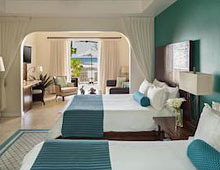 Hotel
Hotel 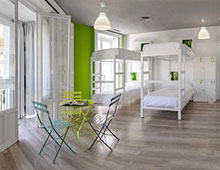 Budget accommodations
 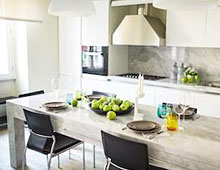 Apartments
  Family Hotel
 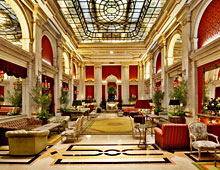 Luxury Hotel
 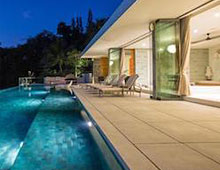 Resorts