Al Chiar di Luna
Monte di Procida - Via Amedeo 89
Al Chiar di Luna in Monte di Procida offers a sun terrace, restaurant, bar, and free WiFi.
Book now
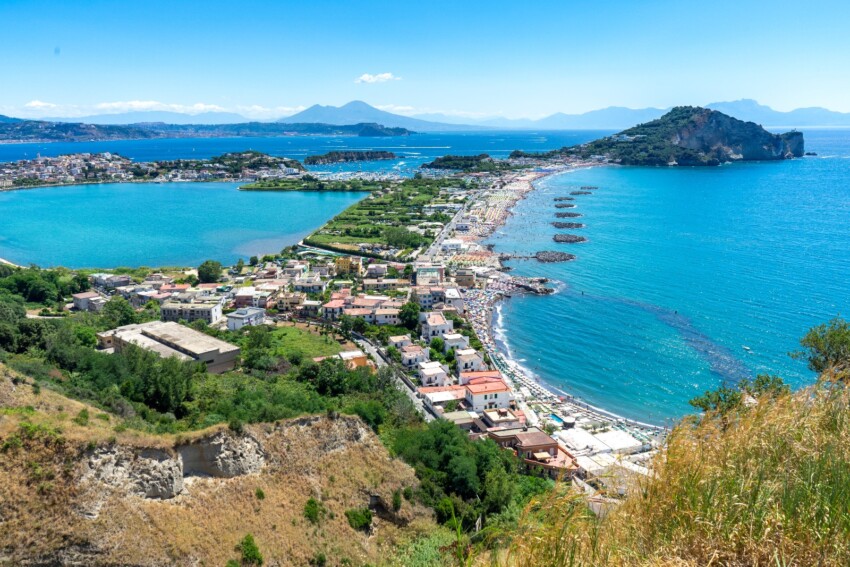
Located at the far end of the Phlegraean Peninsula, Monte di Procida is a charming and graceful town that sits on a promontory directly facing the Island of Procida. Known as “the terrace of the Phlegraean Fields“, the town offers a breathtaking panoramic view that sweeps from the Gulf of Naples to the Sorrentine Peninsula, from the islands of Procida and Ischia to those of Ventotene.
The Procida Channel is the narrow strait that divides the mainland area where the town is located from the Island of Procida, one of the most distinctive of the Phlegraean Islands. Monte di Procida has extremely ancient origins and was first a settlement of the historic city of Cumae, so much so that it was known by the name of Monte Cumano, and then became an integral part of the colony of Misenum, which gave the town the name of Monte Miseno.
Barbarian invasions devastated the territory of Misenum and in particular the area of Monte Miseno, which was abandoned for a long time and became overgrown with wild vegetation. Given the wild and untouched nature of this area, in the mid-15th century King Ferdinand I decreed that the forest on the Monte should be the ideal location for a royal hunting reserve.
Only around the 17th century did the area begin to be inhabited again thanks to the migration of population from the Island of Procida to the mainland. Once the strategic position of this town and its fertile territory had been rediscovered, Monte di Procida began to form a new residential hub along the coast, where inhabitants also built an early place of worship that over time became the Church of the Assumption, the town’s principal church.
The town’s economy at the time was based mainly on farming and livestock. In particular, grain and various grape varieties were cultivated, from which the famous “montese wine” was produced. Monte di Procida gradually became a flourishing coastal town and, thanks to its position, also acquired an important commercial role.
The town boasts a characteristic historic centre that offers several viewpoints over the surrounding areas. The most famous of these is the Belvedere Stupor Mundi1, which is located along the road connecting the Miliscola hamlet to the town centre.
The symbol of Monte di Procida is certainly the Church of the Assumption2, whose origins date back to the 17th century, although it has since undergone various enlargement and renovation works. Inside, the Church houses an image of the Virgin Mary believed to be miraculous, which many devotees visit especially during the celebrations on 15 August.
Part of the town’s territory falls within the Phlegraean Fields Park and hosts the ancient Roman Necropolis of Cappella3, where artefacts dating from the early 1st century BC to the first half of the 5th century have been found. The monuments present include underground chambers and numerous pit tombs that preserve some of their painted decorations.
Among other sites of interest in the town is Villa Matarese, an ancient farmhouse converted in the early 1900s by the Matarese family into an elegant residence. Inside, the villa boasts splendid Art Nouveau decorations, whilst outside there is an enormous garden of approximately 4,000 square metres.
Not to be missed, finally, is a pleasant walk at the Torrefumo Nature Reserve4, made up of a scenic trail along the coast stretching for approximately one and a half kilometres. This itinerary is characterised by the presence of a beautiful lagoon inhabited by particular species of fish and truly evocative natural landscapes. The reserve owes its name to the presence of an ancient watchtower that once stood here and communicated with the inland areas by means of smoke signals.
Monte di Procida boasts excellent town beaches where you can enjoy hours of relaxation in the sun. The most famous stretch of coastline is certainly Acquamorta Beach5, which is nestled between two inlets and also hosts a characteristic harbour. This is a very evocative beach as it offers a breathtaking view of the nearby Island of Procida. The name of the beach derives from an ancient legend that tells of a girl named Acqua who waited here every day for the arrival of a young fisherman from Procida named Giosuè. One day the boy died in a storm and Acqua, with the intention of reuniting with her love, decided to take her own life by throwing herself into the sea.
Other beaches in the town are Miseno Beach6, a tranquil stretch of coastline with views of Ischia and Procida where you can hire sunbeds and parasols, or the Miliscola beach, a sandy beach surrounded by rocky cliffs.
In the following map you can see the location of the main places of interest mentioned in this article.
Monte di Procida offers a wide range of accommodation to choose from for a pleasant stay in the town. From hotels to small B&Bs, from seaside villas to residences, all visitors can find the accommodation that best suits their needs.
The most sought-after facilities are those located in the area close to the beaches and that allow you to reach the shoreline quickly. Many facilities also offer panoramic terraces or rooms with breathtaking views of the Island of Procida. The prices of these accommodations may be higher than average but the view they offer is certainly worth the price.
From Naples you can easily reach Monte di Procida either by car or by public transport. By car you need to take the A56 motorway in the direction of Pozzuoli until exit 14. Once there, you need to pass through the towns of Baia and Miliscola to reach Monte di Procida.
From the city of Naples you can also use the Cumana railway to Torregaveta and then use the shuttle service that takes you to the town centre. Alternatively, you can take the bus line that departs from Naples Piazza Municipio and reaches Monte di Procida in about an hour.
If you are coming from Sorrento by car, you need to take the SS145 first, then the E45 and finally the A56 in the direction of Pozzuoli.
What's the weather at Monte di Procida? Below are the temperatures and the weather forecast at Monte di Procida for the next few days.
Monte di Procida is a Campanian settlement perched on a promontory in the Campi Flegrei, directly facing the island of Procida. The town lies approximately 25 km from Naples, 80 km from Sorrento and 55 km from Caserta.
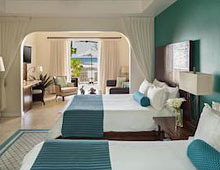 Hotel
Hotel 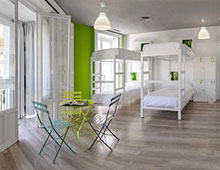 Budget accommodations
  Apartments
  Family Hotel
  Luxury Hotel
 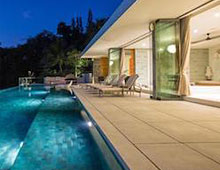 Resorts