An ancient city with a turbulent history, Caserta is a destination that safeguards a truly precious heritage of history, art and architecture. Founded by the Etruscans under the name of Galatia, the city was first dominated by the Samnites before becoming a Roman colony. After the fall of the Roman Empire, Caserta underwent various periods of rule: first under the Swabians, then the Angevins and finally the Bourbons, who wanted to transform it into a city rivalling Europe’s great capitals.
Caserta comprises a fairly compact city centre that’s easy to explore on foot, and it’s a city rich in history, monuments and churches. Famous worldwide for hosting the magnificent Royal Palace of Caserta, a complex built by the Bourbon family to rival the lavish Palace of Versailles, the city boasts numerous other buildings and works recognised as UNESCO World Heritage Sites, including the Belvedere Palace of San Leucio and the Vanvitelli Aqueduct.
Things to do in Caserta
Caserta is a city not far from Naples but offering a completely different atmosphere to the Parthenopean city. Particularly renowned for the presence of the Bourbon Royal Palace, this peaceful Campania town is a destination that blends history, art, nature and architecture.
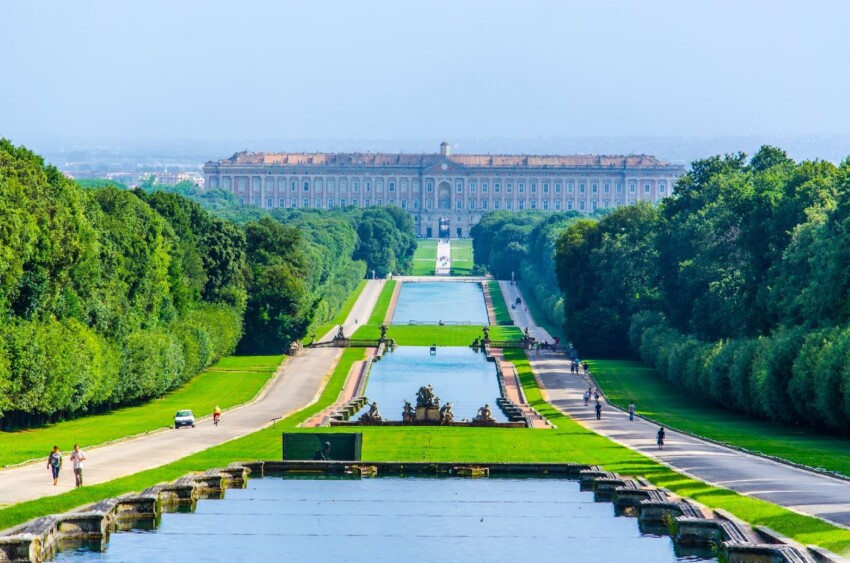
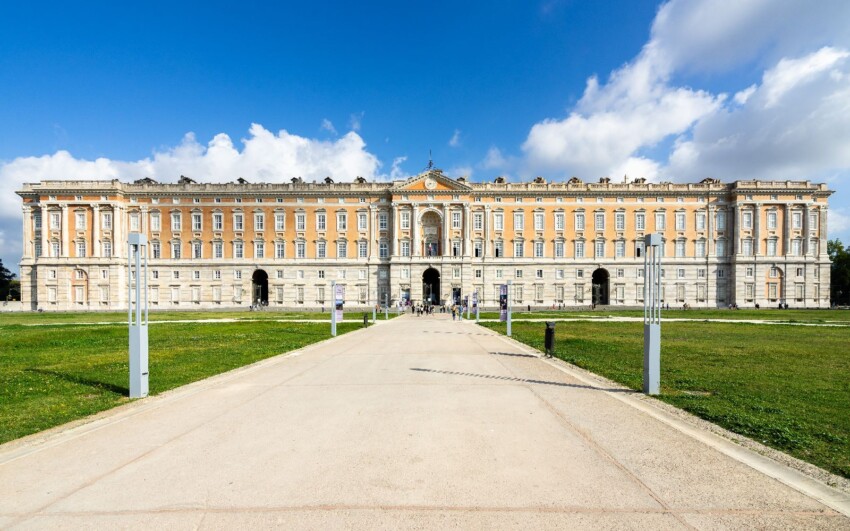
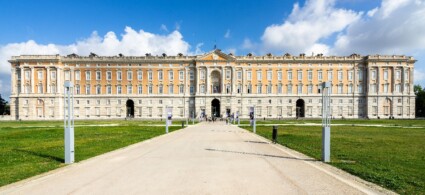
The Royal Palace of Caserta is an architectural complex built by the renowned architect Luigi Vanvitelli between 1752 and 1845 at the behest of Charles of Bourbon. Conceived on the model of the Palace of Versailles, the Royal Palace of Caserta is a masterpiece of Italian Baroque comprising more than 1,200 rooms and nearly 1,800 windows. It was inscribed on the UNESCO World Heritage List in 1997. To visit the entire complex requires at least two full days, but the most important stops you shouldn’t miss are: the royal apartments, the park and the English Garden.
Inside the palace you can visit the floor reserved for the Royal Family, the State Rooms and the Old Apartment, while outside you’ll find the park and the English Garden where you can admire the famous marble statue “Venus at her Bath”, made from Carrara marble.
The imperial palace San Leucio Belvedere, a village within Caserta, was home to various noble families such as the Acquavivas, until the arrival of the Bourbons when the area was used by the royal family for leisure and relaxation. It was only in 1778 that King Charles of Bourbon decided to transform the complex to host a community of craftspeople and weavers known as the Royal Colony of San Leucio. In this community, orphaned boys and poor men were taken in, educated and trained to become textile workers. Here workers lived, were educated, fairly paid and received proper care: for over two centuries this place was a social model envied by the entire world.
In 1997 the San Leucio complex became part of UNESCO’s World Heritage Sites, and today it still features two workers’ quarters, the Belvedere palace with a charming garden for strolling, which often becomes the ideal venue for concerts and cultural events. The silk produced here achieved worldwide popularity, eventually adorning important buildings such as the White House, Buckingham Palace and the Quirinal Palace.
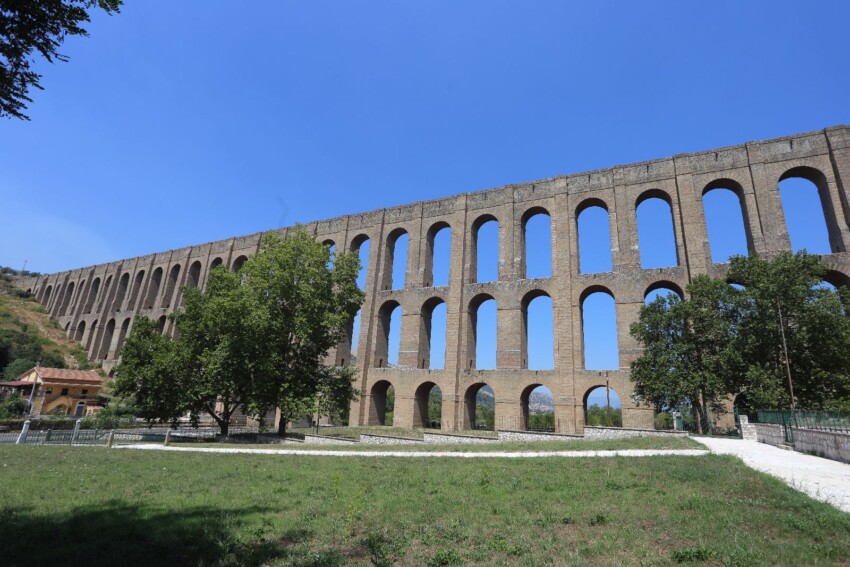
The Carolino Aqueduct is a remarkable feat of hydraulic engineering commissioned by Charles of Bourbon to bring water from the springs of Mount Taburno to the Royal Palace of Caserta. The aqueduct, designed by Luigi Vanvitelli (who also designed the Royal Palace of Caserta), was built following the model of ancient Roman aqueducts and spans 38 km, mostly underground, whilst in other sections feature canal-bridges.
The most famous section of the aqueduct crosses the Maddaloni Valley where you can admire a bridge approximately 529 metres long composed of three tiers of arches supported by 44 square-plan pillars. In 1997 it was declared a UNESCO World Heritage Site and today it can still be admired in all its grandeur at the foot of Maddaloni Valley.
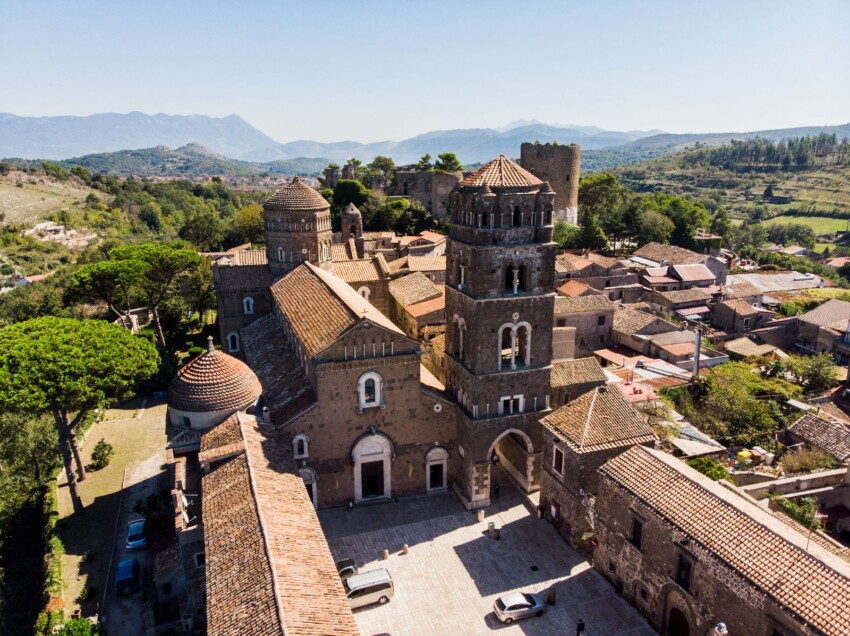
A small and atmospheric medieval village, Casertavecchia is situated on a hilltop just north of the city of Caserta. A must-visit stop as you wander through its narrow lanes, it feels like stepping back in time: its cobbled streets are lined with small shops keeping alive traditional crafts, stone houses and traditional restaurants.
The town’s Cathedral, dedicated to the Archangel Michael, dates back to 1113 and features a Romanesque style with a magnificent bell tower standing 32 metres high. Close to the Cathedral you’ll also find the Church of the Annunciation, dating from the late 1300s and built in Gothic style with wonderfully frescoed interiors. The remains of Casertavecchia castle, dating from 879 and used as a defensive fortress until the 1500s, are also worth a visit.
Campania Amphitheatre and Museum of Gladiators
5Piazza Adriano, 81055 Santa Maria Capua Vetere CE, Italy
The Campania Amphitheatre is a fascinating Roman amphitheatre built by Emperor Augustus and is the second-largest amphitheatre in the world after the Colosseum. Although not widely known, the Campania Amphitheatre is one of the most important relics that ancient Roman society left behind in Campania.
Originally the structure also housed a gladiator school, from which in 73 BC the famous revolt led by Spartacus originated. Unfortunately, over the centuries the amphitheatre suffered devastating damage and looting by barbarians and Saracens.
San Silvestro Wood
6Via dei Giardini Reali, 78, 81100 Caserta CE, Italy
Once a hunting reserve of the Bourbons, San Silvestro Wood has been a WWF nature reserve since 1993, spanning approximately 76 hectares where you can observe Mediterranean flora and fauna species. Guided thematic trails allow you to discover this beautiful protected area, where in summer you can also witness the phenomenon of bioluminescence thanks to the numerous fireflies present in the garden.
Map
In the following map you can see the location of the main places of interest mentioned in this article.
Where to stay in Caserta
Caserta is not a very large city and is easy to explore on foot, however the best area to stay is certainly the historic centre. The centre is a vibrant area with various shops and traditional restaurants, as well as venues to experience the city’s nightlife.
The city centre is a couple of hundred metres from the Bourbon Royal Palace whilst the railway station is less than a kilometre away. For a romantic and atmospheric stay you can choose to lodge in Casertavecchia.
We offer best rates If you find it cheaper we refund the price difference.
Free cancellation Most properties allow cancellation without penalty.
We're available 24 hours a day For any problem call Booking.com.
Approximately 35 km from the city of Caserta is Naples Capodichino airport, which is connected daily to major Italian and European cities. From Naples airport you can reach Caserta by bus or by hiring a car.
The bus journey takes 35/40 minutes whilst by car it takes about 30 minutes – you’ll need to take the A1/E45 motorway heading north for approximately 25 km and then take the Caserta north exit. Caserta also has a railway station connecting the city to other destinations such as Naples, Benevento and Piedimonte. Alternatively, Flixbus and Duemari bus services also connect major Italian cities to Caserta.
Caserta Weather
What's the weather at Caserta? Below are the temperatures and the weather forecast at Caserta for the next few days.
Saturday 3
17°
27°
Sunday 4
14°
27°
Monday 5
15°
26°
Tuesday 6
16°
27°
Wednesday 7
15°
27°
Thursday 8
19°
27°
Where is located Caserta
The city of Caserta is located in the northern part of the Campania region and lies 37 km from Naples, 200 km from Rome and 270 km from Bari.
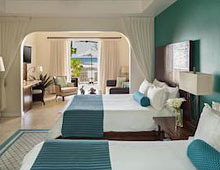 Hotel
Hotel 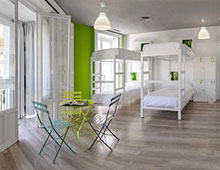 Budget accommodations
  Apartments
  Family Hotel
 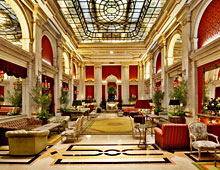 Luxury Hotel
 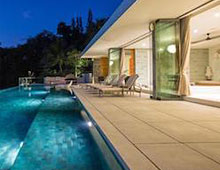 Resorts