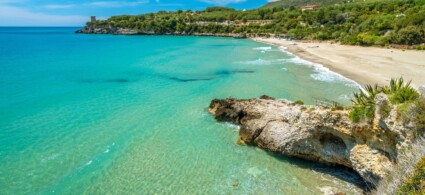
Best beaches in Cilento
The most beautiful beaches in Cilento: from Castellabate to Acciaroli, from Palinuro to Cala Bianca, voted Italy's most beautiful beach, to the Bay of Infreschi.
Read more
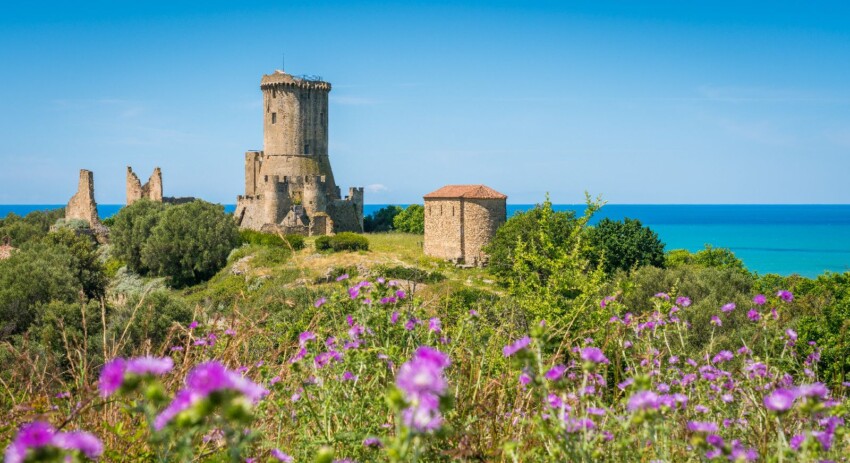
The Cilento National Park stands out as an ideal destination for a trip centred on nature, history and relaxation. Within its boundaries, you can visit the stunning archaeological sites of Paestum and Velia, two ancient cities of Magna Graecia, and the archaeological area of Marina di Camerota with its prehistoric caves. Ancient town centres such as Castellabate, Castel San Lorenzo, Teggiano and Agropoli are plentiful, as are medieval villages like San Severino and Pisciotta.
The Park is also home to numerous caves and oases of extraordinary natural beauty, such as the Castelcivita Caves, a complex of karstic cavities, and the Capo Palinuro Caves, where millions of years ago the waters of the sea carved limestone rocks creating deep underwater gorges that are now a sought-after destination for diving enthusiasts.
A visit to the magnificent Certosa di Padula, or Certosa di San Lorenzo, is a must. It is considered one of the oldest monastic complexes in Southern Italy and also one of the largest in the country. This lavish baroque monumental complex comprises three cloisters, a garden, a church (dating back to 1374) and a courtyard.
The Cilento National Park is located in the southern part of Campania in the province of Salerno and stretches from the Tyrrhenian coast to the foothills of the Campano-Lucanian Apennines, encompassing 80 municipalities and 8 mountain communities within its boundaries.
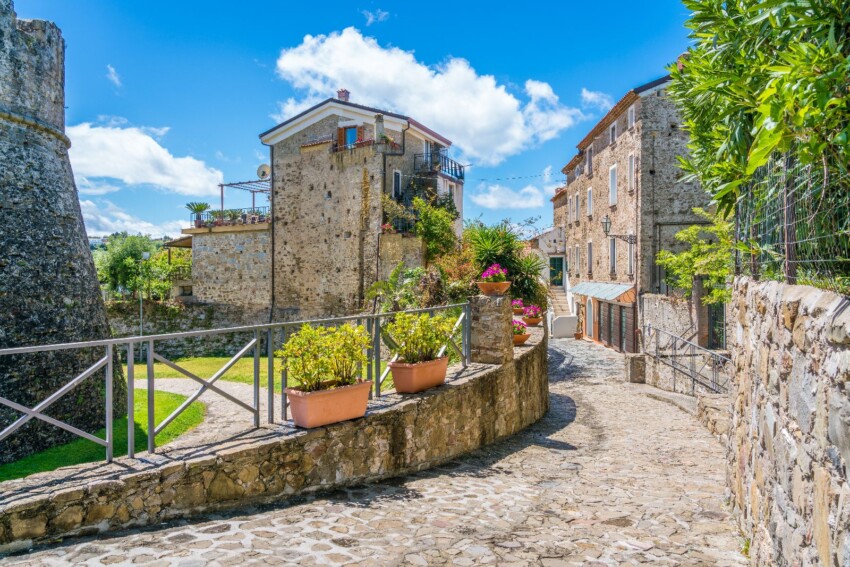
A land that hosts an extraordinary environmental, historical, landscape and cultural heritage, Cilento presents itself as the perfect destination for a stay that can combine diverse interests, such as history, nature and relaxation.
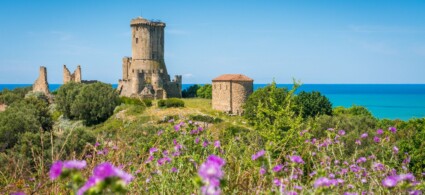
Cilento is, in fact, an area with ancient origins, as demonstrated by the Paestum Archaeological Area, founded by Greek colonists in the early 6th century BC with the name Poseidonia and which represents one of Italy’s most beautiful archaeological sites. This is also a land of myths and legends, as we are reminded by the beautiful locality of Capo Palinuro, named after the famous helmsman of Aeneas who died in these very waters, but also of important seaside resorts that have repeatedly won titles and recognition for the beauty of their beaches. For example, Palinuro is, together with Marina di Camerota, a tourist destination characterised by enchanting panoramas, beaches with crystal-clear waters, coves and sea caves that have fascinated diving enthusiasts for years.
Worth visiting in the province of Salerno is the magnificent Certosa di San Lorenzo in Padula, the first Certosa to be built in Campania and has been declared a UNESCO World Heritage Site. Sprawling over more than 50,000 square metres, San Lorenzo is considered the largest Certosa in Italy and is also one of the most sumptuous baroque monumental complexes in the country with a cloister covering almost 15,000 square metres.
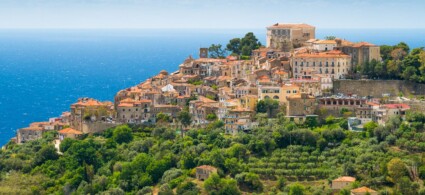
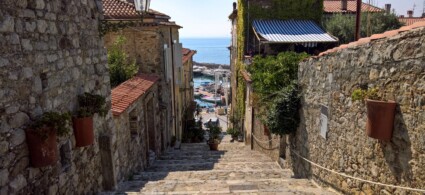
It is impossible not to mention the characteristic town of Castellabate, whose historic centre was built around a castle erected in the 12th century by Costabile Gentilcore, abbot of Cava dei Tirreni, who wanted to protect the territory from pirate attacks. Castellabate thus presents itself as one of the most beautiful villages in Campania and Italy, with a historic centre made up of ancient buildings set among cobbled alleyways and narrow staircases. The town has managed to preserve its charm as a medieval village over time and has been recognised as a UNESCO World Heritage Site.
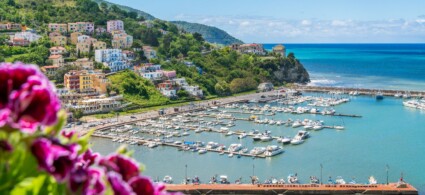
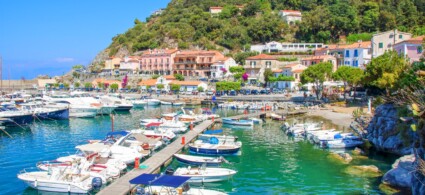
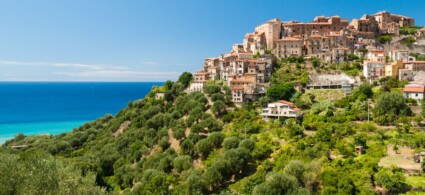
Finally, do not forget the small Cilento villages such as Acciaroli, Pollica and Pioppi. Acciaroli in particular is a fishing village that, with its peaceful and genuine atmosphere, won over figures like Ernest Hemingway, who was inspired here to write his book “The Old Man and the Sea”.
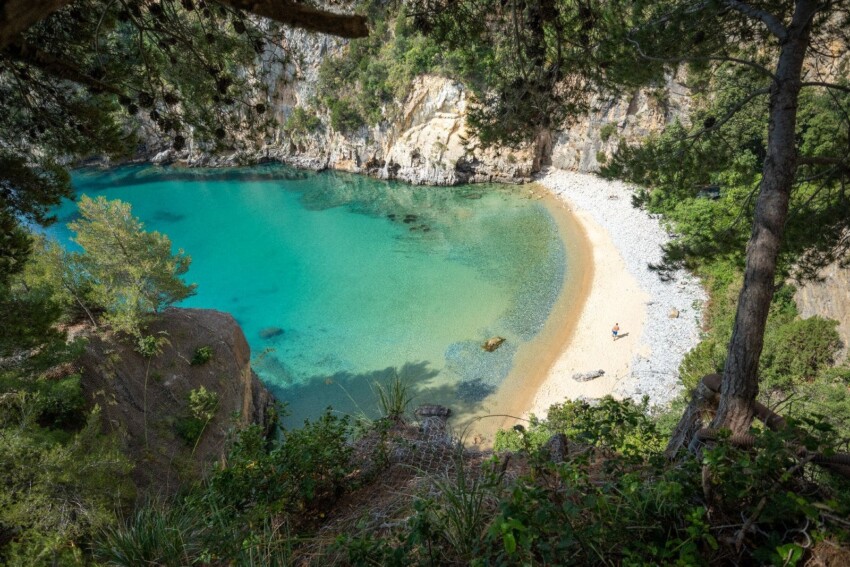
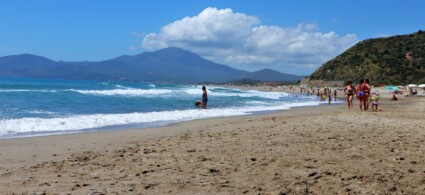
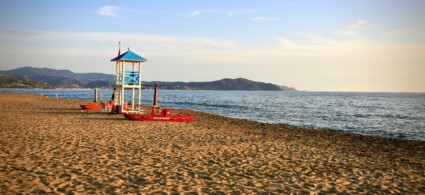
Cilento is the place where you can relax on some of the most beautiful beaches in all of Campania, and also where diving enthusiasts can find countless places to explore.
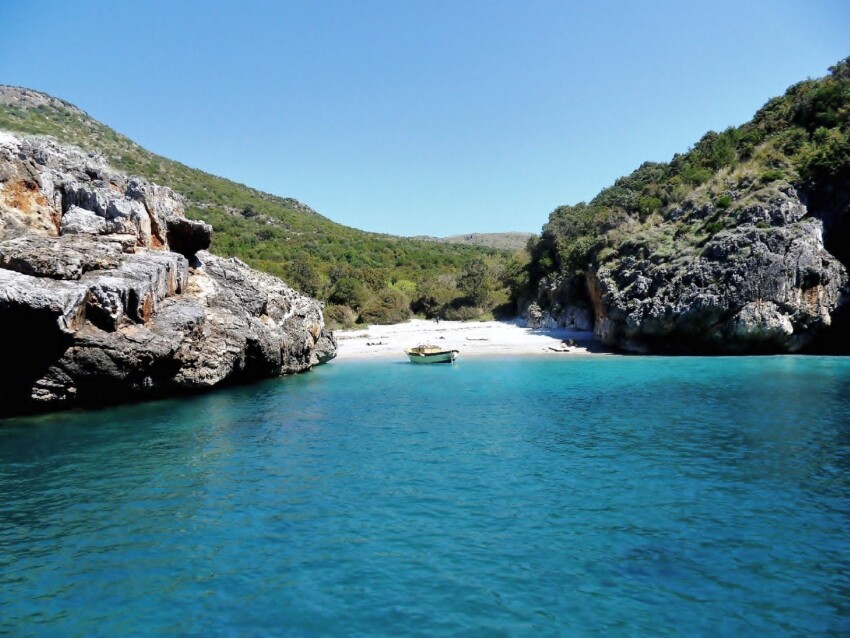
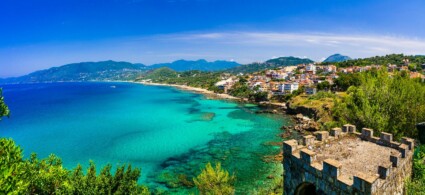
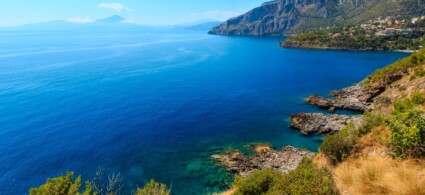
The coastline in this area is jagged, rich in natural caves carved into the rock and small hidden bays, and is also famous for the quality of its waters, which have frequently received the “Blue Flag” title. Among the many beaches not to be missed, we recommend Buondormire Beach at Capo Palinuro, which is only accessible by sea as it is “hidden” behind a tall rock wall and features emerald-green waters and fine golden sand.
Another unmissable beach in Cilento is certainly Baia degli Infreschi, also known as Porto or Cala degli Infreschi, located between Marina di Camerota and Scario. This small cove is a true paradise characterised by a beach of mixed pebbles and sand and a sea with deep seabeds. Baia degli Infreschi is accessible only by sea or on foot via the beautiful Sentiero degli Infreschi (Infreschi Trail).
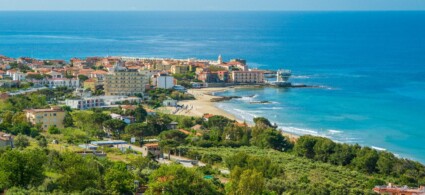
An exceptionally beautiful beach in this area is also Cala Bianca, which is characterised by white sand and crystal-clear seawater. This beach is also only accessible by sea or via the scenic Sentiero degli Infreschi. Finally, we also recommend Punta Licosa, declared a Protected Marine Area, which features one of Italy’s most beautiful beaches that has been awarded “the most beautiful beach” several times by Legambiente and has won several Blue Flags for the clarity of its waters.
Established in 1991 and declared a UNESCO World Heritage Site in 1998, the Cilento, Vallo di Diano and Alburni National Park is an oasis that contains a great diversity of environments and preserves numerous protected plant and animal species.
Spanning an area of 181,048 hectares, the Cilento National Park, thanks to its territorial extension from the Tyrrhenian coast to the foothills of the Campano-Lucanian Apennines, and its mild climate, is an area that has seen not only the development of ancient civilisations but is also the cradle of biodiversity and unique natural beauty.
The Park is also home to numerous caves and oases of extraordinary natural beauty, such as the Castelcivita Caves, a complex of karstic cavities, and the Capo Palinuro Caves, where millions of years ago the waters of the sea carved limestone rocks creating deep underwater gorges that are now a sought-after destination for diving enthusiasts.
The vast territory of the park and the diversity of environments that compose it present themselves as the ideal habitat for countless genera of both flora and fauna. Among the mammal species are wild boar, badger, Apennine hare, porcupine and wolf, while regarding birdlife there are golden eagles, honey buzzards, peregrine falcons, red-billed choughs, green woodpeckers and the rare black woodpecker, to name just a few. From a flora perspective, approximately 1,800 different species of native spontaneous plants have been recorded within the park. About 10% of these are endemic or rare species, such as the Palinuro Primrose (Primula palinuri), the symbolic flower of the Park. Along the coastlines, rare species of sea lily can still be found, while on the coastal cliffs there are cliff pinks, centaury and Neapolitan bellflower.
Within the Cilento National Park there are also two beautiful protected marine areas: the Costa degli Infreschi and della Masseta and the Santa Maria di Castellabate Area.
The Costa degli Infreschi and della Masseta hosts numerous submerged caves, among which stand out the Grotta dell’Alabastro, the Grotta Azzurra and the Grotta degli Infreschi, where freshwater submarine springs, small beaches and tiny coves are found. Due to the spectacularity of its seabeds, the area is a very popular destination for those who love diving. Another peculiarity of this zone is the presence of freshwater marine springs, some of which have a high temperature while others are extremely cold, a characteristic from which the name “costa degli infreschi” (coast of fresh waters) derives.
The Santa Maria di Castellabate protected marine area, on the other hand, is located near Licosa, known as “the island of myth”, between whose waters lie the submerged remains of a Graeco-Roman city and a Roman villa. This part of the coastal zone is distinguished by the presence of the “Cilento Flysch“, an ancient and rare type of rock formed thanks to the erosion of mountains and composed of numerous stratification levels that appear in truly peculiar colours. These rock formations are found on the seabed where they host numerous animal and plant species such as Posidonia oceanica, groupers, moray eels and lobsters, and very gradually emerge from the sea until they are visible near the coasts.
The area hosts a vast heritage of both flora and fauna with animal and plant species unique in the world. The shoreline is surrounded by green trees typical of Cilento, such as olive and fig trees, while on the beaches you can find the sea lily, a very rare wild flower. Typical of the place is the “Licosa red mullet“, a particular rock mullet that lives in the waters of Punta Licosa where it has found its ideal environment and which has been included in the list of Traditional Agri-food Products (PAT).
In addition to its historical and archaeological heritage, the Park is also famous for its natural heritage. Within the park there are numerous itineraries for trekking and excursions during which it is possible to admire truly spectacular landscapes and immerse yourself in unique natural environments.
The Magliano Nuovo – Postiglione route is a hiking itinerary of almost 30 km that connects the town of Magliano Nuovo to the Remolino di Felitto locality, passing through Magliano’s medieval bridge and crossing the famous Gole del Calore (Calore Gorges). The route has truly ancient origins, so much so that hundreds of years ago it was the road connecting the town of Magliano to that of Felitto, while currently it is one of the most appreciated itineraries within the Park.
Another beautiful route is the Sentiero del Castelluccio (Castelluccio Trail), which allows you to reach the summit of Castelluccio (701 m asl) and is almost 10 kilometres long with over 500 metres of elevation gain. This itinerary offers a marvellous view stretching from the port of Marina di Pisciotta to that of Capo Palinuro.
One of the treks we recommend for the more experienced is the Sentiero del Cilento rivoluzionario (Revolutionary Cilento Trail), which retraces the route taken in 1828 during the revolutionary uprisings that sought to end Bourbon rule in the Kingdom of the Two Sicilies. The itinerary starts from San Biase di Ceraso, touches the peak of Monte Gelbison and that of Monte Bulgheria before arriving at Scario.
Finally, one of the most famous routes is the Sentiero degli Innamorati (Lovers’ Trail). About 2 km long with an overall elevation gain of 140 metres, the trail can be walked by anyone who wants to enjoy a marvellous view of the Gulf of Velia, Punta Telegrafo and Capo Palinuro.
Among the trails to walk along the coast, there is the Punta Licosa trail, which runs from San Marco di Castellabate to Punta Licosa beach, and the Capo Palinuro trail which offers beautiful views of the sea.
 Hotel
Hotel  Budget accommodations
  Apartments
  Family Hotel
  Luxury Hotel
  Resorts