Palazzo Gentilcore
Castellabate - Via Amendola 1
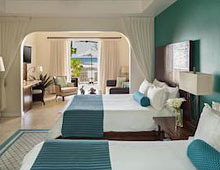
Palazzo Gentilcore in Castellabate offers family rooms with sea or garden views.
Book now
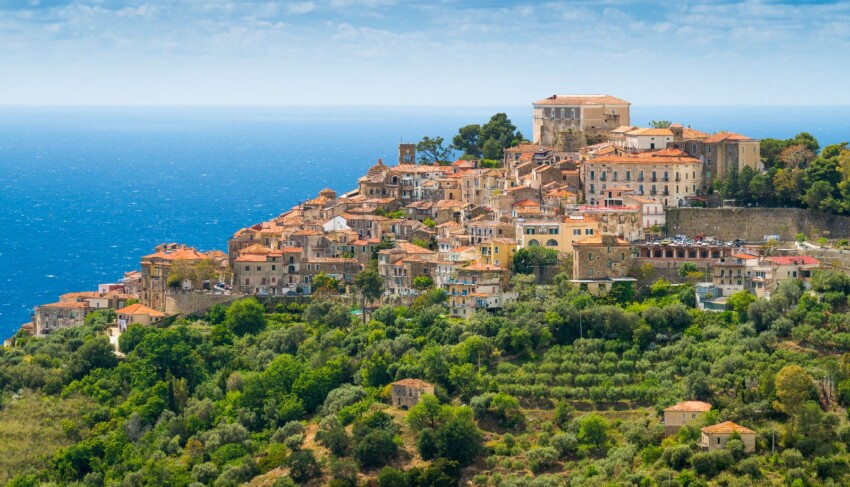
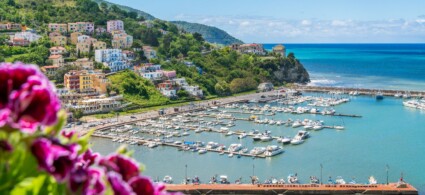
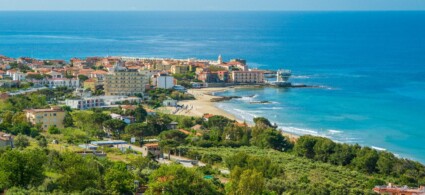
Castellabate is a special corner of Campania located in the province of Salerno in the heart of the Cilento National Park. This charming town is an ancient medieval settlement that not only features in the list of “Italy’s most beautiful villages“, but is also recognised as a UNESCO World Heritage Site. Situated at approximately 300 metres above sea level, the town is characterised by narrow cobbled streets, ancient buildings that conceal elegant courtyards and terraces offering stunning views.
The beauty of this town is also captured in the words spoken by Gioacchino Murat to describe it: “One does not die here” in reference to the purity of its air and the beauty of its landscapes. Visiting Castellabate is like taking a journey through time, as this place where life still unfolds at a leisurely pace has managed to preserve its charm intact over the years. You’ve probably heard of Castellabate because the town featured in the famous film with Claudio Bisio Welcome to the South.
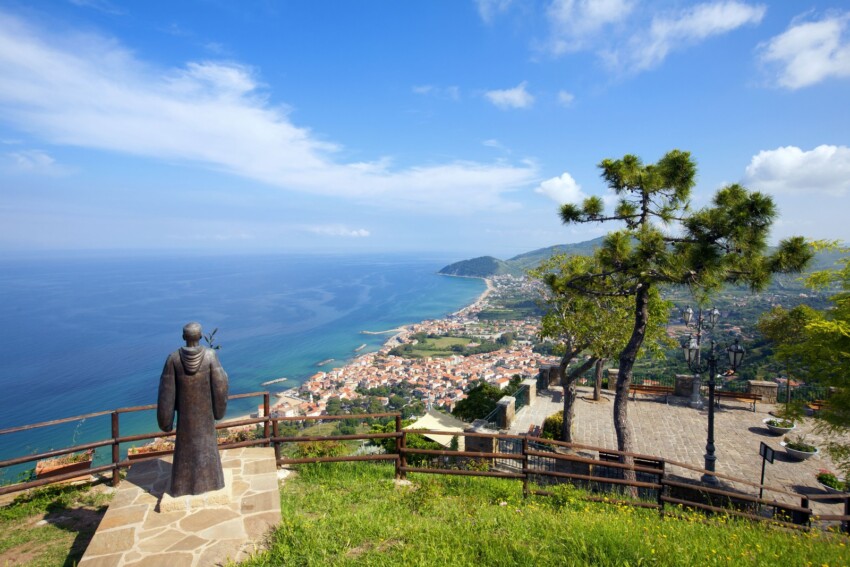
Castellabate is a rather quiet town during the winter months but becomes a highly sought-after destination in summer. The town rises on a hill where Abate Costabile Gentilcore, the village’s founder, had the Castle of Sant’Angelo built around the twelfth century. This is where the town’s name derives from: “Castrum abbatis”, meaning the Castle of the Abbot, which later became Castellabate. Thanks to its medieval structure, which has remained intact over the years, the village is recognised by UNESCO as a “World Heritage Site“.
The Castle of Castellabate was erected in 1123 by Abate Costabile with the purpose of defending the city, which at the time thrived on maritime trade, from possible attacks by Saracens. This fortress still stands today as an imposing and massive circular castle with high perimeter walls and brick corner towers.
Inside, the structure preserves beautiful halls, storage rooms, underground galleries and according to legend, there is a network of tunnels running from the Castle to Punta Licosa and other coastal locations, which served as escape routes. The conference hall is currently available for ceremonies and events, whilst the castle hosts artistic and cultural events.
The Pontifical Basilica of Santa Maria de Gulia is a twelfth-century church in Romanesque style with a sixteenth-century façade. The interior, with fifteenth-century majolica paving, features three naves and a series of highly valuable artworks, including a painting depicting Saint Michael triumphing over Satan and a polyptych created in 1472 by Pavanino da Palermo, representing the Madonna enthroned with Child, Saint Peter and Saint John the Evangelist.
Right in front of the Basilica of Santa Maria Giulia stands the small Rosary Chapel. This graceful and charming chapel dates back to the second half of the sixteenth century and features a single nave with octagonal coffered ceiling and a valuable polychrome marble altar dating from the eighteenth century.
The small harbour of Santa Maria is known as the ”Gate of the Cats” because its arcades illuminated by candlelight in the darkness of night resembled a cat’s eyes. Walking down from the village towards the sea, you reach this “Travierso” harbour where you’ll find an arched structure dating back to the twelfth century, commissioned by Abate Simeone.
Once inside these arches there were warehouses used to store numerous products from the Cilento area (cereals, wine and olive oil) which were then traded especially with Cava de’ Tirreni and Naples.
Castellabate is also known for its charming and valuable noble residences, among which stands out Villa Prince of Belmonte, built in 1733 by uniting pre-existing properties, a villa set between a five-acre park and the sea. Property of the Granito Pignatelli di Belmonte family, it was initially a hunting reserve frequented by the Kings of Spain and Italy for wild boar and quail hunts.
Villa Belmonte is now a historic seaside residence with a delightful private sandy beach where you can stay during a trip to Cilento and a terrace offering excellent views of the Gulf. The complex is available not only for overnight stays but also as a venue for organising weddings and other events.
Villa Matarazzo is a nineteenth-century villa that was once the residence of Francesco Matarazzo, an important entrepreneur from Castellabate who emigrated to Brazil in 1881. The villa was long the summer home of the Matarazzo family, whilst today it is owned by the Cilento, Vallo di Diano and Alburni National Park and houses the permanent exhibition “Ancient Sea” and other important cultural and musical events.
Surrounded by hectares of greenery where the family vineyard was once cultivated, from the building’s terrace you can admire a spectacular view of the sea and the entire estate. This villa nestled in greenery boasts enviable views over the sea and surrounding areas.
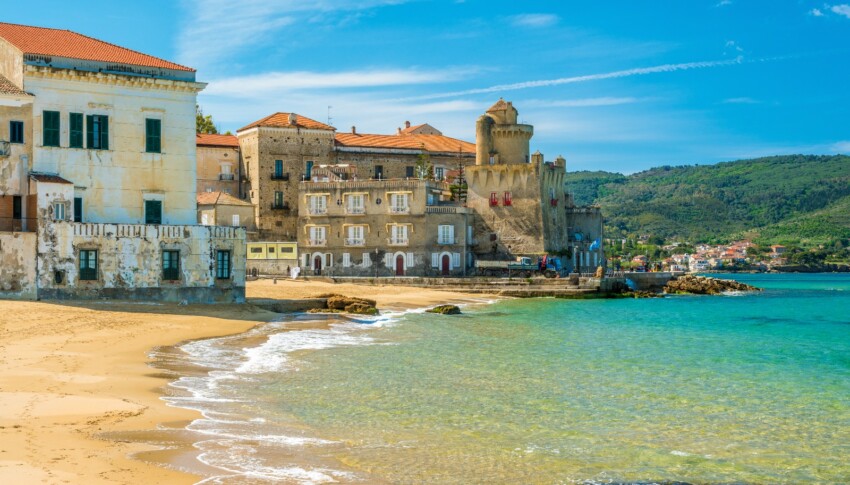
Among the things you must not miss in Castellabate are certainly its splendid beaches, which for many years have received Blue Flag and Quattro Vele awards for the clarity of their waters. Along the coast you’ll find sandy and pebbly beaches located in the district of Santa Maria di Castellabate and San Marco.
The Marina Piccola Beach6 is located in the Santa Maria district just a few steps from the centre, a feature that makes it ideal for those who don’t want to miss a seaside and relaxing stay whilst remaining close to the town centre. The long White Beach of Pozzillo7, meanwhile, stretches from the Santa Maria di Castellabate district to San Marco and is home to several equipped beaches with numerous facilities, making it ideal for families as well.
In San Marco di Castellabate you’ll also find the beautiful Punta Licosa Beaches8 famous for the presence of small coves where you can sunbathe and swim in total relaxation. Finally, the Lake Beach9 features one of Castellabate’s most extensive and famous beaches: here the sand is light and the water is clear and crystalline. The area is rich not only in equipped beaches but also in accommodation facilities, campsites and restaurants suited to welcoming families with children.
In the following map you can see the location of the main places of interest mentioned in this article.
Castellabate is a destination that offers a wide choice of accommodation to suit all needs. Those who wish to be closer to the beach and sea can choose a hotel near the Santa Maria district, whilst those more interested in a cultural stay can opt for accommodation in Castellabate’s town centre.
Many facilities are located within historic residences that have been renovated with wonderful sea views.
We offer a selection of hotels at Castellabate to suit all categories of travellers. The most booked by tourists are the sea-facing hotels, often right on the beach. If you want to play it safe, choose one of the following: they are among the most booked hotels in Castellabate, sorted by number of reviews.
If you prefer space, privacy and the ability to prepare your own meals to a hotel holiday, book a holiday home at Castellabate. We recommend a few below, but in this case we advise you to book early because houses and apartments for rent at Castellabate are in high demand.
The nearest airport to reach Castellabate by air is Naples Capodichino, approximately 120 km away. From the airport you can reach the town via the A3 Naples-Salerno motorway, exit Battipaglia or Eboli, then continue on the State Road 18 towards Agropoli and exit at Agropoli South. Once you’ve exited, follow the signs for Castellabate or San Marco di Castellabate.
For those wishing to reach the location by train, the nearest station is Agropoli, approximately 12 km from Castellabate. From the station you can then take a bus to the San Marco di Castellabate district, hire a car or take a taxi.
Finally, if travelling by car from the north, it’s advisable to always take the A3 Naples-Salerno motorway, exit Battipaglia, then continue on State Road 18 and exit at Agropoli South.
What's the weather at Castellabate? Below are the temperatures and the weather forecast at Castellabate for the next few days.
 Hotel
Hotel  Budget accommodations
  Apartments
  Family Hotel
  Luxury Hotel
  Resorts