Resort Baia del Silenzio
Pisciotta - Via Palinuro 2
Book now
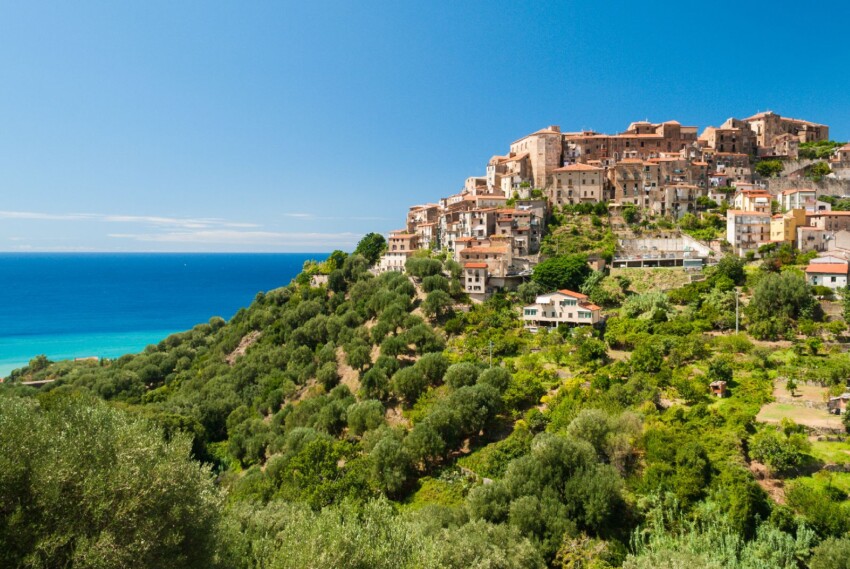
Pisciotta is one of the most authentic medieval villages in Cilento: a town of around 2,400 inhabitants clinging to a hillside about 170 metres above sea level, surrounded by olive groves some of which are over five centuries old, with the Tyrrhenian Sea visible below between the branches.
The historic centre has preserved its medieval structure intact – narrow alleyways, portals of local stone, tuff houses packed tightly together – with an atmosphere that mass tourism has yet to touch. Pisciotta sits midway between Ascea to the north and Palinuro to the south, within the Cilento National Park recognised by UNESCO in 1998: this location makes it both a village worth exploring for its own sake and a strategic base for visiting some of the most important natural and historical attractions of southern Cilento.
Pisciotta’s international reputation is built on a specialist gastronomic product that has won over food critics and journalists worldwide: anchovies caught using the Menaica method, a centuries-old technique unchanged to this day and now a Slow Food Presidium. The British newspaper The Telegraph has listed Marina di Pisciotta, the coastal hamlet at the foot of the village, among underrated Italian destinations worth rediscovering.
But Pisciotta isn’t just about anchovies: it’s also home to some of southern Italy’s finest extra virgin olive oil, a landscape of terraced hills descending to the sea, and a village where you dine in a tavern on fish caught that morning and sleep in absolute silence.
Pisciotta rewards leisurely exploration on foot, following medieval alleyways that lead from one viewpoint to another. The village is small enough to explore in a morning, yet rich in detail – a seventeenth-century doorway, a shuttered chapel, a courtyard with an ancient well – that warrants a longer stay.
The coastal hamlets of Marina di Pisciotta and Caprioli add a seaside dimension to the historic one.
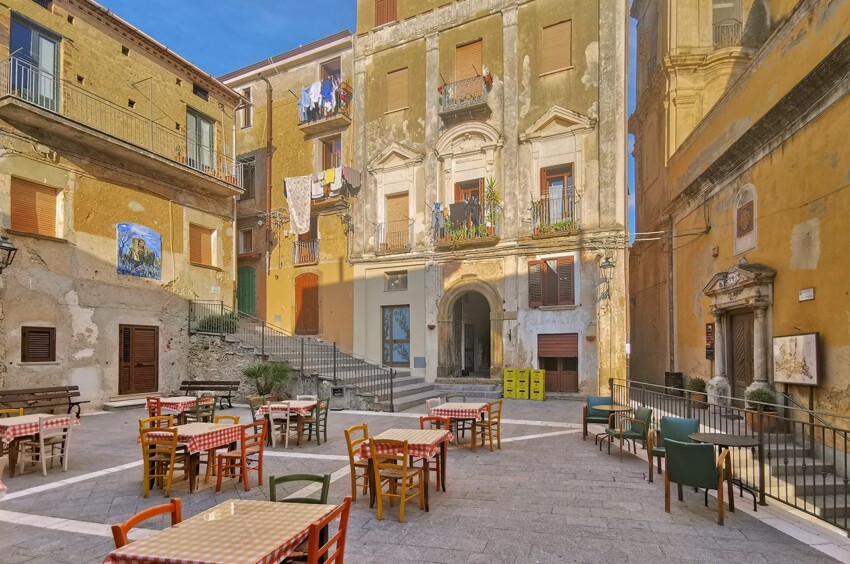
The historic centre of Pisciotta preserves the typical structure of a Cilento medieval village: a labyrinth of narrow, winding alleyways interlaced between stone and tuff houses, with carved portals bearing witness to noble families who built their residences here between the sixteenth and eighteenth centuries.
The most significant walk begins at the village entrance and climbs towards the centre via Via Roma, passing noble palaces with their arched entrances. The principal civic monument is the Palazzo Pappacoda, also known as Palazzo Ducale, dominating the village centre: a sturdy building with an internal courtyard, former residence of the feudal family that governed Pisciotta for centuries, now partly used for public functions. The structure has been altered over time but retains its original layout with the broad façade of local stone.
Close to the palace stands the Chapel of San Michele, built in the seventeenth century at the behest of the Pinto family, one of the most influential noble families in the Cilento region. The chapel is small and austere externally but contains two notable features: an organ crafted by Campanian artisans of considerable merit, and a statue of Archangel Michael, the chapel’s patron. The interior has recently been restored but the chapel is open to the public only on certain occasions: it’s worth asking at the Town Hall or in the village taverns about visiting possibilities. Throughout the historic centre you’ll find small votive shrines, courtyards with wells, and traces of the village’s ancient defensive system.
Every Monday in July the historic centre transforms into an open-air concert hall: “Monday Concerts” bring classical music, jazz and film scores to the evocative Piazza Michelangelo Pagano, a charming small square with particularly good acoustics thanks to the surrounding buildings, with audiences seated among illuminated alleyways. This is one of southern Cilento’s most appreciated summer cultural events and alone worth a visit to Pisciotta in July.
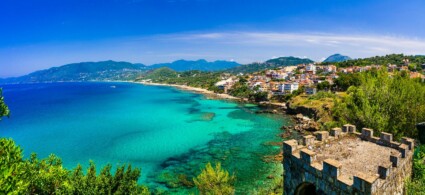
Pisciotta offers some of southern Cilento’s finest views: from 170 metres you can see a stretch of coastline from Punta Licosa to the north to Capo Palinuro to the south, with terraced olive groves descending towards the blue Tyrrhenian Sea.
The Viewpoint is the village’s principal observation point, reached on foot from Piazza San Giorgio in a few minutes: from this panoramic terrace, the vista over the coast and olive groves is particularly striking in morning light, when the low sun highlights the silvery-grey texture of the olive canopies, and at sunset, when the sun dips towards the sea on the opposite side. Piazza San Giorgio itself offers glimpses of the gulf between the village rooftops, with the sea appearing and disappearing between the alleyways like a perspective game.
What makes Pisciotta’s landscape distinct from other Cilento villages is precisely the relationship between olive groves and sea: olives of the Pisciottana variety, a local cultivar selected in this territory, grow in terraces descending from the village hillside almost to the cliff edge, creating a visual continuity between farmland and coast that is rare elsewhere in the peninsula. Some of these olives are over 500 years old: their low, gnarled canopies, twisted and thick trunks, the silvery-grey leaf colour create a landscape that appears painted.
A walk among the olive groves, following the paths that branch from the village towards the coast, is an experience somewhere between trekking and meditation, with the sound of wind in the leaves and the scent of earth and sea. The fruit from these trees is the raw material for Cilento DOP Oil, produced in mills built along the watercourses near the village.
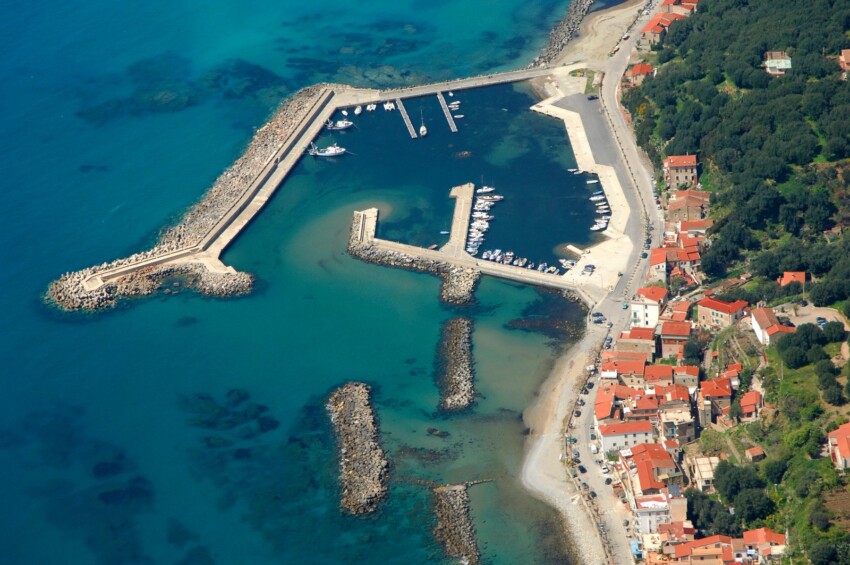
The coastal hamlet of Marina di Pisciotta is reached from the upper village via the “La Chiusa” road from the east, or by descending a long flight of steps on foot: roughly twenty minutes walking through olive groves with increasingly expansive sea views.
Marina is a fishing village that has remained substantially unchanged: the small harbour with moored boats, nets spread to dry, low houses mere metres from the water, bars where fishermen sit in the afternoon between expeditions. There are no luxury hotels or souvenir boutiques. What there is, instead, is Cilento’s oldest and most refined fishing tradition: Menaica anchovies.
The Menaica is a loose-mesh net, different from industrial trawling nets, cast into open water and drawn along the coast on calm nights. The mesh is calibrated so smaller anchovies can escape freely: only those of the right size, in perfect condition, are retained.
Fishing occurs from the night of 25 March to that of 22 July, exclusively in calm sea conditions, since wind and waves would damage the catch quality. Fishermen set out at dusk and return late at night or at dawn; the anchovies are cleaned and filleted directly on board, still in the middle of the Tyrrhenian Sea, and salted immediately upon returning to port.
This immediate handling is the key to the product’s exceptional quality: anchovies don’t accumulate in holds, don’t get crushed, don’t deteriorate. The result is a tender, firm anchovy with intense, complex flavour bearing no resemblance to industrial products. They are now a Slow Food Presidium and among the most appreciated fish products in Italian and European gastronomy.
During salt curing, anchovies release an amber liquid that is the raw material for anchovy colatura, a fermented fish sauce that is the direct heir to Roman garum. Menaica anchovies are eaten fresh or salted, in a series of traditional preparations codified by village cooks: inchiappate (opened, filled with goat cheese, eggs, garlic and parsley, floured and fried in tomato sauce), ammollicate (with breadcrumbs, garlic, oil and parsley), cauraro (potato, broad bean, anchovy and wild fennel soup), simple raw salad with local extra virgin oil, lemon and parsley.
You’ll find them in nearly all restaurants and taverns in Marina di Pisciotta, where menus follow the rhythm of the catch and the season. The Fish Festival, in late June, celebrates the Menaica tradition with tastings, music and fishing demonstrations.
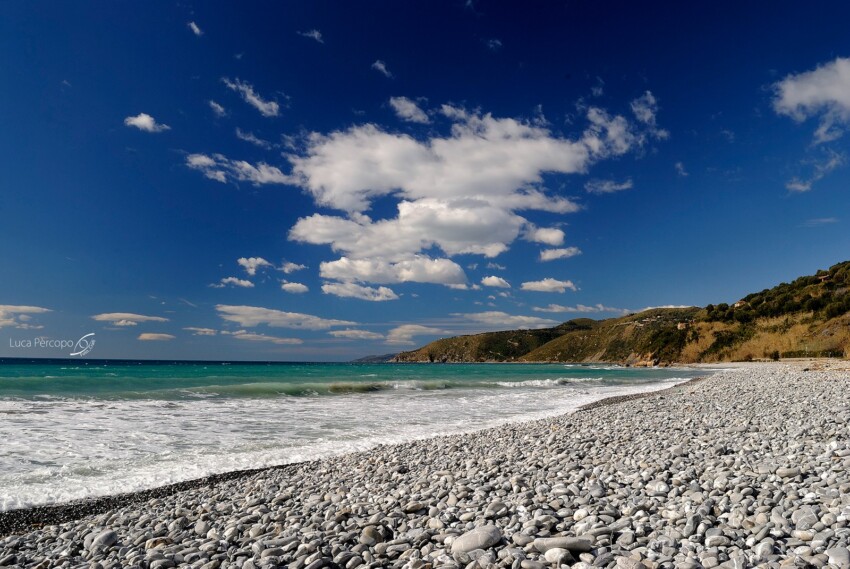
Pisciotta municipality manages three distinct beach areas, each with different characteristics.
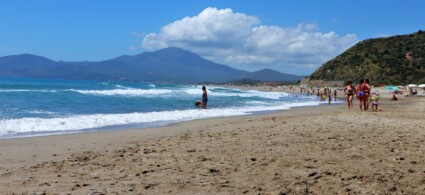
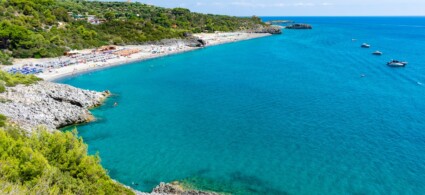
The Marina di Pisciotta beach is the best-known and most photographed: pale pebbles smoothed by the sea that create dazzling reflections in sunlight, transparent water with seagrass-rich seabeds ensuring exceptional water quality, free access with equipped zones. It’s not crowded except in the heart of August. Currents are moderate and the seabed drops off fairly quickly: less suitable for small children, ideal for swimmers.
The Caprioli beach, in the hamlet of the same name south of the main village, is the opposite: fine, yellow sand, shallow and flat seabed, calm waters. It’s the most family-friendly beach in the area, reached by car in a few minutes from the SS18 at Gabella. It livens up from July onwards and is preferred by regular holidaymakers in the territory.
The third beach, Marina Campagna (also called Pietra Acciaio or “64”) is north of Marina di Pisciotta: white pebbles present in the water too among the breakwater rocks, intensely coloured sea, sheltered setting and limited visitor numbers. It’s the most secluded of the three and preferred by those seeking peace and quiet.
The olive grove landscape surrounding Pisciotta is as integral to the village experience as the medieval alleyways and anchovies. The indigenous Pisciottana cultivar, selected and grown in this territory for centuries, produces a small olive with a favourable pulp-to-stone ratio and an organoleptic profile characterised by notes of grass, almond and intense peppery warmth.
The oil produced is the basis of Cilento Extra Virgin DOP Oil, one of Italy’s twenty protected designation oils. The mills processing the olives are located along watercourses near the village, a logistics system linked to using water as a power source in historic mills, and in some cases it’s possible to visit them during harvest season, between October and November, to watch the pressing and taste newly pressed oil straight from the mill: a sensory experience of rare intensity.
Pisciotta oil naturally accompanies Menaica anchovies, local salad, bruschetta with durum wheat bread made in Pisciotta, and Fiano Cilento DOC, the region’s indigenous white wine, completes the food and wine picture of a village that is, in its entirety, an agricultural biodiversity refuge.
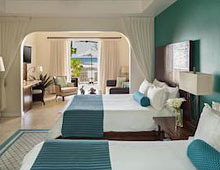
Pisciotta’s accommodation is simple and authentically Cilento: B&Bs and holiday homes in the upper village, apartments in Marina di Pisciotta with direct beach access, farmhouses in the olive groves with their own farm kitchen. There are no chain hotels or large facilities.
It’s this simplicity, and the night-time silence, the scent of olives, breakfast with newly pressed oil and local bread, that are the principal reasons to choose Pisciotta as a base rather than just passing through.
By car, reach Pisciotta from the A3 Salerno-Reggio Calabria motorway: from the Buonabitacolo exit head towards the coast following the SS517; from the Battipaglia or Eboli exits take the SS18 coastal road.
By train, the nearest station is Pisciotta-Palinuro, on the Naples-Reggio Calabria line (Trenitalia), located on the coast approximately 3 km from the upper village: a taxi or local bus connects the station to the centre.
What's the weather at Pisciotta? Below are the temperatures and the weather forecast at Pisciotta for the next few days.
Pisciotta is located in the province of Salerno, within the Cilento National Park, 7 km from Palinuro, 12 km from Ascea and 21 km from Marina di Camerota.
It is approximately 130 km from Salerno and borders Ascea to the north and Centola (Palinuro) to the south. It is also accessible from Maratea, around 70 km to the north.
 Hotel
Hotel 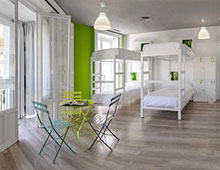 Budget accommodations
 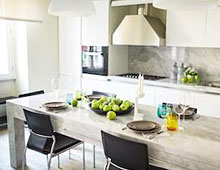 Apartments
  Family Hotel
 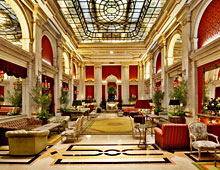 Luxury Hotel
 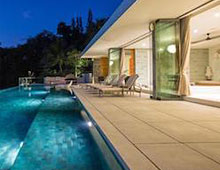 Resorts