Hotel Parco Delle Agavi
Forio d'Ischia - Ss Lacco Forio
Book now
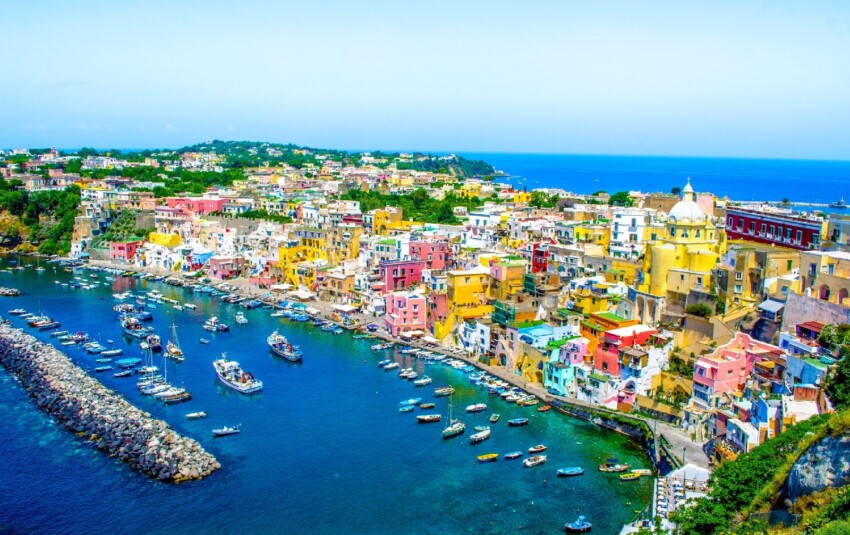
Less famous than Ischia and Capri, Procida is a volcanic island in the Gulf of Naples that stands out for its quintessentially Mediterranean beauty: pastel-coloured houses, fishing boats and small villages perched on hillsides. The island began to gain fame in the late 1950s thanks to Elsa Morante’s novel “Arturo’s Island” and acclaimed films such as Il postino starring Massimo Troisi and, later, The Talented Mr Ripley with Matt Damon.
When your ferry pulls into Procida, you’ll find yourself instantly captivated by this island, where the air smells of salt spray and narrow staircases wind between colourful buildings. Take time to explore and discover Procida, a destination that combines stunning natural landscapes with historic sites and beaches with crystal-clear waters. Procida’s territory is divided into nine districts, known as grancìe: Terra Murata, Corricella, Sent’cò, Semmarezio, San Leonardo, Madonna della Libera, Sant’Antuono, Sant’Antonio and Chiaiolella.
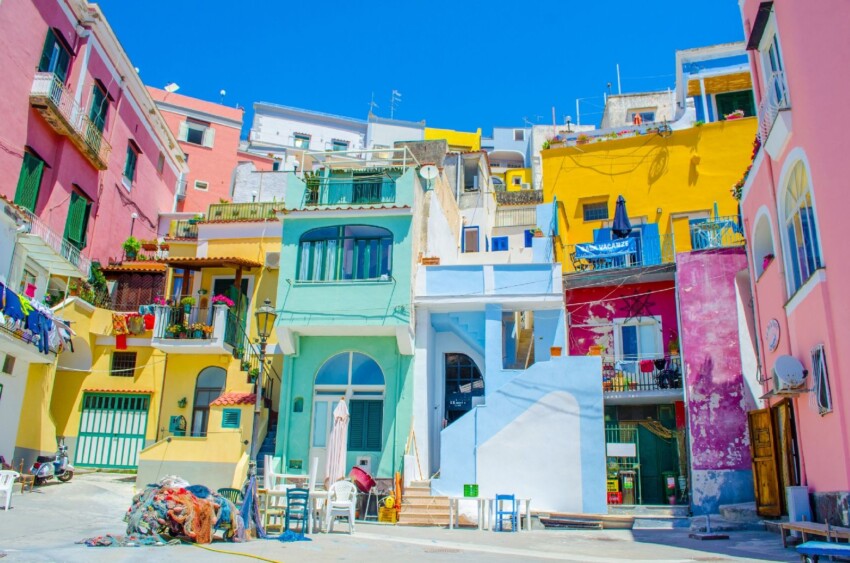
Procida covers just 16 square kilometres, but don’t be fooled: the island should be explored at its own leisurely pace, wandering through its narrow lanes and discovering hidden beaches tucked into coves. Less exclusive than Capri and wilder than Ischia, Procida is an island that seems frozen in time and captivates every visitor with its authenticity and uniqueness.
Don’t miss a visit to the famous village of Terra Murata, the historic heart of the island, and the small island of Vivara, a protected natural oasis connected to Procida by an ancient bridge. Since Procida isn’t very large, the island is easy to explore on foot or alternatively by taking buses or a convenient taxi.
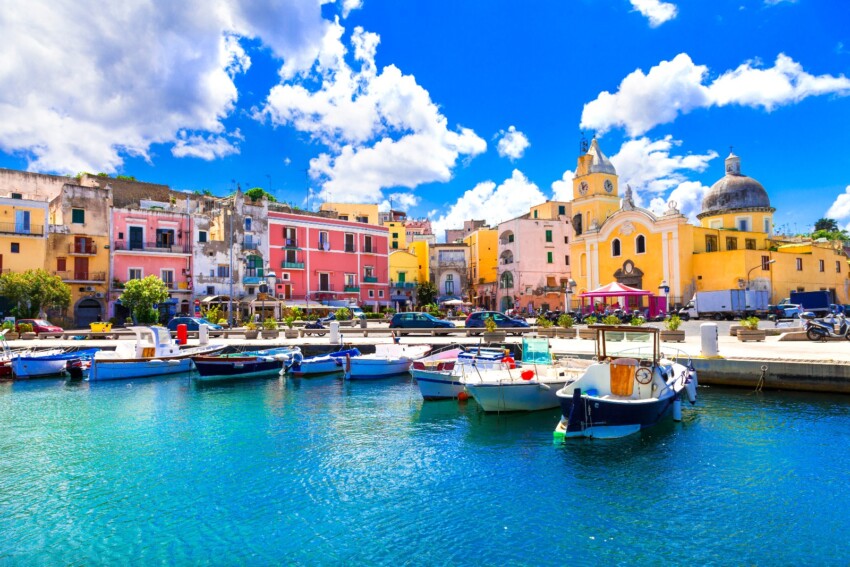
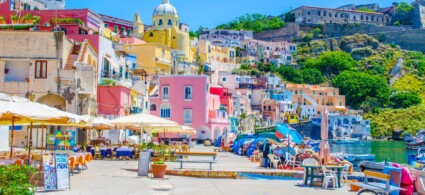
Marina Corricella, one of the island’s main tourist hubs, is Procida’s oldest fishing village and enjoys beautiful sunsets over the water. The village, which is wonderfully atmospheric and romantic, gained fame after serving as the film set for “Il Postino” with Massimo Troisi and Maria Grazia Cucinotta, but it’s worth a visit for its charming seventeenth-century harbour and characteristic centre.
As you stroll through its narrow streets, you’ll discover colourful little houses, fishing nets, craft shops and inns serving traditional local dishes. Marina della Corricella is accessible by sea or via long staircases that can be quite tiring but reward you with stunning views.
Terra Murata sits almost 90 metres above sea level, making it the island’s highest point. The village’s name comes from the fact that in the 16th century, residents took refuge in this central part of the island to escape pirate raids and built an impressive defensive system of walls and towers.
Walking through this village, navigating its intricate lanes lined with colourful houses huddled together, is like stepping back in time. At Torre Murata, perched on a clifftop overlooking the sea, stands the majestic Palazzo D’Avalos, a building constructed in the 16th century by the D’Avalos family. From 1830 to 1988, the complex served as a prison where fascist-era figures were also detained.
In the Terra Murata area, don’t forget to visit the Abbey of San Michele Arcangelo, the island’s patron saint. The church, founded in 1026, underwent various restoration and renovation works over the years until the mid-16th century, when Cardinal Innico D’Avalos gave it the architectural style that we still admire today.
The building has an elongated Latin cross layout and consists of a central nave and two side aisles housing three nineteenth-century chapels. In the underground sections, you can also see a beautiful permanent Nativity scene dating from the 18th century, made up of Neapolitan-school shepherds crafted from wood and terracotta. The abbey’s Library, which contains around 8,000 ancient volumes, and the Chapel of San Michele are also worth visiting.
Marina Grande, also known as Marina di Sancio Cattolico (or Sent’ Co by locals), is Procida’s main port where ferries and hydrofoils from the mainland and Ischia dock. You can stroll along Via Roma, Procida’s main street, where you’ll find shops, craft boutiques, churches and restaurants.
Stop to visit the Church of Santa Maria della Pietà, built in 1760 on the foundations of an earlier chapel dating from 1616. The religious building features a single nave with side chapels adorned with polychrome marble altars and a dome decorated with frescoes depicting the Four Evangelists.
On the slopes of the hill that hosts Terra Murata lies Casale Vascello, an ancient fortified village accessible only on foot, which represents a well-preserved example of traditional hamlets. This residential cluster, which arose to protect against pirate raids, appears to date from the sixteenth century and features houses tightly packed together to block enemy passage, with a shared central courtyard where village life took place.
The houses (still inhabited today) are characterised by the presence of the vefio, a distinctive local architectural feature consisting of a terrace or balcony covered by an arched vault. Access to the village is only through two narrow entrances that in the days of Saracen raids would be closed to prevent enemy access.
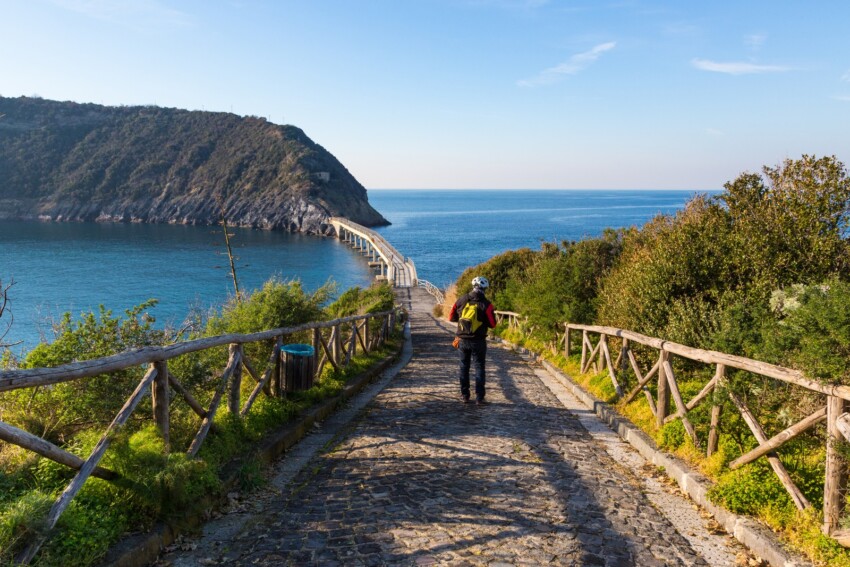
The small island of Vivara was a volcanic crater connected to Procida thousands of years ago, and is now a protected nature reserve offering various trekking and walking trails. The uninhabited island is crescent-shaped and connected to Procida by a small stone pedestrian bridge located on the Santa Margherita hill. Vivara remains unspoilt and wild, where you can find rare plants, numerous wild animals and crystal-clear waters with a seabed that attracts diving enthusiasts.
Visiting Vivara means discovering clifftop terraces and magnificent viewpoints offering spectacular vistas. Visits to the island are by reservation only, which must be arranged through the Procida Municipality website, and only with an authorised nature guide.
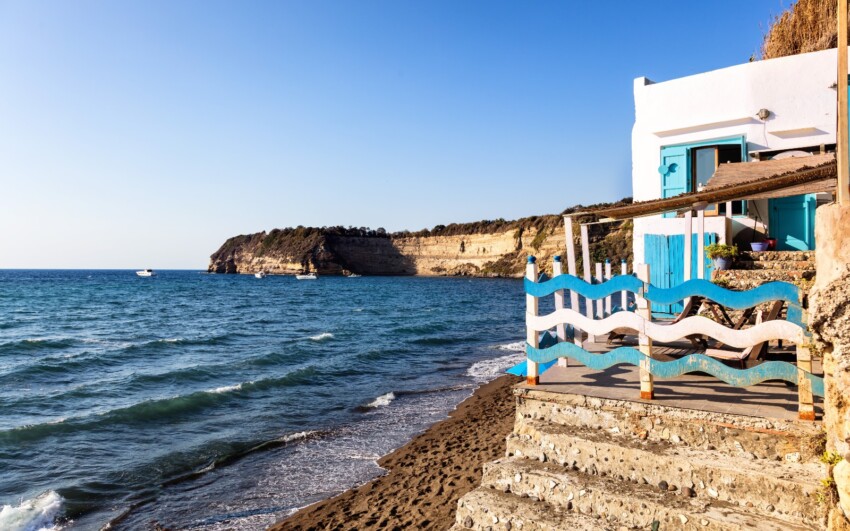
You can’t visit Procida without spending time on its lovely little beaches, many of which are only accessible by sea. The island boasts numerous bays and inlets surrounded by high cliffs offering crystal-clear waters with transparent depths. The Spiaggia Lingua7 and Spiaggia di Silurenza8 are located near the port where ferries dock and are equipped beaches with facilities, bars and restaurants.
On the eastern side you’ll find the beautiful Spiaggia Chiaia9, reached by climbing a scenic staircase of 182 steps or by boat. Chiaia is particularly popular with families with children as the water is transparent, the seabed is shallow and the beach is well-equipped. The Spiaggia della Chiaiolella10, on the opposite side of the island, features equipped beaches with bathing facilities and family-friendly services, as well as bars and venues that come alive from aperitif time onwards.
Just further north lies Spiaggia di Ciraccio11, where the sun sets late and the water has clear depths. This is the island’s longest beach and features both equipped areas and free beach. Not far away is the renowned Spiaggia Pozzovecchio12, where some scenes from “Il Postino” were filmed. Here the sand is coarse and dark, testament to the island’s volcanic origins, whilst the water is transparent and the seabed shallow.
More information about Procida's beachesIn the following map you can see the location of the main places of interest mentioned in this article.
Unlike Capri and Ischia, Procida, being a small island, doesn’t offer as many accommodation options. Therefore, especially if you’re planning to visit during peak season, we recommend booking your stay in advance.
On the island you can choose to stay in one of the many B&Bs, a hotel or one of the holiday homes that offer excellent views of the Gulf. The most touristy area of Procida is Marina Grande which, given its proximity to the port, is also the most convenient area to stay if you’re only spending one night on the island.
The island of Procida is easily reached by ferry or hydrofoil departing from the ports of Pozzuoli, Naples and Ischia. From Pozzuoli the ferry takes 30 minutes, whilst from Naples hydrofoils depart from Molo Beverello and take approximately 45 minutes, while ferries (which can also transport cars) depart from Calata di Massa port and take about 1 hour. Finally, connections with Ischia operate by both ferry and hydrofoil, with the journey taking approximately 30 minutes.
What's the weather at Procida? Below are the temperatures and the weather forecast at Procida for the next few days.
The island of Procida lies in the Bay of Naples, approximately 3.4 km from the mainland, and forms part of the Phlegrean Islands archipelago alongside Ischia, Nisida and Vivara, located in the central Tyrrhenian Sea.
 Hotel
Hotel  Budget accommodations
  Apartments
  Family Hotel
  Luxury Hotel
  Resorts