Hotel Gabbiano
Maratea - Via Luppa 24 - Località Acquafredda
Book now
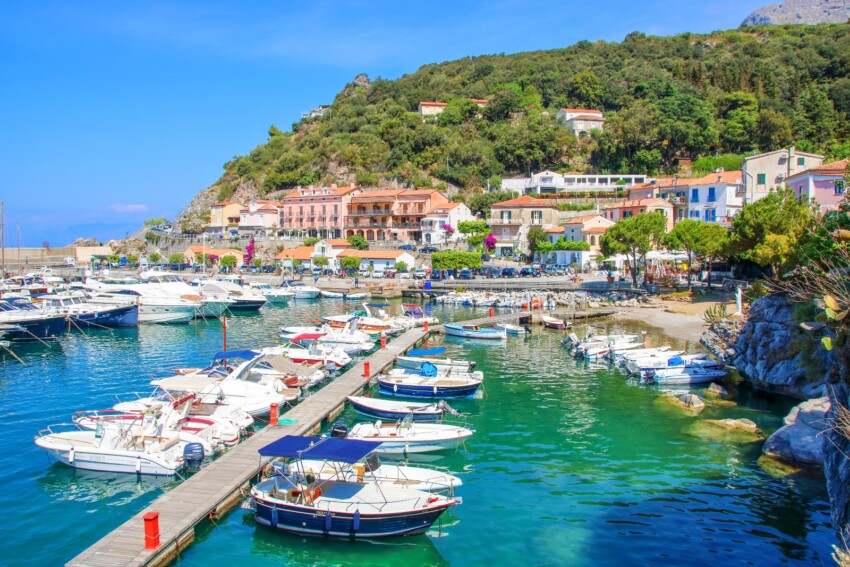
A town in the province of Potenza in Basilicata, Maratea is the only city in the region that offers access to the Tyrrhenian Sea. The town is indeed a famous seaside resort nestled in the Gulf of Policastro and bordered to the north by Campania and to the south by Calabria. Many visitors planning a trip along the Cilento coast often decide to venture further to the city of Maratea, which offers stunning beaches, magnificent natural scenery and a truly unique historical and architectural heritage.
Also known as the “pearl of the Tyrrhenian Sea“, Maratea is a destination with multi-faceted landscapes characterised along the coast by sandy shores alternating with jagged headlands, whilst inland you’ll find lush Mediterranean scrubland vegetation. An ancient city with a long history, Maratea was already inhabited during the Bronze Age, as evidenced by numerous archaeological finds, and subsequently experienced various rulers over the centuries, including the Romans, Byzantines, Normans, Angevins and Aragonese.
However, it was in the medieval period, around 1079, that defensive needs prompted the population to relocate from the coast to the hills and establish a new settlement on the summit of Monte San Biagio. Unfortunately, during the Napoleonic invasion of the Kingdom of Naples, Maratea endured a heavy siege by French troops that destroyed part of the castle and the original settlement.
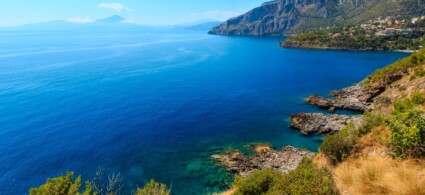
Marina1 is the fraction of the municipality of Maratea that developed in the post-war period along the coast, also thanks to the construction of the railway station. The Maratea shoreline stretches for approximately 32 km and is characterised by sandy beaches, small coves, rocks and small islands.
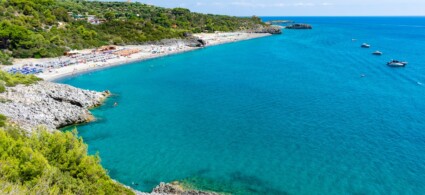
The city offers both free beach areas and equipped lidos with facilities providing all services, whilst the sea water is crystal clear and has received the Blue Flag award on multiple occasions. All Marina di Maratea beaches are easily accessible by car, and Santa Teresa beach is the most frequented due to its location near the railway station.
Among the other most popular beaches, we find in the Acquafredda fraction the Spiaggia della Luppa2, one of the most extensive stretches of Maratea’s coast bordered to the north by a cliff that contains the Acquafredda cave, and the small beaches of Cersuta3 called Renicedda, Renu d’u nastru and Rena d’a Carruba, which can only be reached by sea.
The Spiaggia di Fiumicello4, meanwhile, is located at the corresponding fraction and extends over the territory of Ogliastro point where the Fiumicello caves are found. The beach is divided into two areas by the Fiumicello stream, and the shoreline comprises both sand and rocks.
Another particularly picturesque beach is Cala Jannita5, also known as the Black Beach for the dark colour of its sand. This is one of the most beautiful and famous beaches along the entire coast for its natural setting. Access to the beach is via a path winding through lush vegetation and from this shoreline you can swim out to the Sciabella cave.
Although it’s a renowned seaside destination, Maratea also boasts an extensive historical and architectural heritage to discover, so much so that the city is known as “the city of 44 churches” for the large number of places of worship present. The ancient city centre is positioned higher up from the beach area, which is of more recent development.
At the summit of Monte San Biagio once stood the highest inhabited area, called the Castle, precisely because a fortress stood here of which only ruins remain visible today. This area, known as “Maratia Superior“, was later abandoned and the new residential centre that arose on the side of Monte San Biagio is what we can still visit today.
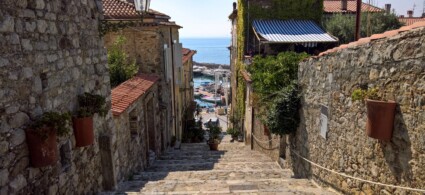
The city of Maratea is currently made up of numerous hamlets, also known as fractions, which have emerged over the years around the original urban nucleus. The medieval centre consists of a labyrinth of cobbled lanes, ancient churches and 18th-century buildings, among which the Palazzo De Lieto stands out. You can comfortably explore the city on foot to discover small local artisan shops, boutiques and typical restaurants.
Maratea’s undisputed symbol is undoubtedly the statue of the Redeemer, also known as the “Christ of Maratea”, which stands at 650 metres above sea level on a viewpoint offering a magnificent panorama of the coast. This work was created in 1965 in concrete mixed with Carrara marble by Florentine sculptor Bruno Innocenti.
Standing 22 metres high, the “Christ of Maratea” is Italy’s tallest statue and in its category is second in size only to the famous Christ the Redeemer in Rio de Janeiro. The work was executed with a special optical effect so that when viewed from a distance the statue appears to face the sea, but only when you get closer can you see that it gazes inland.
At the highest point of old Maratea stands the Basilica of San Biagio, the city’s main religious building which according to legend was built where a pagan temple dedicated to the goddess Minerva once stood. The church houses the relics of San Biagio in the Royal Chapel, who is considered the patron saint of the city.
Externally, the church features a portico with three arches in neoclassical style, whilst internally it has three naves, a presbytery and arches in Romanesque style. Inside you’ll find interesting works such as the 15th-century Fresco of the Madonna of the Pomegranate, marble bas-reliefs depicting the Annunciation from the 17th century and the Madonna of Wisdom from the 18th century.
Also known as the Church of the Assumption, Santa Maria Maggiore Church has an original nucleus that appears to date between the 12th and 14th centuries but has undergone various restoration works over the years.
Externally, the church presents Romanesque style with a bell tower with a rectangular base. Internally, you can now admire stucco decorations in baroque style and altars in polychrome marble. However, in ancient times the building was characterised by the presence of ancient frescoes which were partially discovered during restoration work.
Inside you can still admire works of great value such as a wooden statue of the Madonna and Child (dating from the 18th century), a painting of the Adoration of the Shepherds and Saints and a beautiful wooden sculpture of Saint Michael the Archangel.
Purchased in the early 20th century by Francesco Saverio Nitti, who served as President of the Council of Ministers during the Italian Kingdom, the villa is a building of considerable historical and architectural value that was designed by Venetian architect Vincenzo Rinaldo.
Originally an agricultural estate dating from the 19th century owned by the Marsicano family and specialising in the production of oranges and grapes was located here. Designed by combining neo-gothic-décor style with that of the typical rural house, the villa is situated at the Acquafredda fraction in a truly panoramic position on the so-called Punta San Pietro.
The Cave of Wonders is located in Marina di Maratea and was discovered in 1929 during the construction of the Strada Statale 18 Tirrena Inferiore. The cave was formed by the flow of water over time, which led to the formation of stalactites and stalagmites that shaped fantastic “sculptures”.
The Cave of Wonders extends for approximately 90 metres and is thus considered Italy’s smallest cave. A special staircase was constructed to allow exploration to reach the bottom of the underground chamber. This site can be visited through guided tours organised during the summer season.
In the following map you can see the location of the main places of interest mentioned in this article.
In summer, the port area and the Marina di Maratea fraction are the heart of the city’s evening life and host numerous shops, restaurants, bars and venues.
However, the historic centre of Maratea is also a pedestrian zone where you can stroll and spend relaxing evenings enjoying good food and quality shopping. Entertainment events and outdoor exhibitions of paintings and sculptures are frequently organised here.
The city doesn’t have many nightclubs, though there are several venues where you can listen to live music whilst enjoying a good glass of wine or a cocktail. The various fractions of the city regularly organise festivals, celebrations and events that are opportunities to sample excellent local specialities and discover ancient traditions.
Maratea boasts a wide range of accommodation options given its strategic location makes it an ideal base for exploring other nearby destinations. The presence of stunning beaches, unique archaeological heritage and excellent services make Maratea a highly popular destination, especially during the summer season.
For a relaxing and comfortable stay in Maratea, visitors can choose one of the numerous hotels found throughout the city offering full board, half board or B&B arrangements. The city boasts both star-rated hotels and simpler facilities, but regardless of budget all options offer a range of services that allow guests to enjoy a wonderful holiday.
The recommendation is to book your accommodation in advance as beachfront hotels are the most sought-after options and especially in summer it’s easy to find everything fully booked.
Maratea also offers visitors various flats and holiday homes that are suitable for those who wish to enjoy greater independence. Flats or houses can be rented for both short and long periods and these accommodations allow not only greater privacy and flexibility with schedules but also more spacious accommodation compared to a simple hotel room.
These options also have a kitchen available that allows you to prepare meals and organise your daily routine as you wish.
From the north, the city is easily accessible by car taking the A3 Salerno-Reggio Calabria motorway, exiting at Lagonegro Nord-Maratea and following the SS585 until the Maratea Sud exit. Alternatively from Naples you can take the SS18 first and then the SS19. From the south you can arrive via the A3 motorway exiting at Lauria Sud, then taking the Provincial Road 3 and subsequently the SS585.
The city also has three railway stations allowing you to travel along the coast. The main station is Maratea, located on the Rome-Naples-Reggio Calabria line and served by numerous trains, including Eurostar, Intercity and high-speed trains with increased services during the summer period. The other two stations are Acquafredda and Marina di Maratea, located on the Battipaglia-Reggio di Calabria railway line.
The nearest airports are Naples Capodichino, approximately 200 km away, and Lamezia Terme, approximately 150 km away. The bus company SITA connects Maratea to other Campanian locations such as Sapri, Tortora and Praia a Mare.
What's the weather at Maratea? Below are the temperatures and the weather forecast at Maratea for the next few days.
Maratea is a charming town in Basilicata located in the province of Potenza, 40 km from Sapri, 70 km from Marina di Camerota and 150 km from Salerno.
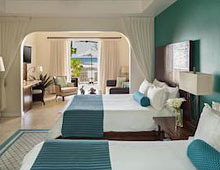 Hotel
Hotel 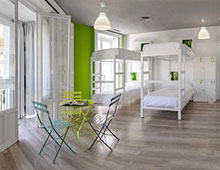 Budget accommodations
 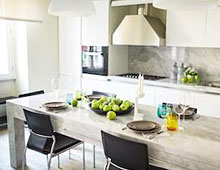 Apartments
  Family Hotel
 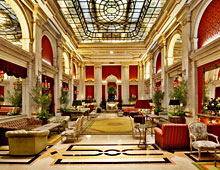 Luxury Hotel
  Resorts