Neapolitan pizza: where all the world’s pizzas are born
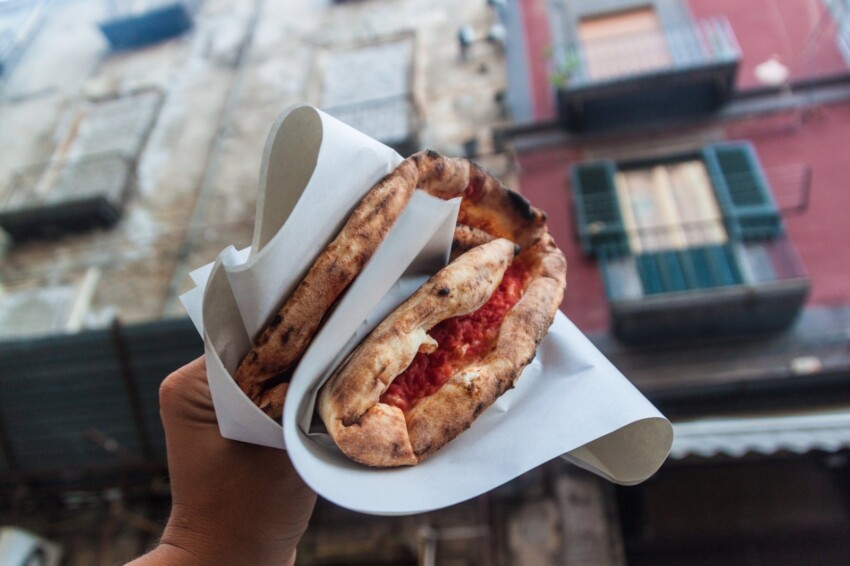
Neapolitan pizza is the most famous dish in the world and the only one registered in UNESCO’s intangible cultural heritage, not as a dish, but as the “practice of the Neapolitan pizza maker”, recognising that it’s not just a recipe but an artistic gesture passed on orally from generation to generation.
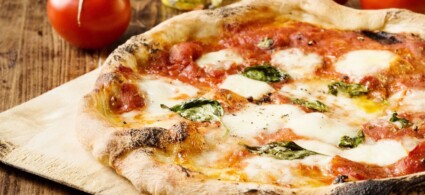
The rules of the Associazione Verace Pizza Napoletana are strict: dough made with type 00 or 0 flour, leavening for at least 8 hours (ideally 24), baking in a wood-fired oven between 430 and 480°C for 60-90 seconds, a high and soft crust, a thin centre that doesn’t buckle under the weight of the toppings. There are two original versions: the margherita (San Marzano DOP tomato, fior di latte from the Lattari Mountains or buffalo mozzarella, fresh basil, extra virgin olive oil) and the marinara (tomato, garlic, oregano, oil, no cheese, and not for economy reasons but simply because that’s how it is).
“Wallet pizza”, or pizza to go, is folded into a “booklet” shape before eating, in four sections, holding it in your hand: it’s a sign that the dough is correctly soft and that the crust hasn’t gone hard.
The average price of a margherita in a pizzeria ranges between €5 and €9 depending on the area and the restaurant; paying more isn’t necessarily a sign of superior quality.
Pizzerias not to miss
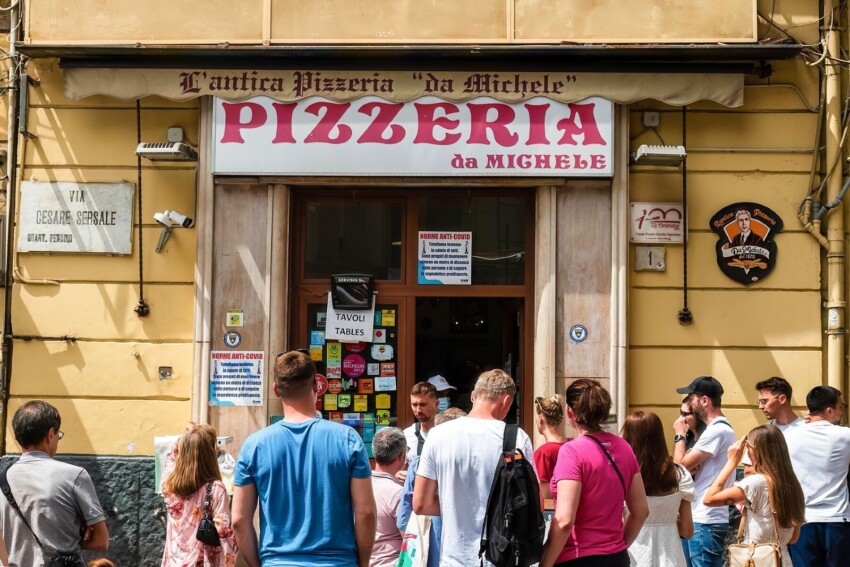
Antica Pizzeria da Michele (Via Cesare Sersale 1-3) is the most famous in the world and perhaps the most austere: opened in 1870, it serves only margherita and marinara with no other variations. The queues are long, the surroundings are spartan, and the pizza is extraordinary in its absolute respect for tradition. It’s the pizzeria made famous to the international public by the film Eat Pray Love with Julia Roberts, but Neapolitans had been coming here for five generations already.
Gino Sorbillo (Via dei Tribunali 32) is the other institution in the historic centre: founded in 1935 by the Sorbillo family, all 21 children of the founders became pizza makers, and it’s now the benchmark for contemporary pizza respecting tradition.
Pizzeria Starita (Via Materdei 27/28), in the Rione Sanità, is considered by many to be the best in the city and has an equally rich history; its dough is particularly light and easy to digest.
Concettina ai Tre Santi (Via Arena della Sanità 7), run by Ciro Oliva in the heart of the Sanità, is the reference point for those seeking innovation within tradition: the alley behind the restaurant, where you can dine in summer surrounded by the neighbourhood’s buildings, is one of Naples’ most memorable experiences.
For a wider overview, consult our guide to the best pizzerias in Naples.
Learn to make pizza!
If you want to go beyond simply tasting, this hands-on pizza-making workshop allows you to learn traditional Neapolitan techniques directly from a local chef: from the dough, worked using the mozzatura technique, which is 600 years old, to cooking in a Neapolitan oven. The experience, lasting around 2 hours, includes an appetiser of bruschetta with fresh ingredients and a drink to enjoy with your freshly baked pizza. At the end you’ll also receive a pizza maker’s diploma to take home as a souvenir.
Neapolitan street food
Along with Palermo, Naples is the Italian capital of street food. It’s not a recent phenomenon or something created for tourists: Neapolitans have eaten in the street since the city had a million inhabitants packed into a few square kilometres and many families didn’t have a kitchen.
Partenopean street food has survived modernisation because it works: it’s cheap, it’s good, you can eat it while walking between one alley and another, and every bite tells centuries of popular history.
Fried pizza
Fried pizza is the oldest form of Neapolitan pizza and was most popular after the Second World War when a wood-fired oven was a luxury: the dough was fried in boiling oil, which was cheaper and more accessible.
There are two main versions. Closed fried pizza, filled with ricotta, cicoli (fried pork rinds), mozzarella and pepper, is a puffy, savoury cushion eaten while walking, piping hot, held in paper. Montanara is fried pizza then finished in the oven with tomato and cheese, a hybrid of the two cooking methods.
La Masardona (Via Giulio Cesare Capaccio 27, near Central Station) is the temple of Neapolitan fried pizza, open from dawn; Zia Esterina Sorbillo (Via dei Tribunali 35) is the contemporary and highly rated version. Di Matteo (Via dei Tribunali 94) is a classic in 1950s style where fried pizza alternates with pasta frittata.
The cuoppo
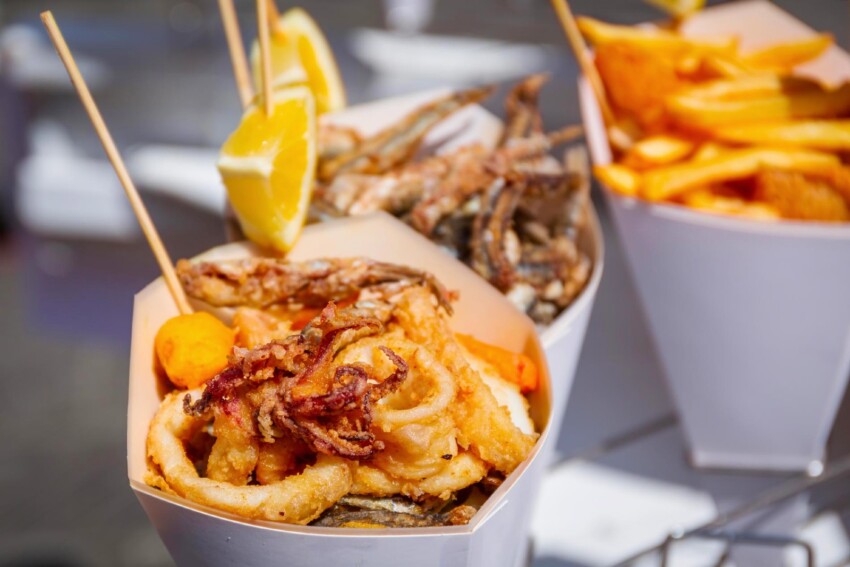
The cuoppo, from the Neapolitan coppo, cone, is the iconic format of Neapolitan street food: a sheet of parchment paper rolled into a cone shape that holds a selection of assorted fried foods. The classic cuoppo di terra contains potato croquettes (filled with mozzarella and parsley, crispy outside and melting inside), pasta frittata (pasta timbales in béchamel sauce, fried in breadcrumbs), empty zeppoline (fried risen dough), scagliozzi (fried polenta in triangles), courgette flowers in batter and sometimes small arancini. The cuoppo di mare contains fried anchovies, prawns, squid rings, cuttlefish and all the humble fish the gulf has to offer: it’s dressed with lemon and eaten hot.
Friggitoria Vomero (Via Cimarosa 44) is a historic reference for cuoppo in the hilltop neighbourhood.
Pasta frittata
Pasta frittata is one of the most representative dishes of Neapolitan genius applied to cooking: leftover short pasta (usually bucatini or macaroni) from the day before, mixed with béchamel, ham, peas and cheese shavings, compressed into a round mould and fried in breadcrumbs until it forms a golden, crispy crust. The contrast between the crispy outside and creamy inside is, according to many, the best possible argument for frying. You’ll find it in almost all the fried food stalls and rotisseries in the city.
Taralli ‘nzogna e pepe
Neapolitan taralli have nothing to do with Puglian taralli: they are crispy dough rings made with sugna (lard) and plenty of black pepper, and in some versions enriched with toasted almonds. The recipe has remained virtually unchanged since the eighteenth century, when they were sold by street vendors as a cheap snack for market workers. The flavour is fatty, peppery and irresistibly moreish: it’s impossible to stop at just one.
Tarallificio Leopoldo (Via Poerio 39) and Taralleria Napoletana on Via dei Tribunali are among the best references, but you’ll find taralli in almost all the delis and bakeries in the historic centre.
The marenna and the cuzzetiello
Marenna, literally “snack” in Neapolitan but a complete meal, is the quintessential Neapolitan sandwich: cafone bread (with a hard crust and soft crumb) cut and filled with whatever the delicatessen or the kitchen cupboard has to offer. Cold meats, cheeses, leftover aubergine parmesan, meatballs in ragù, sausage and friarielli, ragù spread on the crumb: any Neapolitan dish can become marenna.
The cuzzetiello is the poor yet ingenious variation: the end part of a cafone bread loaf, hollowed out and filled with the dish of the day, usually pasta and beans, ragù or genovese, eaten as a single bite. It’s street food for bricklayers and labourers, recently making its way into trendy restaurants.
Strino (Via Santa Lucia) and Salumeria Malinconico (Via Benedetto Croce) are two historic addresses for marenna in the centre.
‘O pere e ‘o musso
For the gastronomically brave: ‘o pere e ‘o musso (literally “the foot and the snout”) is one of Naples’ oldest street foods, served by carnacuttari, offal vendors who once presided over neighbourhood markets. It’s pork trotters and veal muzzle, boiled for a long time, served cold dressed with extra virgin olive oil, lemon juice, salt, pepper and often lupini beans and olives. The flavour is gelatinous, intense, absolutely unusual for an unaccustomed palate: it’s one of those dishes that you either love immediately or reject just as quickly.
The Pignasecca market, near Piazza Carità, is the right place to find it in its most authentic version.
Neapolitan street food tour
To navigate the best street food tastings without wasting time, it’s worth considering this gastronomic walking tour with a local guide, which starts from Piazza Bellini and crosses the historic centre along the Decumani.
In around 2 hours you’ll taste the most representative specialities, from fried pizza to gelato, passing through a visit to a limoncello factory, with stories of the legends and origins of each dish. A concrete way to discover where Neapolitans really eat, away from places designed for tourists.
Signature dishes of Neapolitan cuisine
Beyond pizza, Neapolitan cuisine is a universe of flavours that few visitors explore fully, often because pizza’s reputation overshadows everything else. That’s a mistake: the pasta, fish and meat dishes of the Parthenopean tradition rank among the most complex and satisfying in all of Italian cuisine.
Ragù napoletano
Neapolitan ragù bears no resemblance to Bolognese ragù—it’s not minced meat sauce. It’s something entirely different and, to many, incomparably superior. It’s a tomato sauce cooked with large chunks of meat: beef rolls stuffed with parsley, garlic and hard-boiled eggs, veal fricandeau, sausages and pork ribs, simmering gently on the stove for a minimum of 4–6 hours, sometimes overnight. The result is a dark red, almost brown sauce, dense and rich, with an aroma that permeates your entire home and wafts into the street.
The traditional pasta for ragù are hand-broken ziti or torchio-pressed macaroni; the meat becomes the second course. Ragù is the quintessential Sunday dish, the measure of Neapolitan identity: every family has its own recipe and every Neapolitan swears their mother’s is the best.
The restaurant Tandem Ragù (Via Giovanni Paladino 51) is entirely dedicated to ragù in all its variations; a worthwhile experience even for returning visitors to Naples.
Pasta alla genovese
Pasta alla genovese is Naples’ most unknown dish outside Campania, and arguably its finest. Despite its name, it has nothing to do with Genoa: it’s called that likely because Genoese merchants introduced it to the city in the 17th century, preparing a humble dish from leftover meat and onions.
The recipe is deceptively simple: a cut of veal (usually the muscle or silverside) cooked for hours in an ocean of onions, traditionally the sweet red onions of Montoro, until the meat falls apart and the onions caramelize into a dense, sweet and deeply aromatic sauce. The meat becomes the second course; the sauce dresses mezzanelli, broken candele or paccheri pasta. It’s a labour of love requiring at least 4 hours of cooking time, and not something you’ll find in tourist-oriented restaurants.
L’Osteria della Mattonella (Via G. Nicotera 13), in the Spanish Quarter, serves it only twice a week using Antonietta Imperatrice’s recipe, which she’s been perfecting for decades; Locanda del Cerriglio (Via del Cerriglio 11), one of Naples’ oldest inns, is another essential address.
Pasta and potatoes, pasta and beans, pasta and chickpeas
The trinity of pasta with legumes represents the oldest and most popular heart of Neapolitan cuisine: dishes born from poverty that have attained a rare level of gustatory complexity.
Pasta and potatoes with smoked provola is the most beloved: a thick, creamy soup where short pasta and chunky potatoes merge into one harmonious whole, eaten almost like risotto, with provola melting into savoury strands.
Pasta and beans with mussels, Naples’ version of the dish, adds seafood to the legumes in a pairing that always surprises first-time tasters. You’ll find all these dishes in traditional trattorie in the historic centre and the Rione Sanità neighbourhood, rarely in waterfront restaurants catering to tourists.
Octopus alla Luciana and seafood
Naples’ relationship with the sea translates into extraordinary fish cuisine—renowned for both freshness and variety.
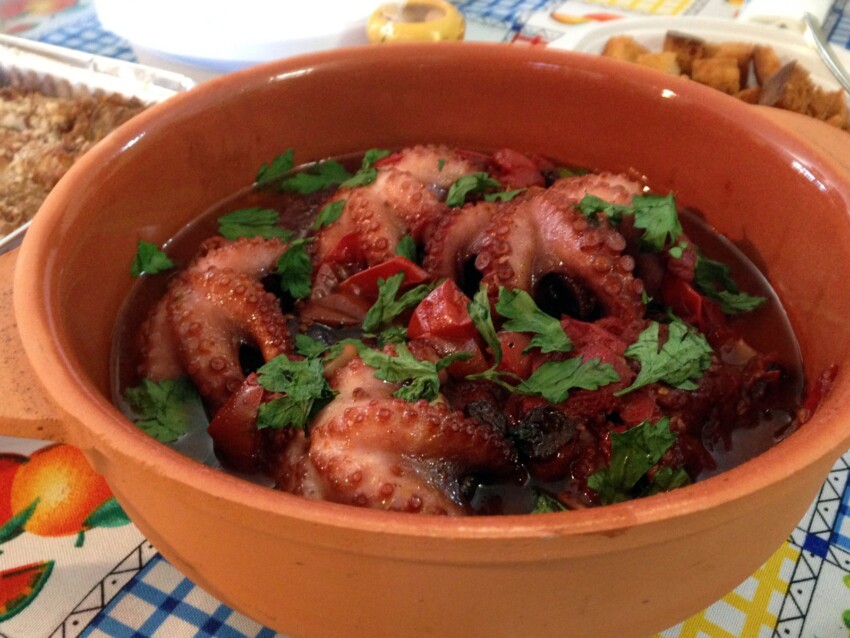
Octopus alla Luciana, braised in a casserole with Vesuvian tomatoes, Pantelleria capers, black olives and extra-virgin olive oil, with no added water (the octopus releases plenty), is arguably Naples’ most representative seafood dish: tender, flavourful, with a sauce that demands bread.
Mussel pepperata is even simpler and even better: shelled mussels pan-fried with generous quantities of black pepper, their cooking liquid serving as a broth, finished with a squeeze of lemon.
Mixed-catch fry—anchovies, red mullet, prawns, small hake and other small fish, breaded and fried—is the ultimate seafood snack.
Cicciotto a Marechiaro (Calata Ponticello a Marechiaro 32) is Naples’ most romantic seafood restaurant with a sea-facing terrace in Posillipo; Mimì alla Ferrovia (Via Alfonso d’Aragona 21) is the historic institution dating from 1943 that has welcomed generations of Neapolitans and celebrities from around the world.
Sausage and friarielli and other meat dishes
Neapolitan cuisine isn’t solely about the sea: sausage and friarielli is the most beloved meat dish of popular tradition, found in every respectable trattoria.
Friarielli are Campania’s version of turnip greens, pan-fried with garlic, oil and chilli until slightly bitter and crispy, accompanying pork sausages in a flavour combination that rarely fails.
Aubergine parmigiana—layers of fried aubergine alternating with ragù, mozzarella and Parmesan—is another Neapolitan preparation of the highest calibre, perfect as an antipasto or as a main course.
Salt cod is ubiquitous: fried in batter, baked with potatoes and olives, prepared in zimino or alla pizzaiola, this versatile ingredient features across Parthenopean cooking. La Baccalaria (Vico Sedil Capuano 30, near Piazza Bovio) is an osteria entirely devoted to salt cod in all its guises.
Neapolitan cakes and pastries

Naples’ pastry tradition ranks among Italy’s richest and technically most accomplished, with cakes rooted in the convent cooking of the 17th and 18th centuries. Nearly all the great Neapolitan cakes originated in the kitchens of enclosed monasteries, where nuns had the time, skills and quality ingredients to develop complex recipes.
Sfogliatella
Sfogliatella is the symbol of Neapolitan pastry work, dividing Neapolitans into two irreconcilable camps: riccia (curled) or frolla (shortcrust). The riccia features a shell of paper-thin puff pastry layered in hundreds of sheets that shatter between your teeth in a cascade of crisp flakes; the frolla wears a soft, buttery shortcrust envelope that yields gently to the bite. Both share an identical filling: ricotta, semolina, sugar, candied fruit and cinnamon.
The sfogliatella was born in the Santa Rosa convent in Conca dei Marini, on the Amalfi Coast, in the 17th century; it arrived in Naples in the 19th century thanks to pastry chef Pintauro. Attanasio (Vico Ferrovia 1/4, near Central Station) bakes them continuously throughout the day, always warm and fragrant: it’s where you queue for the city’s freshest sfogliatella. Pintauro (Via Toledo 275) is the direct descendant of the original pastry shop, still on Via Toledo.
Rum baba
Babà is the quintessential Neapolitan cake, the king of Parthenopean pastry: a soft yeast cake shaped like a mushroom (or a cylinder in modern versions), soaked in a syrup of water, sugar and rum until completely saturated—undrinkable perhaps, but utterly irresistible.
The babà’s story is fascinating: it reached Naples from Central Europe, likely Poland or Alsace, via the Bourbon court in the 18th century, and was transformed into something entirely different from the original. The Neapolitan version comes small (the classic “babàino” from a pastry shop) or giant (sliced and filled with cream, strawberries or chocolate).
Scaturchio (Piazza San Domenico Maggiore 19) and Carraturo (Via Roma) are two historic pastry shops with excellent babà.
Pastiera napoletana
Pastiera is the Easter cake par excellence, though today it’s available year-round in nearly every Naples pastry shop. The base is a shortcrust shell; the filling is a blend of wheat cooked in milk, fresh ricotta, eggs, sugar, candied citron and orange peel, and orange-flower water that perfumes the cake distinctively and delicately. The surface is decorated with a lattice of shortcrust pastry.
According to legend, the pastiera was created for Parthenope, the siren who founded Naples, using the seven gifts of the sea; tradition holds that the pastry strips on the surface represent the street plan of ancient Neapolis.
Scaturchio and most historic Naples pastry shops produce it year-round.
Fiocco di neve and contemporary cakes
Fiocco di neve is Naples’ only major cake from the 20th century: invented in 2015 by Ciro Scognamillo at the Poppella pastry shop (Via Arena della Sanità 29), it’s a soft white brioche filled with milk cream, whipped cream and vanilla, small enough to hold in one hand, lukewarm, melting literally on your tongue.
It’s become so popular that queues form daily outside the Sanità shop, and imitations abound throughout the city, but Poppella’s original remains unbeatable.
Other entries in Neapolitan pastry to know: St Joseph’s zeppole (fried or baked beignets filled with pastry cream and topped with a maraschino cherry, typical of 19 March but available year-round), struffoli (little fried pastry balls in honey syrup, typical at Christmas), roccocò (hard circular biscuits with almonds and spices, a Christmas specialty), and pizza di nonna (a sweet rustic tart filled with wheat paste, ricotta and eggs).
Neapolitan coffee
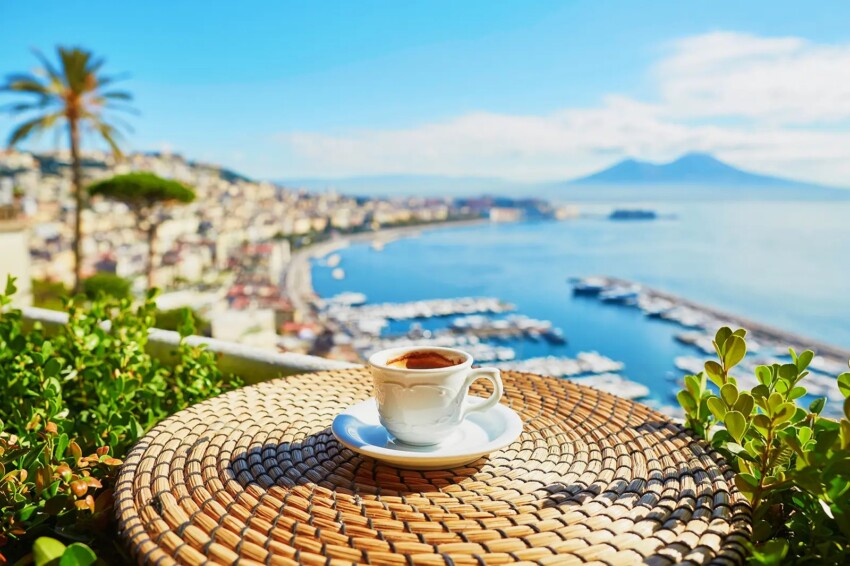
Neapolitan espresso differs from any other Italian espresso: denser, more bitter, with a thicker crema, served in a preheated cup and consumed standing at the bar in less than two minutes. The secret lies in the blend (with a higher percentage of Robusta than in northern Italy), the machine’s pressure and Naples’ water—which Neapolitans swear is essential and impossible to replicate elsewhere.
Coffee is drunk this way in Naples: standing, at the bar, hot, bitter (or with very little sugar), without discussion of cappuccinos at three in the afternoon.
The tradition of suspended coffee is one of the most beautiful inventions of Neapolitan popular culture: you pay for a coffee for yourself and a coffee “suspended” that remains available for anyone who enters the bar without the means to afford one. It’s an act of anonymous generosity that has existed in Naples since at least the late 19th century.
Gran Caffè Gambrinus (Piazza del Plebiscito 1/Via Chiaia 1/2) is Naples’ most famous historic café, opened in 1860 and frequented by Oscar Wilde, Matilde Serao, Gabriele D’Annunzio and generations of Neapolitan intellectuals: its Liberty-style salons are among the waterfront’s attractions, even just for a pastry break. Scaturchio in Piazza San Domenico Maggiore and most of the historic bars on Via dei Tribunali are the alternatives in the historic centre.
Historic trattorie
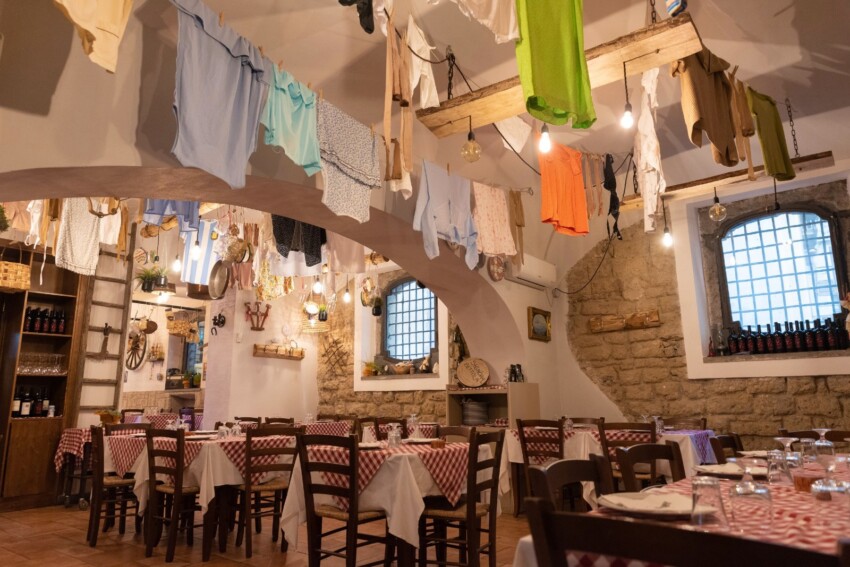
Naples has a concentration of historic trattorie unmatched by Italian cities of comparable size: dozens of establishments founded before the Second World War, run by the same families for three or four generations, with handwritten menus that change daily and hospitality blending care with irony. They’re not restaurants in the formal sense: they’re extensions of Neapolitan domestic cooking, where you go to eat well without ceremony.
Trattoria Nennella (Vico Lungo del Gelso 103, Spanish Quarter) is probably the most famous among tourists, celebrated for its loud waiters, generous portions and surprisingly low bills; the boisterous atmosphere is part of the menu.
Mimì alla Ferrovia (Via Alfonso d’Aragona 21), a stone’s throw from Central Station since 1943, has remained unchanged for decades: mussel soup, candele alla genovese, salt cod and seafood delicacies in a setting where photographs of famous patrons paper the walls.
Locanda del Cerriglio (Via del Cerriglio 11) is one of Naples’ oldest inns, opened in 1300, frequented by Caravaggio before he was attacked on these streets in 1609, and serves parmigiana, ragù, genovese and fish according to recipes unchanged for centuries.
Osteria della Mattonella (Via G. Nicotera 13) in the Spanish Quarter is small, familial and makes no concessions to tourism: Antonietta’s genovese and seasonal fries are worth any queue.
Tandem Ragù (Via Giovanni Paladino 51) is Naples’ only restaurant entirely devoted to Neapolitan ragù: five different versions, all slow-cooked, to eat with pasta or straight from a bread cone.
For seafood outside the historic centre, Cicciotto a Marechiaro (Calata Ponticello a Marechiaro 32, Posillipo) has one of Naples’ most beautiful sea-facing terraces and a seafood kitchen that prioritises the local catch.
Those seeking contemporary Neapolitan cuisine without abandoning tradition should consider Palazzo Petrucci in Posillipo, Naples’ first Michelin-starred restaurant, where seafood ragù and layered pastiera rework tradition with technique and creativity.
Markets and where to buy local products
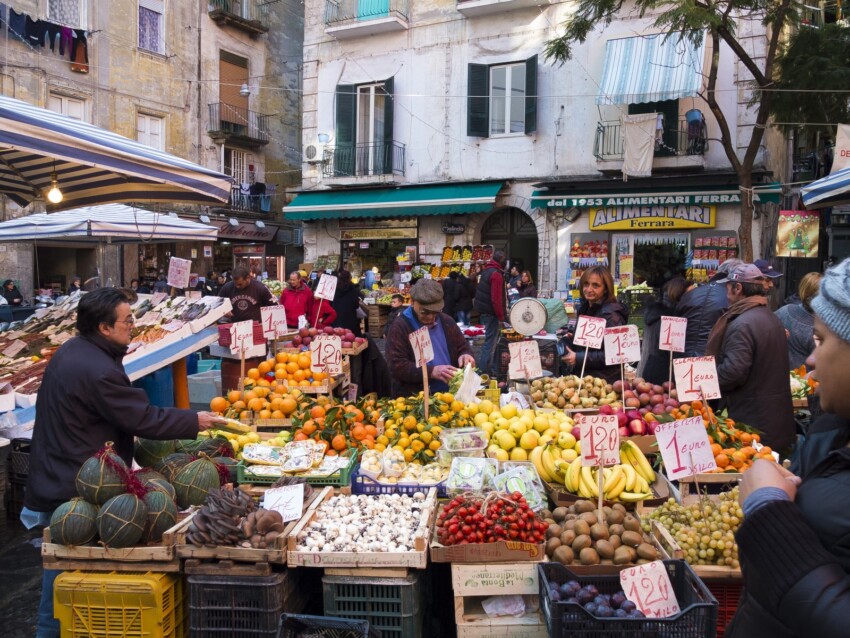
The Pignasecca market, stretching between Piazza Carità and Via Pignasecca just a stone’s throw from Via Toledo, is the most vibrant neighbourhood market in central Naples and one of the best places to source local produce: fresh mozzarella, Piennolo tomatoes strung together in bunches, Neapolitan sausages, friarielli, the freshest fish, Campanian fruit and vegetables. It’s open every morning except Sunday and also offers street food straight from the stalls: fried seafood, octopus and battered salt cod sold directly from the vendors.
The Porta Nolana market (near Circumvesuviana station) is instead the premier fish market, operating early each morning: it sells the night’s catch and the air is thick with the scent of sea and iodine.
For take-home products, the shops along Spaccanapoli and Via Toledo stock limoncello from the Amalfi Coast, packaged taralli biscuits, Gragnano pasta (the artisanal dried pasta produced in the town just outside Naples, considered the finest in Italy), vacuum-packed mozzarella, San Marzano tomato preserves, Cetara anchovies in oil and colatura di alici, the fermented anchovy sauce that is the direct heir to Roman garum.
For Campanian wines—Falanghina, Greco di Tufo, Fiano di Avellino and the red Aglianico del Taurasi—wine shops in Chiaia and the historic centre offer a wide selection at prices considerably more reasonable than restaurants.
Practical tips for eating in Naples
A few practical pointers to make the most of your Neapolitan gastronomic experience. Restaurants marked with large tourist signs in busy areas—the Santa Lucia waterfront, Piazza Plebiscito, streets around the harbour—tend to have inflated prices and mediocre quality: the best experiences are found one or two streets away from the most well-trodden paths.
In historic Neapolitan trattorias, a cover charge runs between €1.50 and €3 per person; a full meal with a main course, second course, house wine and dessert averages €25–35; in simpler establishments you’ll spend under €20. Quality pizzerias have surprisingly reasonable prices: a margherita costs between €5 and €8 almost everywhere.
Don’t be in a rush: in Naples, service moves at the pace of Neapolitan cooking, not to the rhythm of tourists with packed schedules. The best trattorias often don’t accept online reservations and should be contacted by phone or you can simply drop by and hope for a free table.
For nightlife and dining, consult our guide to Naples nightlife: many venues open late also serve food. If you’re staying in the Chiaia or Vomero areas, you can take advantage of the excellent selection of osterie and wine bars in these upmarket neighbourhoods.
 Hotel
Hotel  Budget accommodations
  Apartments
  Family Hotel
  Luxury Hotel
  Resorts