
Scarpato Port Parking Naples
119 reviews
Book now
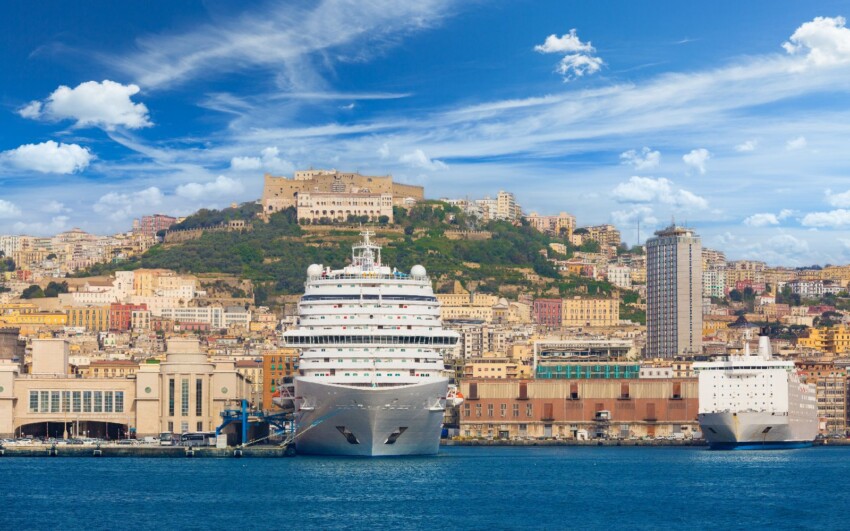
Regarded not only as Campania’s most important maritime hub but also one of Europe’s most significant ports, Naples Port sits in an inlet north of the Gulf of Naples and stretches for approximately 12 km. Built by the ancient Greeks, this port has always played a strategic role for military, commercial and tourist reasons, becoming one of the principal ports of the Mediterranean.
During the Bourbon reign (in the 18th century) Naples Port established itself as one of Europe’s finest, ready to welcome Venetian, Genoese, English, Turkish and numerous other vessels. It was precisely during these years that the Arsenale became a major shipyard, launching the Mediterranean’s first steamship in 1818, named “Real Ferdinando I”.
Following Italian unification, the port lost some importance, but with the advent of the Fascist government it regained prestige, as it was seen as the port connecting Italy’s colonial possessions. During this twenty-year period, Mussolini commissioned the construction of the new Maritime Station, designed by architect Cesare Bazzani.
Within the port, traffic is currently distributed as follows: cruise ships dock at the Molo Angioino, whilst hydrofoils depart and arrive at the Molo Beverello and Molo Mergellina, connecting Naples with the islands in the Gulf (Capri, Ischia, Procida) and other coastal destinations. Calata Porta Massa, Molo Immacolatella Vecchia and Molo Calata Piliero are piers from which ferries depart and arrive.
Naples Port is easily accessible by car via the A3 motorway, taking the Naples Centre/Port exit. Alternatively, those arriving from the south can take the SS 18 Tirrena Inferiore/SR18 road.
For those wishing to reach the port by public transport, the Alibus bus service, operated by ANM, connects Naples Port, the main railway station and Naples Capodichino airport. The service runs daily with departures every 20 minutes or so.
For those preferring to use the underground, take Line 1 and get off at Università station for Calata Porta di Massa (ferries) and at Municipio station for Molo Beverello (hydrofoils). A free shuttle service also operates between the two piers. Finally, tram line 1 also connects Piazza Garibaldi to Naples Port with stops along Via Marina and Via Colombo.
If you prefer to travel more comfortably, you can always take a taxi, which has fixed standard rates for journeys to Capodichino airport and the main railway station.
Since Naples Port is located in the very centre, in a very busy area, it’s not always easy to find a parking space, so it’s best to prepare ahead and book your parking in advance for the required duration.
Here we list all the useful information about car parks near Naples Port so you can decide where to park your car at your leisure. Booking your parking space in advance not only allows you to avoid driving around looking for a space but also means you can find better rates, as online prices are often lower than on-site rates, and you can frequently find offers and promotions on the internet.
Near Naples Port there are several budget car parks that allow you to reach the port in a short time and at the same time offer the service at a reasonable price.
Car parks generally offer a free shuttle service that takes you to the passenger terminal at the port from which you need to depart. Most of these facilities offer hourly parking, daily rates and subscriptions or agreements. Many of these car parks also offer extra services such as car washing, valet service, luggage storage and much more.
The larger car parks have both covered and uncovered spaces, and the best ones are open 24 hours a day with CCTV monitoring. For those embarking on a cruise, a “Park and Cruise” service is often available, which allows travellers to leave their car in dedicated car parks near the cruise terminal before boarding the ship with peace of mind.
After Rome and Civitavecchia, Naples port ranks third in Italy for cruise ship traffic. Within the port, the pier dedicated to cruises is the Molo Angioino, located within the Maritime Station designed by architect Cesare Bazzani in 1936 at Mussolini’s request.
Large ships from various cruise lines dock in Naples, departing on cruises that allow you to explore the entire Mediterranean. The cruise terminal has 10 berths, arrival and departure lounge, baggage carousels, shops, bars and a conference centre.
From Naples Port depart not only cruise ships but also ferries to Capri, Ischia and major coastal destinations in Campania. Visit the page on ferries to and from Naples to see all routes and book tickets.
In case of need, you can contact the Naples Port Authority, the body representing the highest expression of Maritime Authority. The Naples Port Authority is the headquarters of the Maritime Authority for Campania and is located in a building constructed between 1894 and 1899 at Molo Immacolatella Nuova or Molo Pisacane. You can consult the Coast Guard’s official website to find contact details and opening hours.
Naples' port is situated directly opposite the city centre with plenty of points of interest nearby that are easily reached on foot, including the Maschio Angioino, the Royal Palace, Piazza del Plebiscito, the Umberto I Gallery and shopping streets such as Via Toledo and Via Chiaia. The funicular railway station is also conveniently close to the port, whisking you up to the Vomero in just a few minutes.




 Hotel
Hotel  Budget accommodations
  Apartments
  Family Hotel
  Luxury Hotel
  Resorts