Hotel Royal Continental
Naples - Via Partenope 38/44
Book now
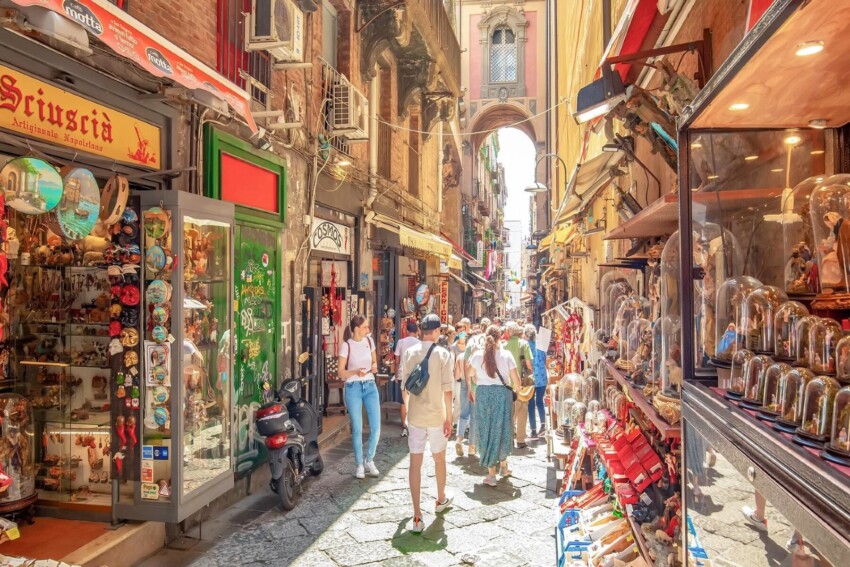
Naples is one of those cities you don’t simply visit – you live them. It boasts the largest historic centre in Europe recognised by UNESCO, four castles, twelve centuries of layered dominions from Greek, Roman, Norman, Angevin, Aragonese and Bourbon rulers, and a density of masterpieces per square kilometre that would make many European capitals pale in comparison.
Above all, it possesses an unrepeatable atmosphere (the roar of Vespas through the alleyways, the aroma of coffee and fried pizza, washing strung between palazzos, the brisk and forthright kindness of Neapolitans) that transforms any itinerary into something far more than a standard tourist tour.
Two or three days simply aren’t enough to see everything, and anyone promising otherwise is doing you a disservice. They are, however, enough to fall in love. The itinerary you’ll find here is designed for first-time visitors to Naples who want to experience the best the city has to offer without getting lost in logistics: walking routes through the historic centre, precise guidance on what to book in advance, tips on where to eat and how to get around.
The third day is dedicated to great day trips beyond the city that transform a standard weekend into a truly complete experience.
The best time to visit Naples is spring (April–May) and early autumn (September–October): the climate is mild, perfect for walking, and the city is less crowded than July and August, when the heat can be oppressive and museums heaving. The spring bank holidays and Christmas period (with its markets and the workshops of San Gregorio Armeno in full swing) are among the most enchanting times, but also the busiest: always book well in advance.
The Campania Artecard is the museum pass offering free or reduced entry to museums and archaeological sites across Campania, including the National Archaeological Museum, Capodimonte, Pompeii and Herculaneum, plus unlimited public transport on the “Naples 3 days” version. If you’re planning to visit at least three of the main paid attractions, the savings are substantial and it’s worth buying online before you travel.
Some attractions require mandatory or highly recommended booking: the Sansevero Chapel with the Veiled Christ sells out quickly and must be booked online several days ahead; the same applies to Naples Underground, tours of the Bourbon Gallery and the Catacombs of San Gennaro.
To reach the centre from Naples Capodichino Airport, you can use the Alibus, which reaches Piazza Garibaldi and Piazza Municipio in about 20–30 minutes.
The first day is entirely devoted to Naples’ historic centre, a UNESCO World Heritage Site since 1995: a compact area almost entirely walkable on foot, where every alley hides a Baroque church, a noble palazzo or a medieval courtyard. The route follows the logic of the three ancient decumani of Greek Neapolis, starting from the north and descending towards the sea.
Begin at Piazza Dante, reachable by metro (Line 1) or on foot from anywhere in the centre: it’s the natural gateway to the historic centre and is surrounded by a semicircle of neoclassical arcades designed by Luigi Vanvitelli. Before venturing into the alleyways, spending the early morning at the National Archaeological Museum of Naples (MANN) is a choice that pays handsome dividends: it houses the world’s most important collection of Roman antiquities, including treasures from Pompeii and Herculaneum, the Farnese Collection with the Farnese Bull and Farnese Hercules, and the Venus in Bikini Room. Allow at least two hours and book online to avoid queues.
Leaving the museum, immerse yourself in the main decumanus, Via dei Tribunali: it’s one of Naples’ most vibrant and authentic stretches, alternating between noble palazzos, historic pizzerias (this is where you’ll find Sorbillo and Di Matteo, two classic destinations for fried pizza and authentic margherita), artisan shops and churches of rare beauty. In Piazza San Gaetano you’ll find the main entrance to Naples Underground: a labyrinth of Greek and Roman tunnels running 40 metres beneath the city, visitable only on guided tours. The visit lasts around an hour and takes you through Greek cisterns from the 4th century BC, galleries used as air-raid shelters in the Second World War and passages so narrow you must proceed sideways with a candle in hand. Book online.
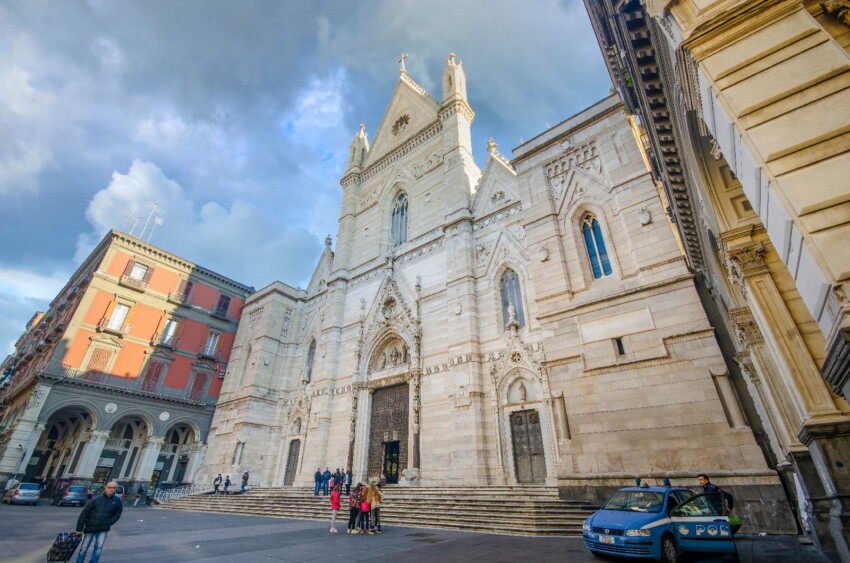
Continuing along Via dei Tribunali, you’ll encounter the Naples Cathedral, the Metropolitan Cathedral dedicated to San Gennaro: inside you’ll find the Royal Chapel of the Treasury of San Gennaro, a masterpiece of Neapolitan Baroque art with frescoes by Domenichino and Lanfranco and the silver reliquary holding the blood of the city’s patron saint. Three times a year, during the blood-liquefaction ritual, thousands of Neapolitans gather in this space to witness the most eagerly awaited event of the Neapolitan religious calendar.
After a lunch break at one of the Via dei Tribunali establishments – a fried pizza or paper cone of mixed fried seafood are the most authentic – head down towards the lower decumanus, better known as Spaccanapoli: the straight road that cuts Naples in two for almost a kilometre, visible from above like a blade through dense urban fabric. Along the route you’ll find the statue of the Nile God (a 1st-century Roman bust recovered from the seabed), Palazzo Carafa and the magnificent church of Santa Maria del Carmine.
Don’t miss turning onto Via San Gregorio Armeno, the presepio (nativity scene) street: here the workshops of master craftsmen are open year-round (not just December) and produce figurines representing both traditional characters and contemporary figures: from Maradona to the Pope, from politicians to music stars. It’s a visual spectacle with no equivalent in any other city in the world, and buying even a single figurine is one of the most authentic souvenirs Naples can offer.
The next essential stop is the Sansevero Chapel with the celebrated Veiled Christ by Giuseppe Sanmartino (1753): a marble sculpture depicting Christ lying beneath a transparent veil, itself carved from marble, rendered with such breathtaking technical skill that legend claims the veil was real fabric chemically petrified. The space is small and visits last 20–30 minutes, but the emotional impact is unforgettable. Online booking is mandatory and sells out weeks in advance during peak periods.
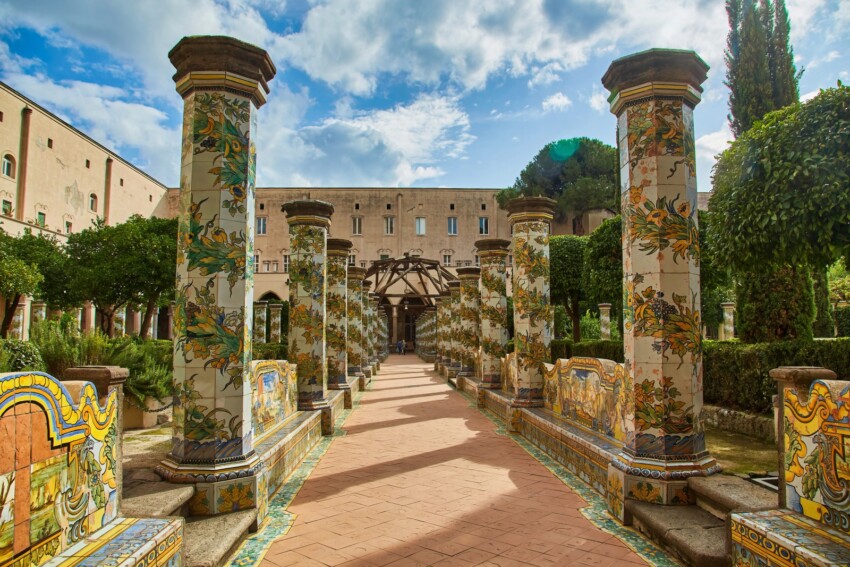
Nearby, the Santa Chiara Complex with its 18th-century majolica cloister, a work by Domenico Antonio Vaccaro, is one of the historic centre’s most delightful surprises: an oasis of peace and colour amidst the chaos of Naples.
Late afternoon, leave the medieval historic centre and head towards the sea along Via Toledo, Naples’ great commercial thoroughfare, stopping at the Toledo Station on Metro Line 1: it’s considered one of Europe’s most beautiful stations thanks to contemporary art installations by artist Robert Wilson, with blue lighting effects evoking ocean depths. It’s worth descending just to see the interiors.
Piazza del Plebiscito is Naples’ living room: one of Italy’s largest squares, dominated by the Basilica of San Francesco di Paola with its neoclassical semicircular colonnade and the Royal Palace, once the Bourbon residence and now a museum. The square is extraordinarily beautiful at sunset and by night, when raking lights emphasise the geometry of the arcades. Just steps away stands the Maschio Angioino (or Castel Nuovo), the 13th-century Angevin fortress with the celebrated Aragonese Triumphal Arch set between towers: entry to the internal civic museum is worth it for the frescoes of the Palatine Chapel.
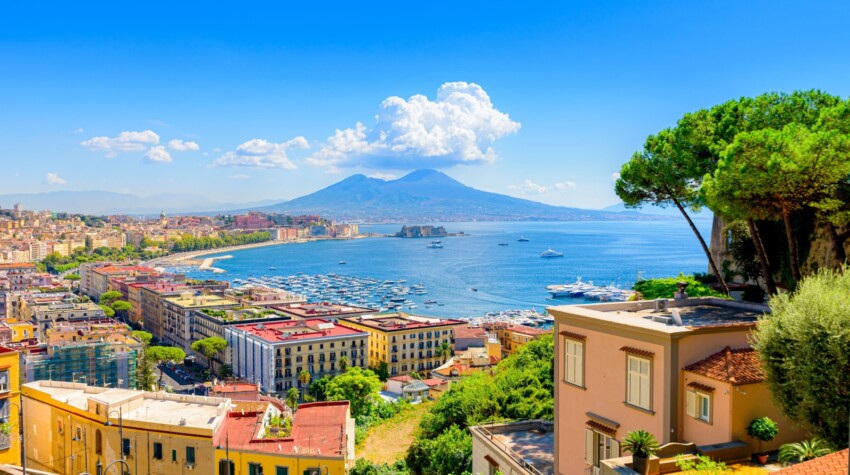
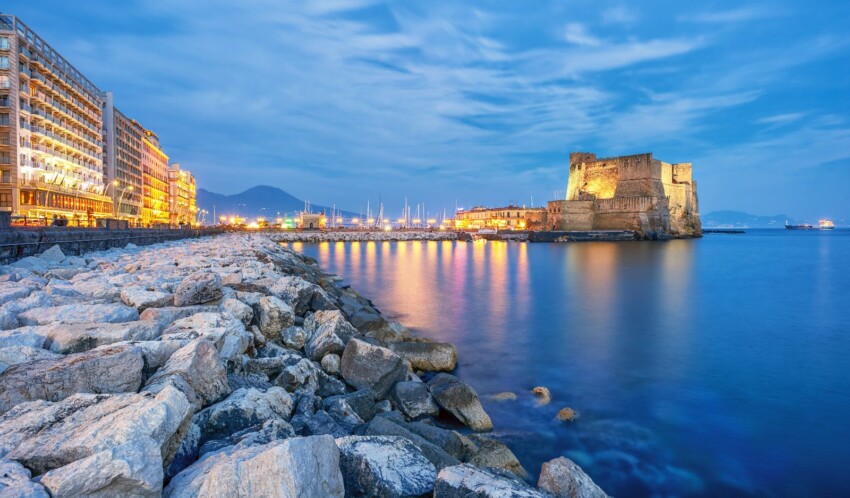
Finish the evening at Castel dell’Ovo, Naples’ oldest castle, situated on the Megaride islet right against the sea: entry is free and the view from the rampart walk, with Vesuvius in the distance and the gulf opening towards Capri, is among the city’s most beautiful vistas, especially at sunset. The Borgo Marinari at the castle’s foot, with its seafood restaurants overlooking the harbour, is ideal for dinner: grab a table in the open air on the jetty and order paranza fry or octopus alla luciana.
The second day explores Naples beyond its monumental landmarks: the Spanish Quarter, the hillside neighbourhoods of Vomero and Posillipo, Rione Sanità and Capodimonte Museum. If Day 1 is Naples of universal history and art, Day 2 is living, contradictory and surprising Naples.
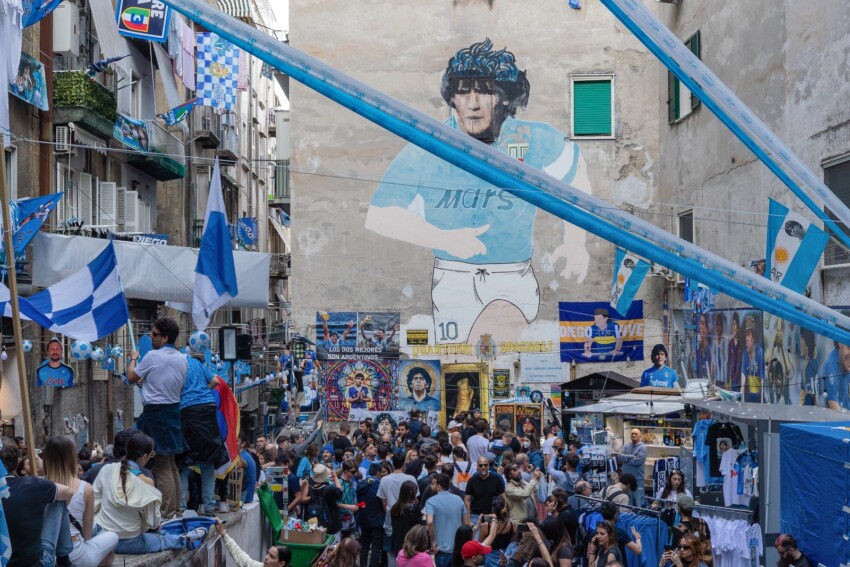
Start from Via Toledo and immerse yourself in the Spanish Quarter: a network of parallel alleyways built by the Spanish in the 16th century to house the royal viceroy’s troops, today one of Naples’ most authentic and photographed neighbourhoods. Here the city is still that of Eduardo De Filippo: washing strung between buildings, scooters speeding at impossible velocities, children playing football, the aroma of ragù and coffee mingling with that of pizzerias opening early in the morning.
The focal point of your Spanish Quarter walk is Largo Maradona at Via Emanuele De Deo 60: a mural painted in 1990 by Mario Filardi to celebrate Naples’ second league title, which has become one of Italy’s most moving secular shrines. The votive altar at the foot of the building, with candles perpetually lit, shirts, photographs and letters in dozens of languages, tells you more about Diego Armando Maradona’s relationship with this city than any guidebook.
Return to the seafront by heading down Via Chiaia and Via dei Mille, the city’s elegant shopping district, for a coffee at Gran Caffè Gambrinus on Piazza del Plebiscito: Naples’ most famous historic café, frequented by Oscar Wilde, Matilde Serao and Gabriele D’Annunzio.
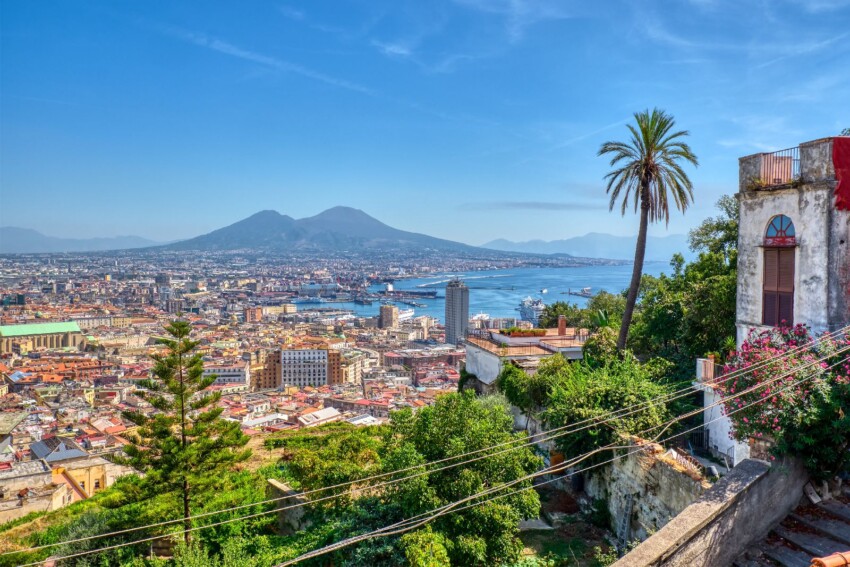
Head up to Vomero via the Chiaia funicular (Parco Margherita stop) or the Centrale funicular (Piazza Fuga stop): in a few minutes you’ll escape the chaos of the historic centre for the peaceful, affluent hillside neighbourhood. Your first stop is Castel Sant’Elmo, a star-shaped medieval fortress that dominates all of Naples from above with an unparalleled 360-degree view: you can simultaneously see Vesuvius, the bay, Posillipo, the Phlegraean Fields and the islands. Admission is charged; ArteCard holders can enter free.
Adjacent to the castle, the Charterhouse and Museum of San Martino is one of Naples’ most important complexes: a 14th-century charterhouse converted into a civic museum, with cloisters of extraordinary elegance, a picture gallery featuring works by Ribera, Caravaggio, Stanzione and Battistello, and the legendary Nativity Scene Collection with the monumental Cuciniello presepe, the largest and most complex 18th-century Neapolitan nativity scene, permanently displayed in a dedicated room. The museum also houses the Charterhouse hanging garden, overlooking the bay with a view that Grand Tour travellers already found marvellous.
In the afternoon, if you have the energy and interest in Renaissance and Baroque art, the Museum and Royal Woods of Capodimonte is definitely worth a visit: the Bourbon palace on the Capodimonte hill houses one of Italy’s most important art galleries, with works by Raphael, Titian, Caravaggio, Pieter Bruegel the Elder and the celebrated Portrait of Antea by Parmigianino. The Royal Woods surrounding the palace form Naples’ largest public park. The visit requires at least 2–3 hours and admission is covered by ArteCard.
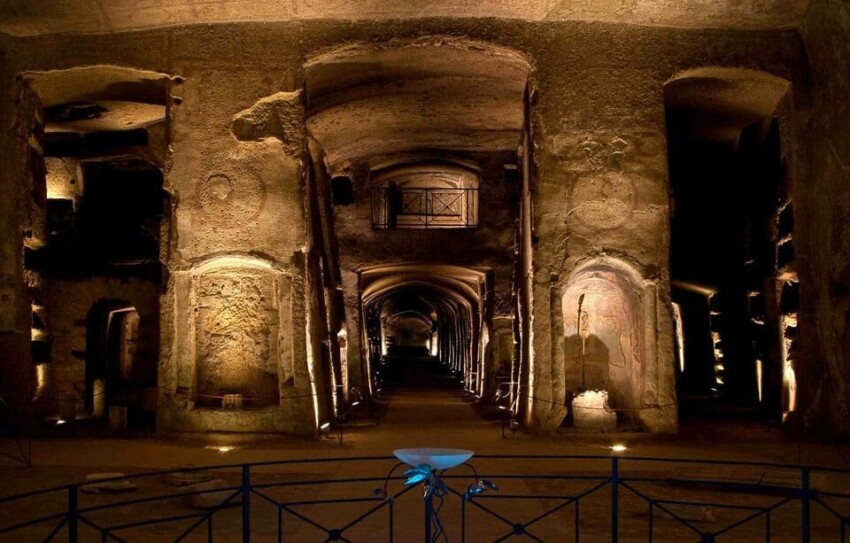
Rione Sanità surprises visitors more than any other Naples neighbourhood: a working-class district at the foot of the Vomero hills, separated from the historic centre by 19th-century viaducts spanning above it, with its own distinct character of Christian catacombs, Baroque palaces, local markets and a popular energy found nowhere else. The Catacombs of San Gennaro, accessible only by guided tour, rank among Naples’ most extraordinary sites: two levels of Christian galleries from the 2nd–5th centuries AD decorated with frescoes and mosaics of exceptional quality, often overlooked by standard tourist routes.
Round off your evening in the Piazza Bellini and Piazza del Gesù Nuovo area, the heart of Naples’ student nightlife scene: tables outside, aperitifs, music spilling from venues, Federico II university students debating everything with characteristic Neapolitan fervour. Find a traditional trattoria for dinner (spaghetti alle vongole, aubergine parmigiana, stewed salt cod) and finish with a crispy sfogliatella (crispy pastry shell with ricotta and candied fruit filling) from Pintauro on Via Toledo, open late.
If you have a third day, Naples opens in three directions that completely change the character of your trip. You can’t do all three: choose based on your interests and remaining energy.
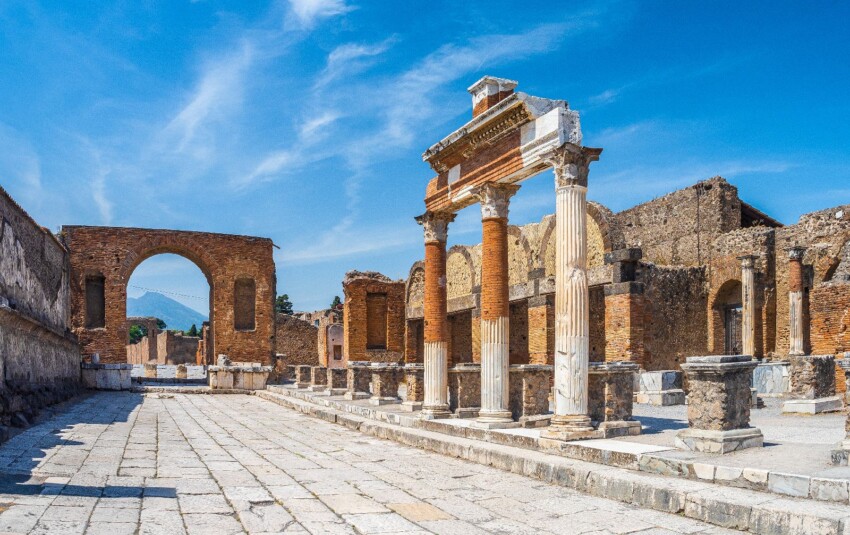
This is the classic excursion and remains unbeatable: walking the streets of Pompeii is an experience that stays with you for years. The city buried by the AD 79 Vesuvius eruption spans 66 hectares, of which roughly two-thirds are accessible today: an entire Roman city with forums, baths, theatres, patrician houses with still-vivid frescoes, bakeries with intact ovens and shops with marble counters. The visit requires at least 3–4 hours; take the Circumvesuviano train from Piazza Garibaldi, arriving in about 40 minutes (Pompei Scavi – Villa dei Misteri stop).
Herculaneum is smaller than Pompeii but often more surprising: its proximity to the eruption (only 7 km from the crater, compared to 14 km for Pompeii) resulted in a different burial, under a layer of solidified mud that preserved organic materials normally lost: charred wooden beams, beds with their webbing still intact, carbonised food, and notably the House of the Bicentenary with the first Christian cross symbol found anywhere in the Roman world.
If you have time, Vesuvius is reachable by shuttle from the Herculaneum excavations: the 30-minute walk to the crater rim rewards you with a unique panorama.
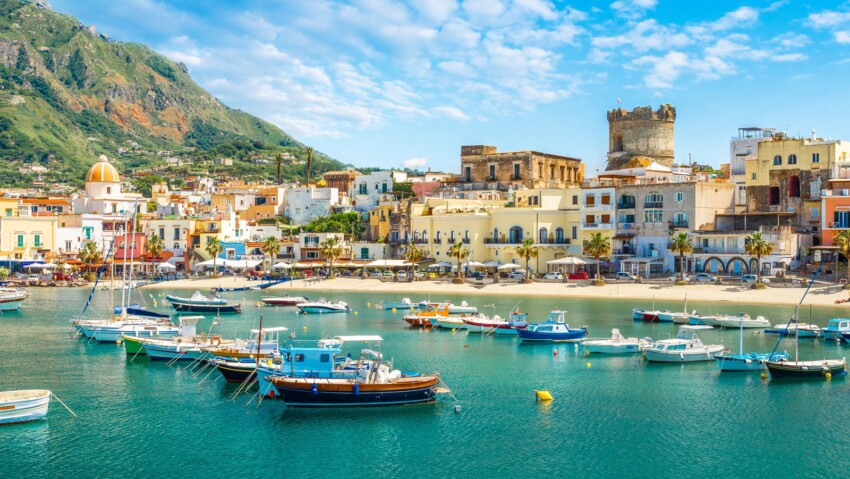
Fast ferries and ferries depart from Naples’ Molo Beverello to the three islands in the bay: it’s one of the most beautiful excursions you can imagine, and you can see plenty even in a day trip. Procida, just 35 minutes by fast ferry, is the smallest and most authentic: pastel-coloured houses, fishermen mending nets, yellow tufa coves and Corricella (Italy’s most photographed fishing village) make it one of the Mediterranean’s most beautiful islands. It was Italy’s Capital of Culture in 2022.
Ischia (45 minutes by fast ferry) is the largest and most developed, with the Aragonese Castle at Ischia Ponte as the main attraction, natural thermal spas at Giardini Poseidon and Negombo, and beaches along the southern coast. Capri (1 hour by fast ferry) is the most famous and exclusive: the Blue Grotto, the Piazzetta, Villa Jovis and the Faraglioni are iconic images of Italian holidays worldwide, with prices and crowds to match their fame.
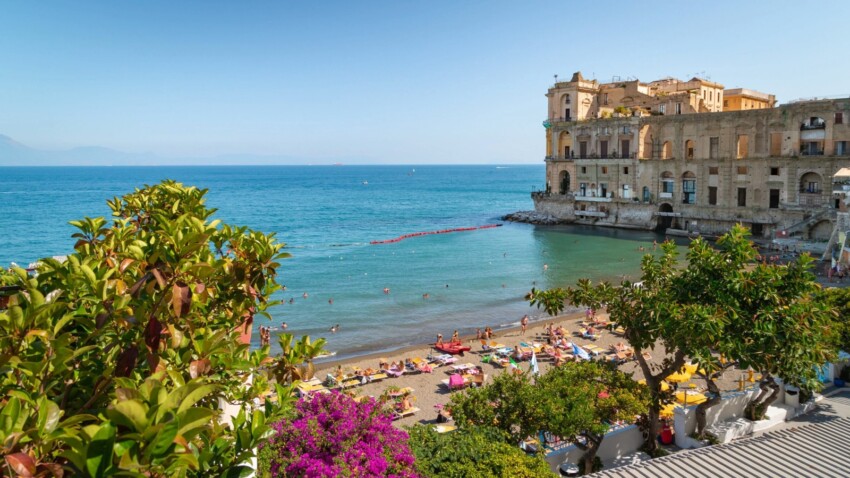
Those preferring to stay within the Naples metropolitan area can devote the third day to the western area of Naples: a less conventional but extraordinary itinerary. Start with a stroll along Via Posillipo to admire Palazzo Donn’Anna and reach Parco Virgiliano, with its panoramic views across the entire bay.
Head down to Gaiola for the Sunken Park, snorkelling or clear-bottomed boat trips over submerged Roman ruins, then continue along Discesa Coroglio to Seiano’s Grotto and Pausilypon Park, with its Roman theatre overlooking the sea.
In the afternoon, the City of Science in Bagnoli, with Corporea (the human body museum) and the 3D Planetarium, rounds off your day in an original way, especially if you’re travelling with children.
For those wanting to venture into the Phlegraean Fields, Pozzuoli and the Flavian Amphitheatre are less than 20 minutes by car.
The best area to stay, especially on your first visit, is the historic centre, between Piazza Dante, Spaccanapoli and Via dei Tribunali: you’re within walking distance of everything and can experience the neighbourhood in the evenings too, when day-trippers leave and the city returns to its residents.
The Chiaia neighbourhood is more elegant and peaceful, with excellent restaurants and good connections to the centre; the Santa Lucia seafront is the quintessential romantic choice, with views across the bay towards Vesuvius. For all accommodation options, consult our guide on where to stay in Naples.
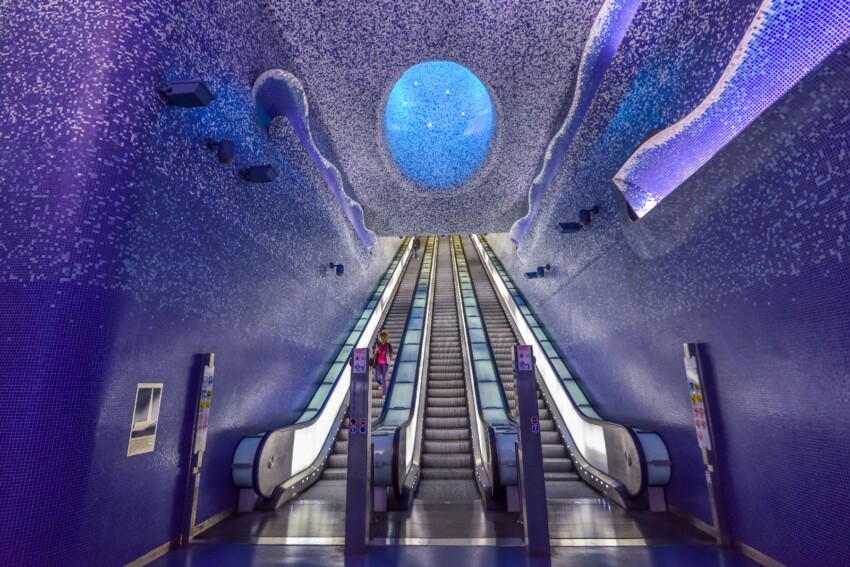
The historic centre is explored almost entirely on foot: distances between main attractions are short and many alleyways aren’t accessible by vehicle.
For longer journeys, the metro is the most efficient option: Line 1 connects the art stations of the centre (Dante, Municipio, Toledo, Università) with Vomero (Vanvitelli) and the airport; Line 2 reaches Fuorigrotta and Pozzuoli.
The Vomero funiculars (Centrale, Chiaia, Montesanto) are the quickest way up the hill; for buses and other transport, you’ll find all the details on public transport in Naples in the dedicated guide.
Avoid driving in the historic centre: traffic is chaotic, restricted traffic zones are numerous and parking in Naples is an adventure best left to locals. Car hire is instead useful for your third day, should you choose to explore the Phlegraean Fields or the scenic roads of Posillipo.
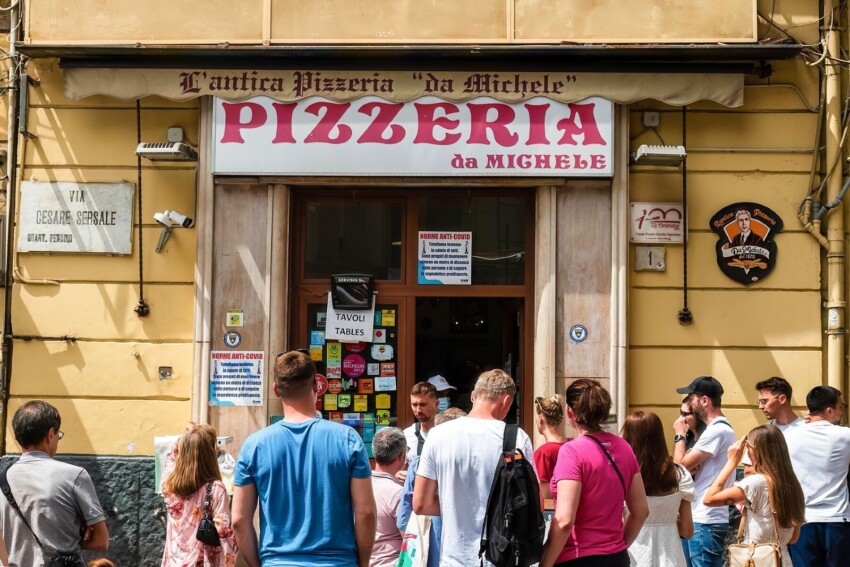
Naples is the world capital of pizza and any guide that doesn’t begin here is lying by omission. Neapolitan margherita pizza (long-fermented dough, San Marzano DOP tomatoes, fior di latte or buffalo mozzarella, fresh basil, extra virgin olive oil) is a dish without equal.
The most celebrated addresses cluster on Via dei Tribunali (Sorbillo, Di Matteo, Trianon) but Neapolitans will tell you the best pizza is always from the pizzeria under their apartment. Don’t miss fried pizza: a puffy pillow of dough filled with pork cracklings, ricotta and pepper, deep-fried in boiling oil. It’s pure street food, eaten standing up and burns your fingers: perfect.
Consult our guide to Naples’ best pizzerias for a curated selection.
Beyond pizza, the cuoppo is Neapolitan street food par excellence: a paper cone filled with mixed fried food containing potato croquettes, pasta fritters, fried polenta and courgette flowers to be eaten walking through the alleyways.
The sfogliatella comes in two versions: riccia (with crispy pastry) and frolla (softer): both contain a filling of ricotta, semolina and candied fruit with cinnamon notes. The best ones are eaten warm, straight from the oven. For dessert, babà au rhum is perhaps Naples’ most universally loved pastry; pastiera wheat pie (traditionally Eastertide but available year-round) is an experience in itself.
Neapolitan espresso coffee, served in warm cups and with a dense crema that forms naturally, has a concentration and balanced bitterness that differs from any other Italian espresso: there’s even the tradition of suspended coffee (paying for an extra one to leave for someone who can’t afford it).
Naples doesn’t enjoy the best reputation when it comes to safety for tourists, but a few simple precautions will eliminate any concerns. Keep your phone in your pocket in the busier side streets and don’t leave bags unattended on café tables. Most unpleasant incidents happen through inattention rather than malice. Don’t be intimidated by what appears to be chaotic traffic: Neapolitan drivers are unpredictable but skilled, and pedestrians who cross with confidence are respected far more than those who hesitate.
Always carry a water bottle with you: public fountains (the famous “fontanine”) dispense free drinking water throughout the historic centre. Wear comfortable shoes with good grip: the cobblestones in the historic centre are slippery in any type of heel, and the steep climbs up to Vomero won’t forgive inadequate footwear.
Churches and monastic complexes require respectful dress: shoulders and knees covered. Pack a lightweight scarf in your bag for impromptu visits.
Naples’ nightlife is lively and goes on well into the early hours: restaurants come alive after 9pm, venues in Piazza Bellini and the Quartieri Spagnoli stay open until 2am–3am at weekends. If you want to experience Naples’ nightlife in its most authentic form, you’d do well to eat late and not be in a hurry. Naples is a city that should be experienced at its own pace, not ours.
 Hotel
Hotel  Budget accommodations
  Apartments
  Family Hotel
  Luxury Hotel
  Resorts