Naples: Royal Palace Entry Ticket with Digital Audio Guide
240 reviews
Explore the Royal Palace of Naples with an audio guide. Enjoy entry to the Time Gallery and the Caruso Museum.
Buy now
From 23,50€ per person
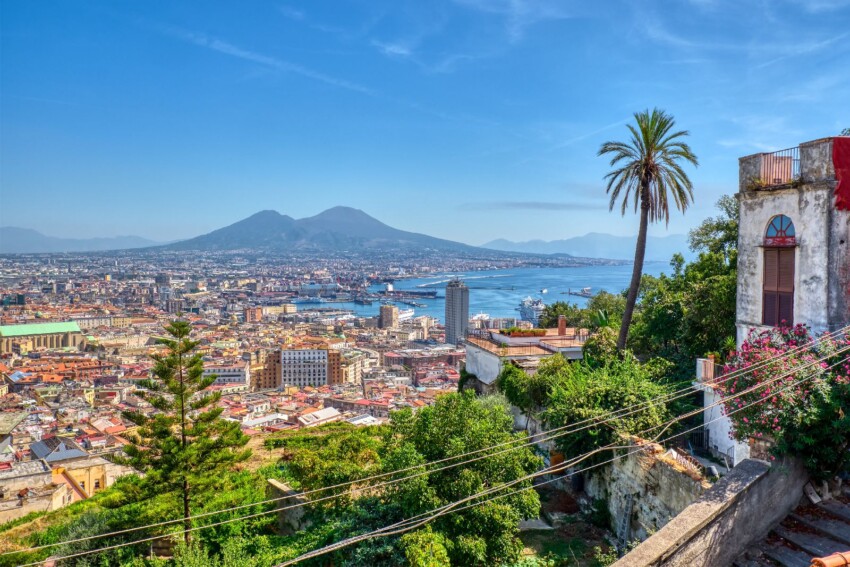
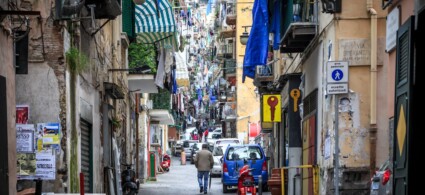
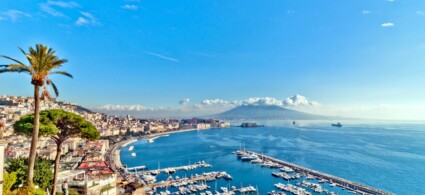
Intricate alleyways lined with historic palazzi, washing strung across windows amidst the chaotic urban bustle: this is Naples, a city enchanting visitors with its utterly unique charm. Dominated by Mount Vesuvius, an active volcano standing 1,281 metres tall, the city sits at the heart of the namesake gulf between the Sorrentine Peninsula and the Phlegraean Fields. A city that never wearies, one whose beauty has captivated famous figures such as Stendhal and Benedetto Croce.
Thanks to its rich historical, artistic, cultural and culinary heritage, Naples has achieved international renown, with visitors arriving from across the globe to witness its treasures firsthand. Its historic centre, considered the largest in all of Europe, is so captivating and monument-rich that it has been declared a UNESCO World Heritage Site.
The city is a true open-air museum: the centre comprises an intricate network of cobbled streets and alleyways, characterised by the presence of imposing palazzi, churches and cafés where you can sample authentic Italian espresso. Naples, or rather Neapolis, the ancient Greco-Roman city, possessed an urban layout distinguished by the presence of three main thoroughfares, the plateiai, which some call the ‘decumani‘, intersecting perpendicularly with smaller streets (roughly three metres wide) known as stenopoi or, more loosely, the ‘cardines‘, which today form the streets of the historic centre.
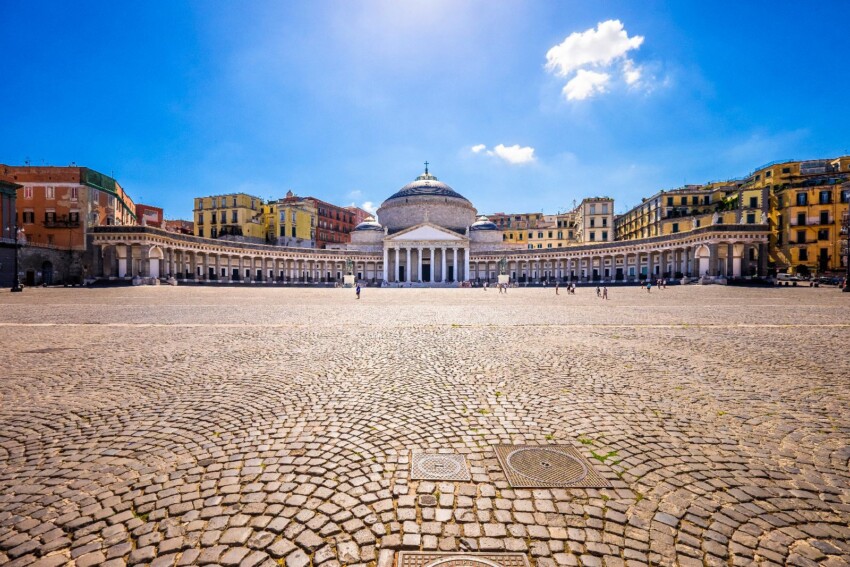
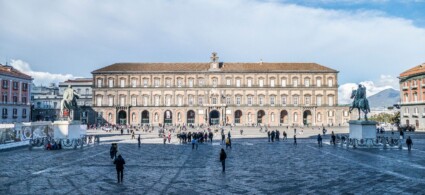
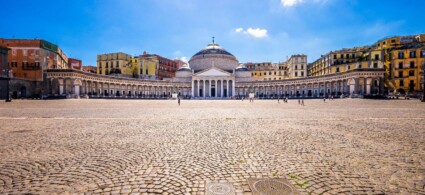
A symbol of Naples, Piazza del Plebiscito is a venue for events and a gathering place for both locals and visitors keen to admire its spacious expanse and the impressive buildings facing onto it, such as the Basilica of San Francesco di Paola, the Royal Palace, the Prefecture building and Palazzo Salerno.
The Basilica of San Francesco, with its striking neoclassical colonnade, dates from the mid-nineteenth century and echoes the architectural forms of the Pantheon in Rome, whilst the Royal Palace, distinguished by its peachy terracotta brick façade, dates from 1600 and was constructed by the people of Naples to receive King Philip III during his visit.
In front of the Basilica stand two equestrian statues depicting Charles III of Bourbon and his son Ferdinand I. The first statue was entirely created by Venetian sculptor Antonio Canova, whilst the second was begun by Canova but completed by Antonio Calì.
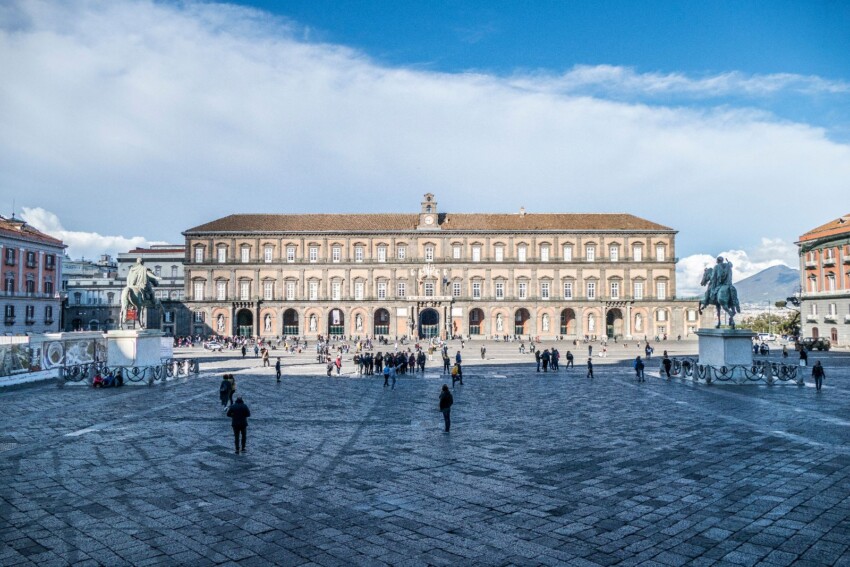
The Royal Palace was constructed in the late sixteenth century by the viceroy Don Ferdinand to receive and accommodate King Philip III, who was expected to visit Naples. The project was entrusted to Domenico Fontana, who began work in 1600 and delivered the complex after two years, though work remained incomplete. The main façade features eight niches housing statues of eight of the most important monarchs to ascend the throne of the Kingdom of Naples.
Inside, visitors can tour the Historic Apartments, now transformed into a museum, which showcase the royal residences of the sovereigns and all that comprised the piano nobile. Fortunately, several rooms have retained their original appearance over time, including the Throne Room, the Diplomatic Hall and the Room of the Flemish. Not to be missed is a visit to the Court Theatre, which has preserved not only its original architectural structure but also twelve plaster and papier-mâché statues depicting nine Muses and three Roman deities.
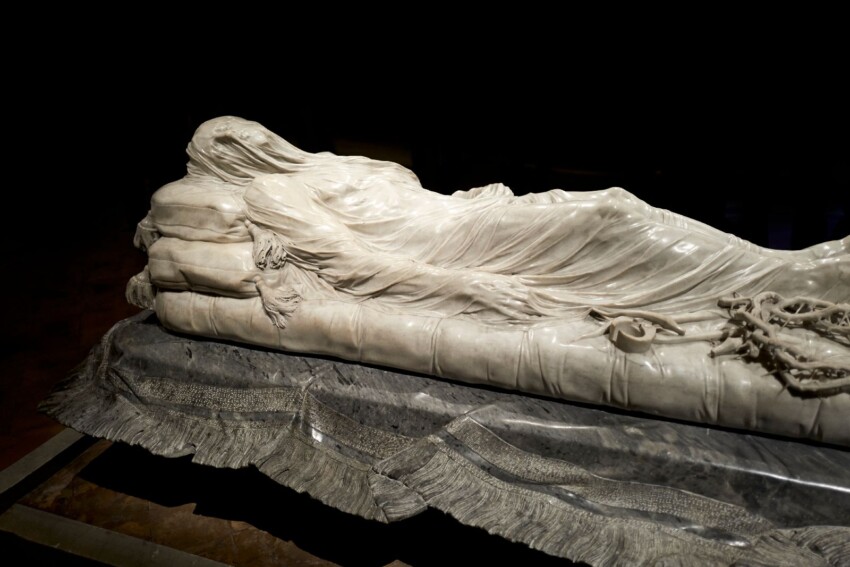
The Sansevero Chapel dates from the late sixteenth century and was commissioned by Raimondo di Sangro, Prince of Sansevero, a noted alchemist and figure close to the Masonic circles of the Kingdom of Naples.
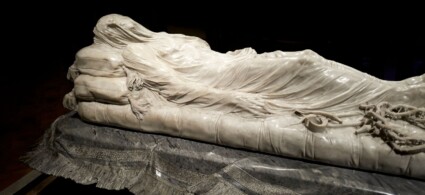
The chapel’s exterior façade presents an elegant classical style whilst the interior evokes baroque aesthetics. Raimondo di Sangro commissioned a series of symbolic marble works, still admirable today, including the celebrated Veiled Christ by Giuseppe Sanmartino. The Veiled Christ depicts the recumbent Christ, his tormented body covered by a delicate veil. What makes this work remarkable is that through the marble veil one can still discern the facial expressions, and the veil appears not to be made of marble at all.
Beyond the Veiled Christ, the chapel also houses ten Statues of Virtue, and within the underground chamber are displayed two Anatomical Machines—the perfectly preserved bodies of a man and woman that allow close inspection of the human circulatory system.
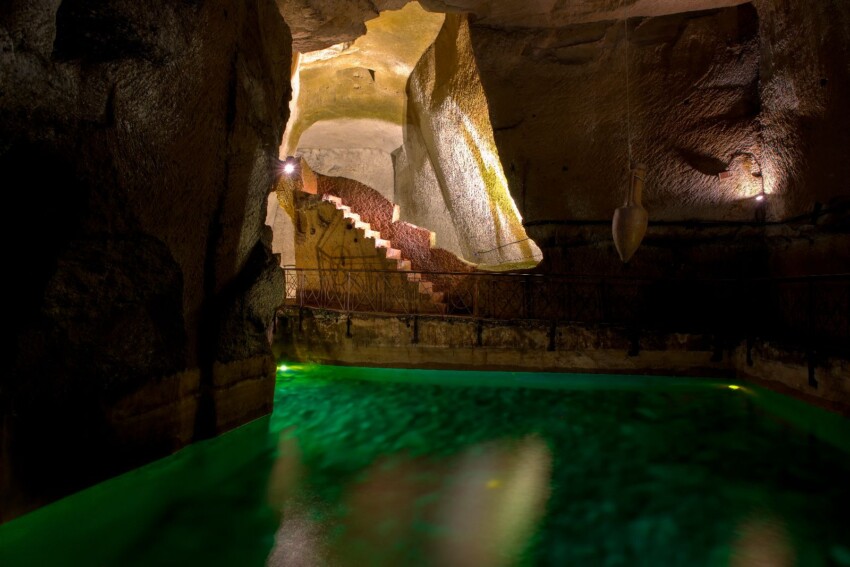
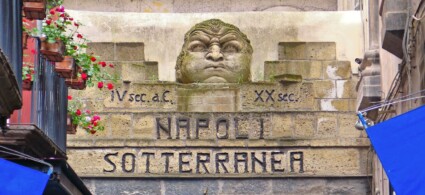
One of the city’s unmissable attractions is a visit to Underground Naples, which conceals true marvels of civil engineering excavated beneath the city. After long being forgotten, a restoration and conservation effort has made it possible to admire the subterranean spaces that date back to both the Greco-Roman period and World War Two, when air-raid shelters were constructed here.
One stop you absolutely cannot miss is the Roman Theatre, where even Nero performed, accessed through a private residence. Beneath the city lies the Bourbon Tunnel, commissioned in 1853 by Ferdinand II of Bourbon, which connected the Royal Palace to Piazza Vittoria and served as a potential escape route towards the sea for the Neapolitan royals in times of crisis.
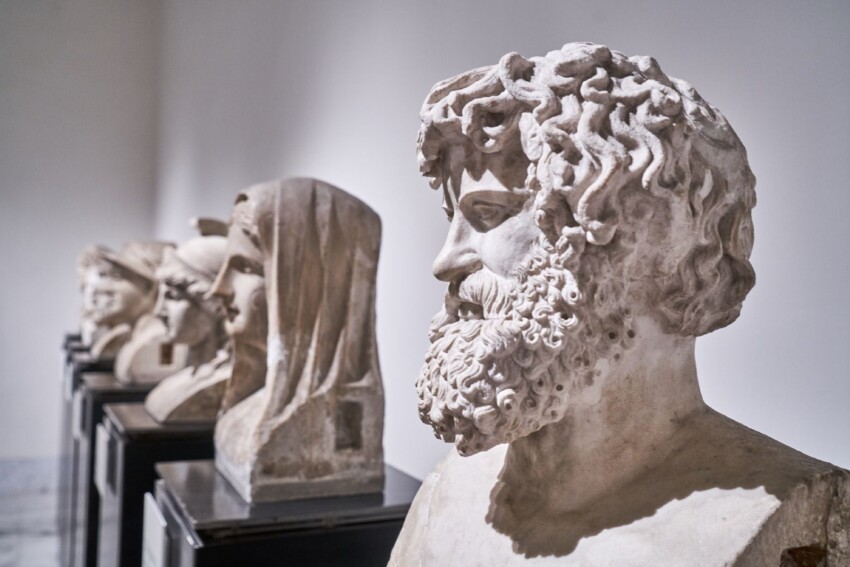
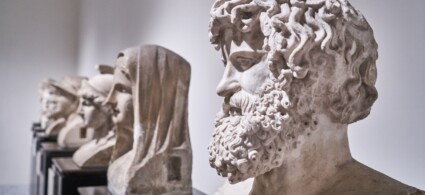
Built in the late 1500s as a cavalry barracks, the building served as the seat of the University from 1616 to 1777 before becoming the Royal Bourbon Museum in 1816. The present-day National Archaeological Museum of Naples was one of Europe’s first archaeological museums and ranks among the world’s most important for the richness of its collections.
Inside are prehistoric artefacts from southern Italy, remains of cities buried by Vesuvius’s eruption in 79 AD, and works from the Farnese Collection formerly belonging to the Bourbons. Part of the museum is known as the “Secret Cabinet” (S.C.), the name the Bourbon royal family gave to reserved rooms housing various erotic and sexually explicit artefacts unearthed during excavations at Pompeii and Herculaneum.
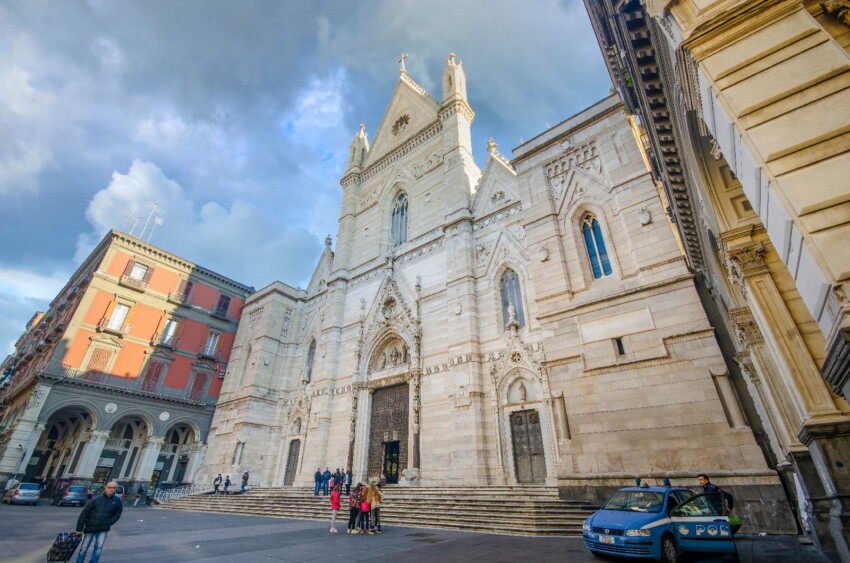
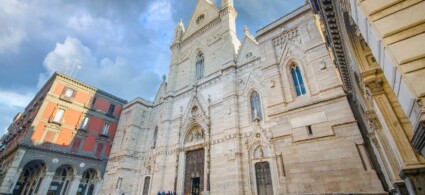
In Roman times, this area was home to a temple dedicated to the god Apollo, whilst in the fourth century AD the Basilica of Santa Restituta and the Baptistry of San Giovanni in Fonte were constructed here. King Charles of Anjou commissioned the Cathedral of Naples in the thirteenth century according to a plan that incorporated the Basilica of Santa Restituta and the Baptistry into the overall design.
The cathedral, with three naves, features a Latin cross plan with lateral chapels, whilst its façade displays neo-gothic style following several renovation campaigns. Above the three entrance doors are gothic decorative sculptural elements; the right-hand door is used exclusively for festivities celebrating Saint Januarius and certain extraordinary occasions. The ceiling of the main nave consists of coffered wood, whilst the lateral naves feature cross vaults.
Two of the chapels stand out for their size and artistic merit: the Chapel of Santa Restituta and the Chapel of the Treasure of Saint Januarius. The Chapel of the Treasure of Saint Januarius in particular dates from the first half of the seventeenth century, and here, three times yearly (the first Saturday in May, 19 September and 16 December), the faithful await the miracle of the liquefaction of the Saint’s blood.
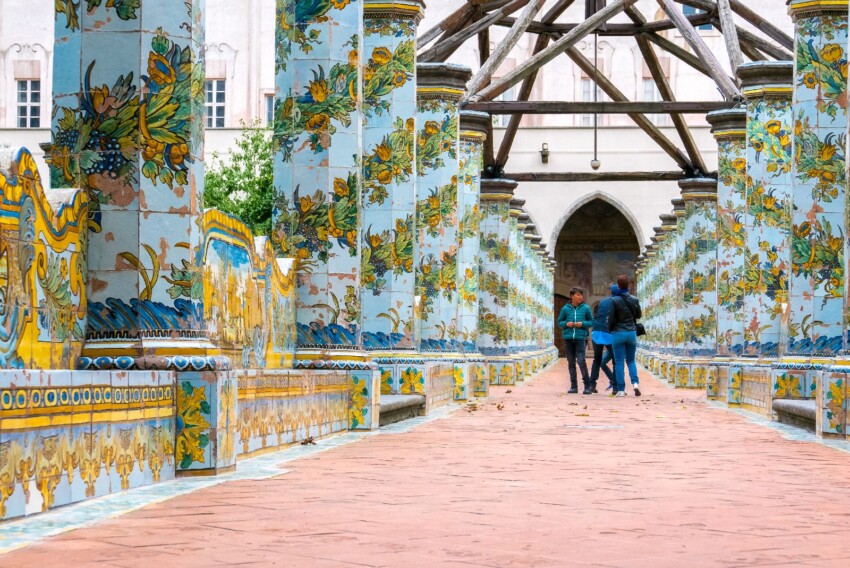
In the heart of Naples’s historic centre stands the ancient Monastery of Santa Chiara, built by King Robert of Anjou and his wife Sanchia of Majorca around 1310. The complex housed two convents: a female one for Poor Clares and a male one for Franciscan friars.
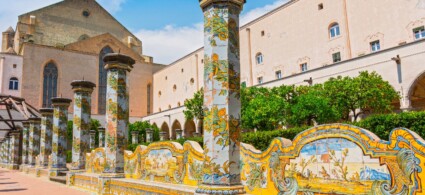
Originally built in gothic style, the church was nearly completely destroyed by bombing in August 1943 during World War Two. Following restoration work, we can once again admire it in its original style. Not to be missed is a visit to the Majolica Cloister of the monastery, characterised by a garden with tree-lined walkways flanked by octagonal pillars decorated with majolica work executed by two local craftsmen.
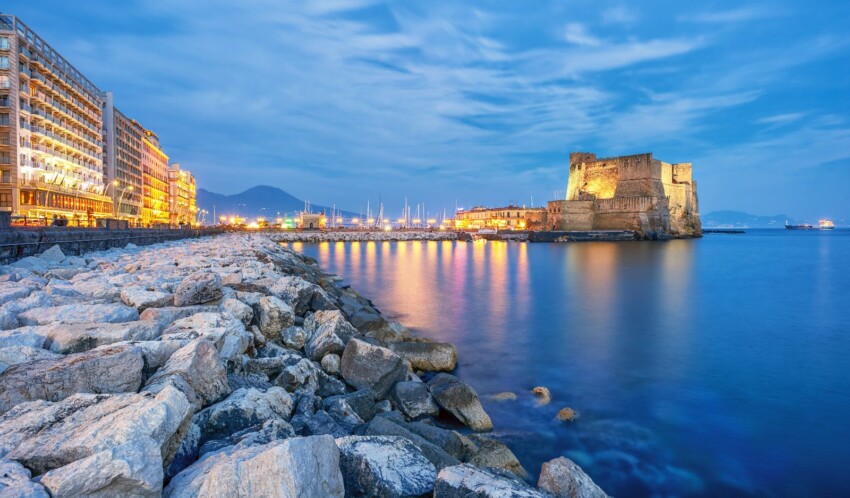
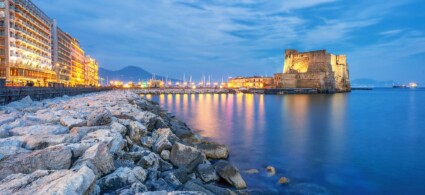
From Via Partenope, along Naples’s waterfront, you can reach the small island of Megaride, which hosts the famous Castel dell’Ovo. Since Roman times, a defensive and military structure, known as the Castrum Lucullanum, had been built here. In the Middle Ages the complex became a hermitage for monks and nuns, but in the fifteenth century, owing to barbarian raids, it became necessary to construct a defensive structure.
Once strategically important for military reasons, Castel dell’Ovo’s location now makes it a splendid vantage point for taking in the entire Gulf of Naples. Entrance is free and visitors can explore two towers, the cell of Queen Giovanna, the ruins of the Church of San Salvatore and a large terrace with Spanish cannons. The panoramic terrace offers truly beautiful views across the city and sea, particularly at sunset.
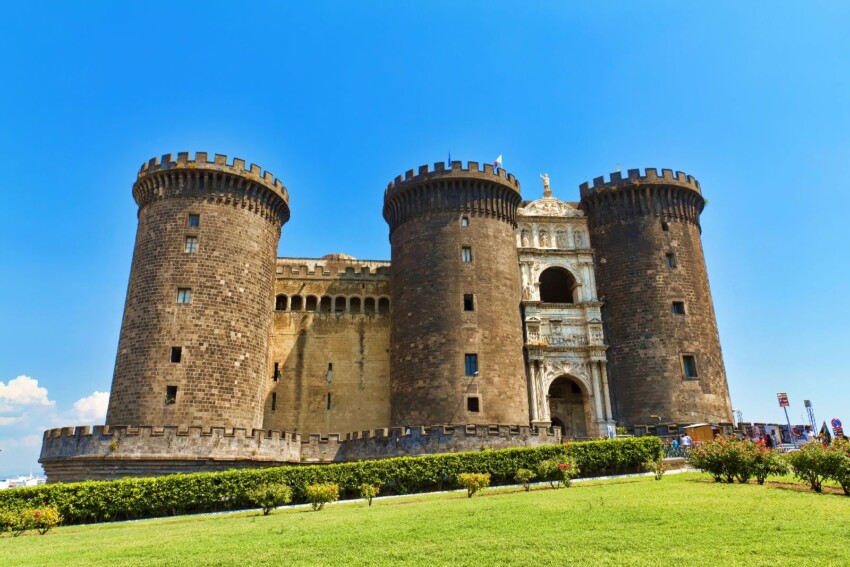
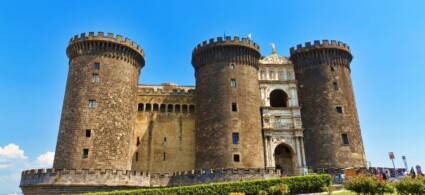
In the mid-thirteenth century, Charles I of Anjou, after defeating the Swabians, conquered the throne of the Kingdom of Sicily and transferred the capital from Palermo to Naples, where he ordered the construction of a building worthy of housing the royal family.
The origin of the name Maschio Angioino stems from the building’s history: ‘maschio’ refers to the keep or fortress, whilst ‘Angioino’ derives from the royal dynasty that first transferred the imperial court here. The castle, surrounded by a broad moat, is defended by five impressive cylindrical towers and within its walls houses the Civic Museum of Castel Nuovo.
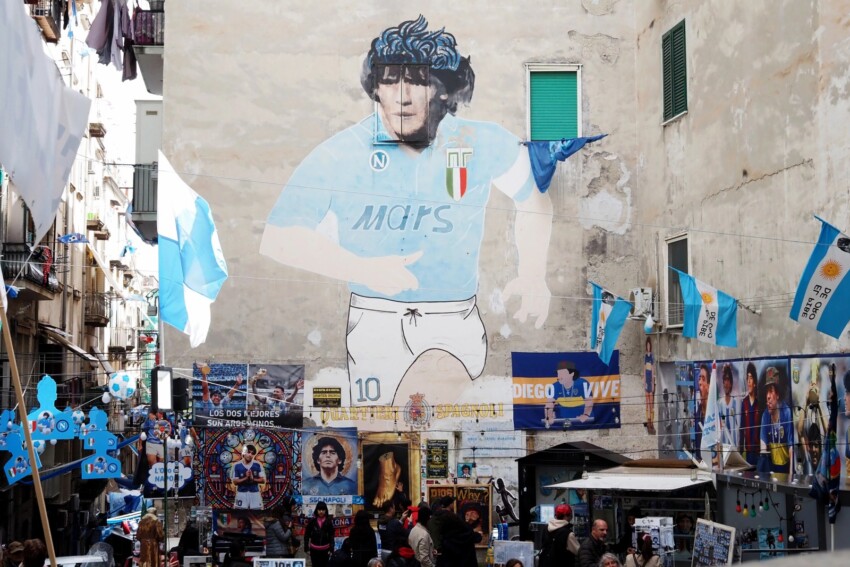
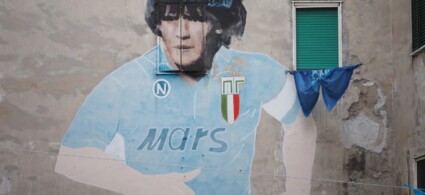
In the heart of the Spanish Quarters, where alleyways run so tight they nearly touch and washing filters the sunlight, stands one of Naples’s most potent and moving symbols: the mural dedicated to Diego Armando Maradona. Created in 1990 by artist Mario Filardi, it has become a place of secular pilgrimage attracting travellers from every corner of the globe, united by the same curiosity to understand why an entire city dedicated its soul to a footballer.
Around the original mural, over the years the neighbourhood has transformed into an open-air art gallery, with dozens of new works reinterpreting the myth through a contemporary lens. Visiting this corner of the city at sunset, when golden light seeps between the cobblestones and alleyways come alive with voices and the aroma of ragù, means touching the truest and most indomitable essence of Naples.
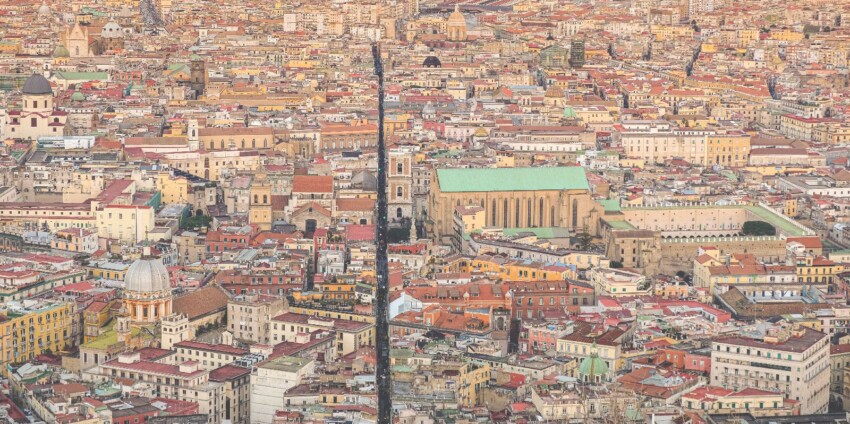
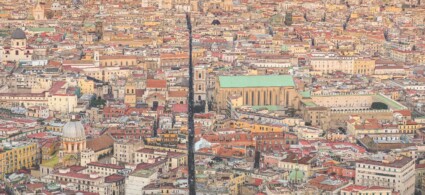
Spaccanapoli is one of three principal thoroughfares that divide (literally ‘split’) the Parthenopean city, running through the historic centre from north to south, from the Spanish Quarters to the Forcella neighbourhood. The best way to fully appreciate its name is to admire it from above—from Castel Sant’Elmo or the Certosa of San Martino.
In fact, ‘Spaccanapoli’ is a nickname given by locals to a thoroughfare comprising several streets that house some of the city’s most significant churches and buildings, such as Palazzo Venezia, the Santa Chiara Complex, the Church of Gesù Nuovo and the complex of San Domenico Maggiore.
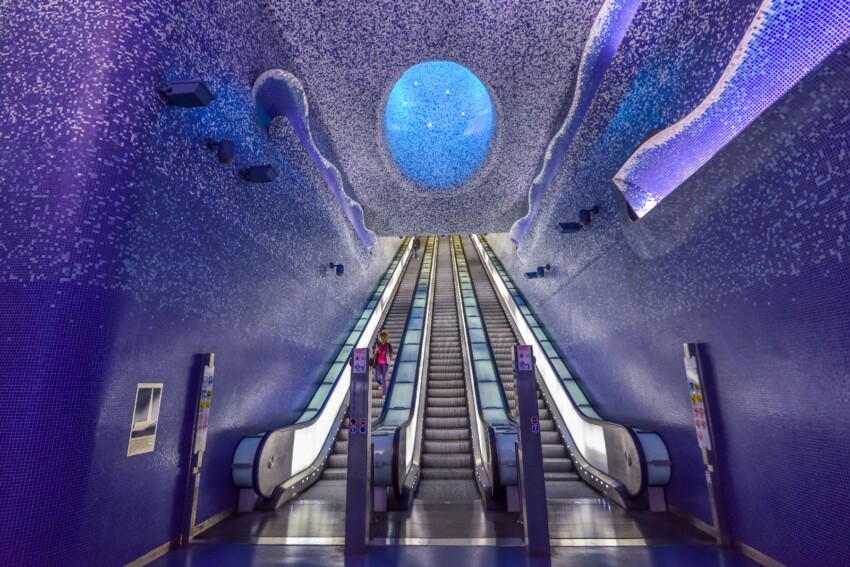
It seems hard to believe, but Naples’s metro system is a genuine museum known as the Art Metro. This project, which emerged in the Nineties, sees metro stations displaying more than eight hundred artworks, of which 90 are by some of the most important contemporary artists, with the aim of making the metro stations more welcoming.
Along lines 1 and 6, there are 16 stations worth stopping at to admire sculptures, paintings, mosaics and archaeological artefacts. The Toledo Station12, in particular, has earned the award for ”Europe’s Most Beautiful Station” thanks to its extraordinary beauty.
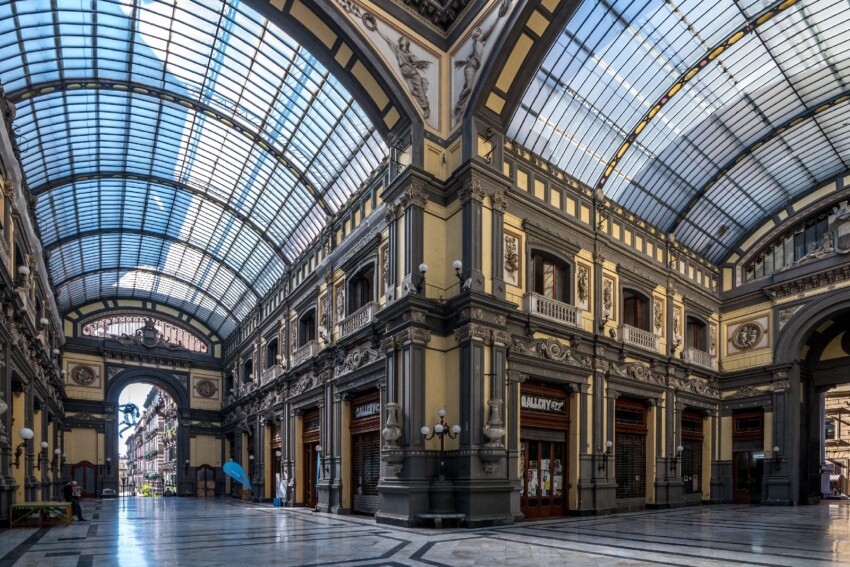
Now one of Naples’s most iconic landmarks, Umberto I Gallery was constructed over three years between 1887 and 1890 in a cross-shaped structure with four orthogonal wings intersecting beneath a grand dome. This iron and glass dome, standing 56 metres high, draws inspiration not only from the Vittorio Emanuele II Gallery in Milan but also from the many covered galleries of Paris.
The interior is decorated in Art Nouveau style with references to neo-Renaissance art, whilst the floor is made of marble with elegant decorative details. Today, the Gallery is one of the city’s most renowned shopping destinations, housing high-end shops and boutiques.
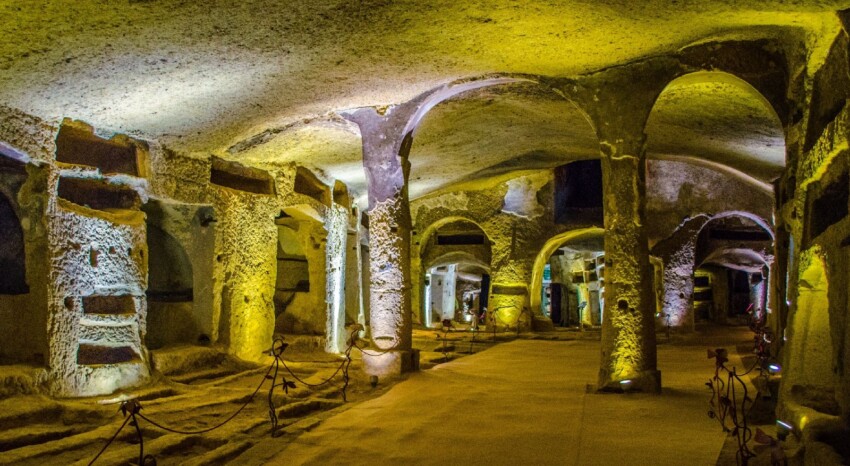
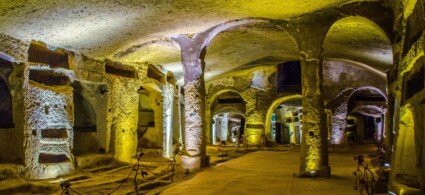
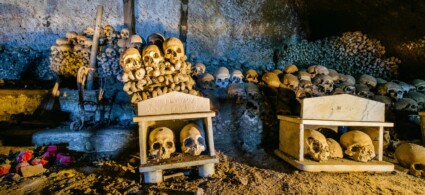
Located underground in the Rione Sanità district, the San Gennaro Catacombs are burial grounds dating back to the 2nd century AD. This area of the city conceals approximately nine catacombs, though only some have been brought to light, such as those of San Gennaro, San Severo, San Gaudioso and the Fontanelle Cemetery.
In this area dedicated to burials since ancient times, the relics of San Gennaro, the city’s patron saint, were transferred here in the 5th century. The entrance to the catacombs is located at the Basilica dell’Incoronata at Capodimonte, where you can also admire a 5th-century portrait of San Gennaro the Martyr.
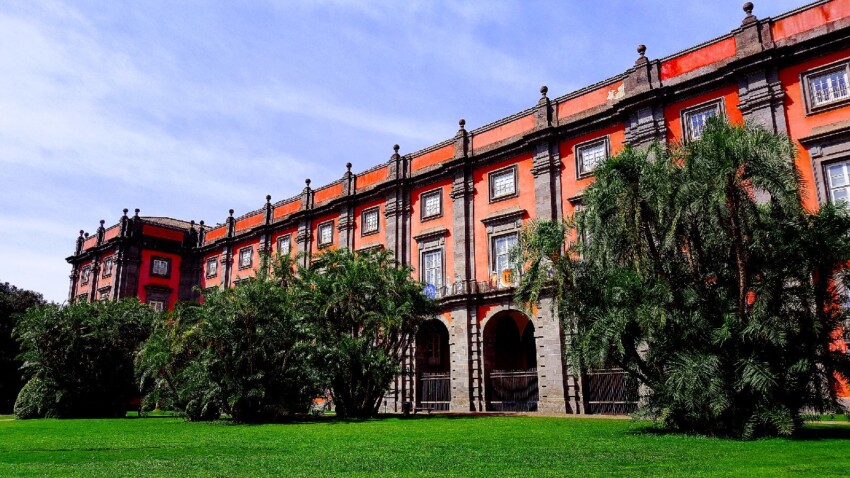
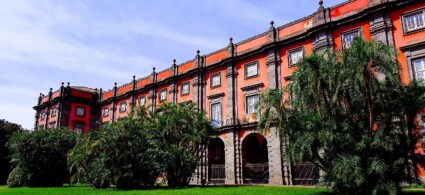
Perched atop a hilltop overlooking the city and the Bay of Naples, the palace that was once one of the Bourbon residences now houses the Capodimonte Museum. In the 18th century, King Charles of Bourbon decided to build a complex within the “Capo di Monte” woodland where he could hunt and relax during his leisure time.
In this palace, the king chose to house the Farnese Collection inherited from his mother, to which over the years were added artworks purchased or donated to the Bourbon family, and finally 19th-century works and contemporary art by internationally renowned artists. The rich Farnese collection features works by Raphael, Titian, Masaccio, Botticelli, Andrea del Sarto and many others.
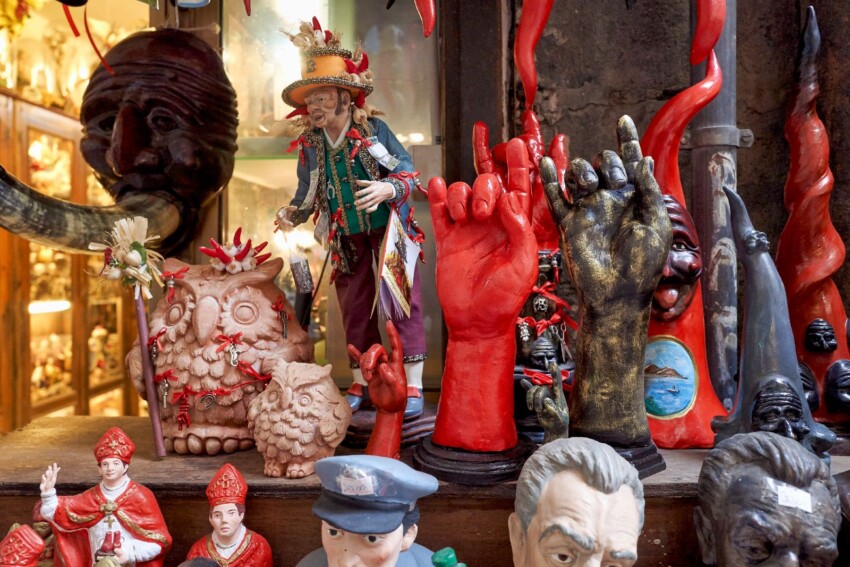
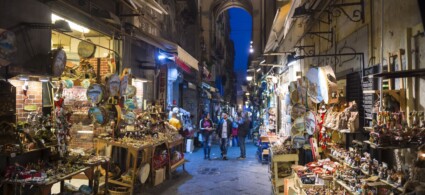
Known as “O’ vico de’ pasture”, or the shepherds’ street, San Gregorio Armeno is far more than just a street in historic Naples—it’s tradition, atmosphere and art rolled into one. Here, 365 days a year, you can breathe in the Christmas spirit and admire artwork crafted by local artisans.
It’s an open-air museum where you’ll find some of the world’s oldest nativity scene craft workshops, producing terracotta figurines inspired not only by nativity characters but also by historical figures, celebrities and contemporary personalities.

Stepping aboard a boat and leaving behind the noise, traffic and glorious chaos of Naples is an experience that completely transforms your perception of the city. From the sea, everything changes perspective: the silhouette of Mount Vesuvius looms imposing and silent on the horizon, the pastel hues of Posillipo and Mergellina glide past like a 17th-century painting, and the waterfront, so hectic when you’re walking along it, becomes a theatrical backdrop of rare beauty.
Boat tours in the Bay of Naples offer itineraries for every type of traveller: from short outings lasting a couple of hours, perfect for circumnavigating Castel dell’Ovo and getting close to the sea caves of Nisida, to full-day excursions that take you to Capri, Ischia or Procida, each with its own distinctive character.
In the following map you can see the location of the main places of interest mentioned in this article.
Discover Napoli through the eyes of expert guides who will take you on a tour of the city's hidden treasures. Participating in a guided visit or a free tour will allow you to capture the true essence of Napoli.
The free tours are a viable alternative to traditional guided tours. They work like this: participation is free and at the end of the visit you can leave a tip at your discretion. Below you will find our favourite free tour, otherwise you can see the full list by visiting this page.



 Hotel
Hotel  Budget accommodations
  Apartments
  Family Hotel
  Luxury Hotel
  Resorts