Bestseller
Naples: Naples Underground Entry Ticket and Guided Tour
From 18,00 €
Buy the ticket
A part of the Parthenopean city that is both mysterious and utterly fascinating is undoubtedly Underground Naples, an essential stop during any visit to the city. Few realise that beneath the characterful streets of the historic centre, forty metres below ground, lies another Naples harbouring an unexplored and largely unknown historical heritage.
The story of Naples’s underground dates back to the 3rd century BC, when the Greeks mined the local tufa rock to construct the city’s buildings, walls and temples. It was the ancient Romans, however, who truly exploited the city’s subterranean passages to build an aqueduct capable of transporting water from springs in the Serino valley to the city centre.
The aqueduct’s channels also supplied the ”Piscina Mirabilis”, a structure that guaranteed water supplies to the fleet stationed at Misenum. This Roman aqueduct continued to serve Neapolitan households until the late 19th century, when the city finally finished excavating underground channels to supply fresh water, and the old canal network was abandoned.
Over 2 million square metres of underground tunnels, during the Second World War, were used by residents as air-raid shelters to protect themselves from the bombing raids that struck the city. Neapolitans worked to prepare these channels, installing lighting systems and creating spaces capable of accommodating almost four thousand people who would take shelter here at the sound of the siren.
After the war, the underground was converted into a dumping ground and used for storing waste and rubble until the late 1980s, when a group of volunteers began the task of recovering and restoring these tunnels, which form an integral part of Naples’s history.
A visit to the underground of Naples allows you to embark on a journey through time spanning almost two thousand years, retracing the city’s history from the days of ancient Rome to the present day.
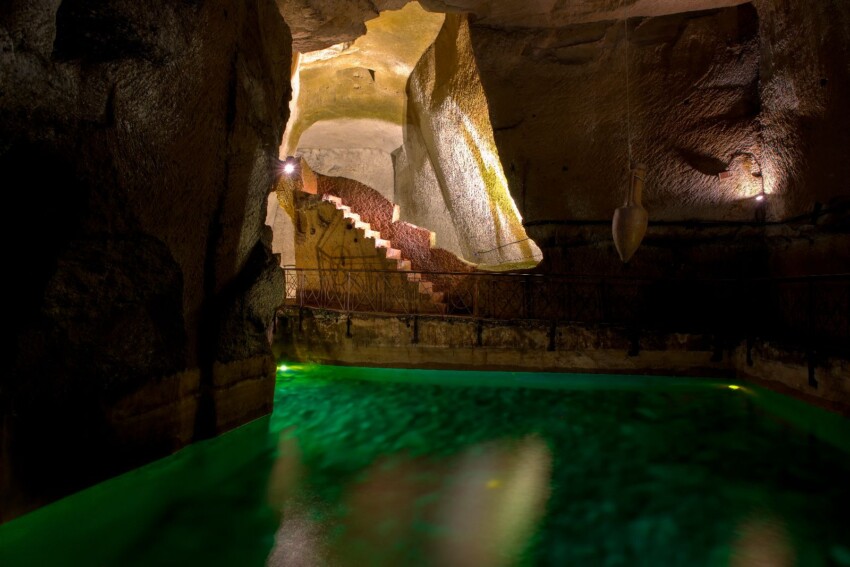
Since Naples’s founding, every civilisation that ruled the city has left its mark in the underground. Starting with the earliest periods, the itinerary through the city’s subterranean passages reveals not only the remains of the Roman aqueduct but also the ancient Greco-Roman Theatre, where Nero himself once performed. The theatre lies ”hidden” behind a trapdoor within a typical Neapolitan dwelling, called a “basso” because it sits at street level. Recently, beneath a carpentry workshop near Piazza San Gaetano—where the ancient agora of Neapolis once stood—further remains have been discovered corresponding to the summa cavea of the theatre.
The tour of these tunnels continues at Underground Naples’s War Museum, which chronicles the years when the subterranean passages became genuine shelters against aerial bombardment. The museum preserves objects, materials and testimonies from 1940–1943 that tell the story of these spaces during the Second World War. Beyond these areas, Underground Naples also offers visits to two particularly unique sections: the ”Arianna” Seismic Station and the Underground Gardens.
The ”Arianna” Seismic Station is part of a scientific project developed with the Department of Earth Sciences at the University of Naples, a research centre where seismic movements affecting the region are recorded. The Underground Gardens, meanwhile, form part of a recently launched experimental project involving the installation of vegetable plots and crops in the city’s underground. Special lamps provide plants with the light necessary for photosynthesis and growth and development.
Underground Naples is accessible only via guided tours conducted in both Italian and English. Italian-language tours run daily from 10am to 6pm on an hourly basis, and on Thursday evenings at 9pm by reservation only.
Groups of fewer than 10 people do not need to book; however, reservations are required for groups of 10 or more and for school parties. On request, guided tours in English and other languages are available.
The starting point for exploring Underground Naples, and where you can purchase your ticket, is located at Piazza San Gaetano 68. The nearest metro station is Dante, approximately a ten-minute walk from the entrance.
Underground Naples sits in the heart of the historic centre, within a limited traffic zone (ZTL). The nearest pay car parks are located on Via Duomo, Corso Umberto, Piazza Cavour and Via Costantinopoli. After parking your car at one of these facilities, you can reach Underground Naples on foot in about 5 minutes.
Naples’s underground passages conceal other itineraries worth exploring to discover the city: the Bourbon Tunnel and the Catacombs of Naples.
The Bourbon Tunnel was commissioned in the mid-19th century, following the uprisings of 1848, by King Ferdinand II of Bourbon to create an underground connection between the Royal Palace and Piazza Vittoria, which was close to both the seafront and military barracks. With this tunnel, the royal family ensured they had a ready escape route in times of emergency. The underground passage showcases this engineering marvel designed by Enrico Alvino and later used as a wartime shelter during the Second World War. After the war, this area became a judicial repository for the Municipality of Naples, and you can therefore find vintage cars and motorcycles buried beneath rubbish and debris.
As for the catacombs, the Sanità district contains nine underground complexes, although only some have been excavated and made accessible to visitors. Among those currently open are the Catacombs of San Gennaro, San Gaudioso and San Severo, whilst the Fontanelle Ossuary has recently also opened to the public.
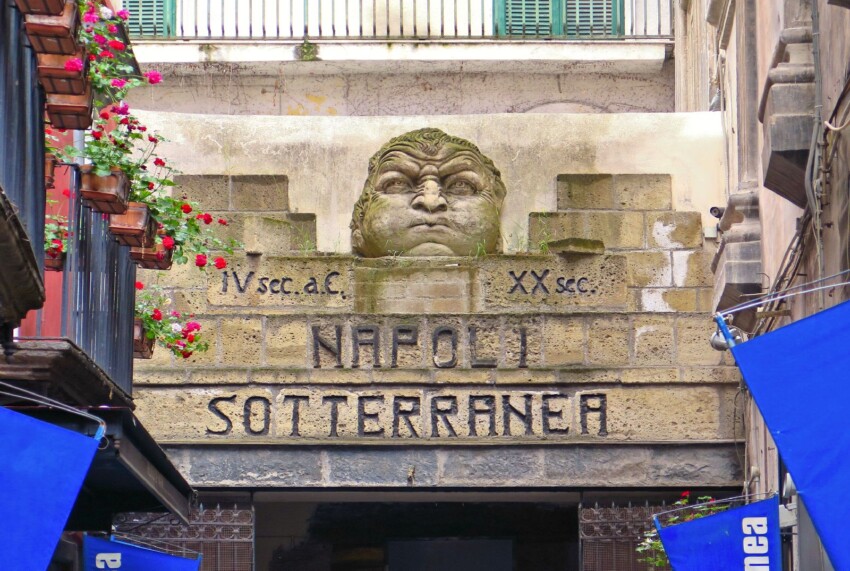
The entrance to Naples Underground is located in the historic centre of the city at Piazza San Gaetano 68 (junction with Via dei Tribunali), near the San Domenico Maggiore monumental complex and just a short walk from the Archaeological Museum, the Cathedral and San Gregorio Armeno.




 Hotel
Hotel  Budget accommodations
  Apartments
  Family Hotel
  Luxury Hotel
  Resorts