Bestseller
Naples: National Archaeological Museum Ticket & Audio App
From 26,00 €
Buy the ticket
Regarded as one of Europe’s oldest museums, the National Archaeological Museum of Naples houses ancient artworks, archaeological artefacts and paintings of extraordinary quality. Set within the Palazzo degli Studi, originally built in 1585, the National Archaeological Museum is located in Naples’ historic centre.
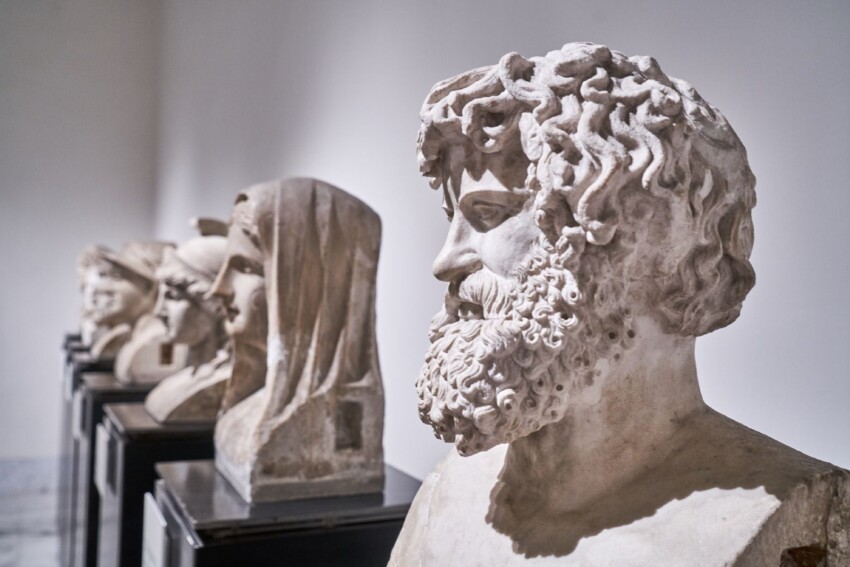
Among its galleries you can admire masterpieces that form part of Italian artistic and archaeological history, such as the Egyptian collection, which ranks third in the world for significance after those of the Egyptian Museum in Cairo and the Egyptian Museum in Turin, the Farnese collection, comprising frescoes, sculptures, busts and gems acquired by the Farnese family, and the Pompeian collections, with artefacts from Pompeii, Herculaneum and archaeological sites in the Campi Flegrei. On the first floor, there is also the topographical section, which features a chronological pathway spanning from prehistoric times through to the Magna Graecia period.
Beyond its role as a museum, this historic building houses several internationally renowned centres of excellence, including a Restoration Laboratory, Library and Historical Archives.
The museum contains several sections spread across its various floors. Here is a brief guide to the collections.
Outside the museum building stands Neapolis Station, featuring archaeological finds discovered during excavations for the Metro Line 1, particularly in the area between Via Toledo and Piazza Municipio. This part of Naples has yielded remains from the Greek period, Roman Naples (a Corinthian capital, column traces and mouldings, plus ornamental sculpture) and Byzantine Naples. Access to this section is free and can be obtained via the “Museo” station on Naples’ underground railway.
On the basement floor are the Egyptian collection and the epigraphic collection. The Egyptian collection is, by importance, Italy’s second most significant collection of Egyptian artefacts, after that at Turin’s Egyptian Museum. It allows you to admire mummies, sarcophagi, vessels, mirrors, everyday objects and items that formed part of funeral goods in ancient Egypt. All materials come from private collections, from Bourbon-era excavations in Campania and from the Borgia collection, assembled in the 18th century by Cardinal Stefano Borgia.
On the ground floor is the Farnese collection, comprising all artefacts gathered, whether purchased or expropriated, by Alessandro Farnese, who later became Pope Paul III. Upon becoming pontiff, the Farnese collection passed first to Elisabetta Farnese and then to her son Charles of Bourbon, who became King of Naples in 1734. The collection includes paintings, sculptures, drawings, bronzes, furnishings, cameos and also Roman-era artefacts, such as sculptures found in the Baths of Caracalla and those discovered in the emperors’ gallery.
The Pompeian collections, meanwhile, display mosaics, the House of the Faun, frescoes, pottery, bronzes, silverware, ivories, ceramics, a scale model of Pompeii, the Villa of the Mysteries and numerous other finds from Campania’s archaeological sites. A distinguishing feature of this section is the Secret Cabinet, an area exhibiting artefacts with erotic and sexual themes.
On the first floor, finally, you’ll find two topographical sections with a chronological pathway featuring: Prehistory, Eneolithic Age, Bronze Age, Iron Age, Cumae, Pithecusae, Neapolis, Villa of the Mysteries, continuing through to the Magna Graecia period.
The famous Secret Cabinet (G.S.) is a collection of artefacts with erotic and sexual themes that illustrates the various aspects of sexuality as experienced by the ancients. The Bourbon royal family coined the term “Secret Cabinet” and restricted entry to these rooms only to “persons of mature age and recognised moral character“.
This area gathered various artefacts with erotic and sexual subject matter from excavations at Pompeii and Herculaneum or acquired by the family in other ways. Over time, the collection also became known as the “Cabinet of Reserved Objects” or “obscene” or “pornographic” pieces. During the revolutionary upheaval of 1848, there were calls to destroy the Cabinet’s works as it was seen as promoting immorality, but the museum director managed to ensure the collection was preserved and closed to the public instead.
During the Fascist period, visiting the Cabinet required authorisation from the Minister of Education. Having survived World War Two bombardment, the Secret Cabinet remained off-limits to the public throughout the post-war years until the early 1970s.
In the 2000s, following complete reinstallation, the Secret Cabinet section was reopened to the public.
The National Archaeological Museum is open every day from 9:00 to 19:30. Closing procedures begin at 19:00.
Tuesday is the weekly closing day. When Tuesday is a public holiday, the museum postpones closure to Wednesday.
The museum is closed on 25 December and 1 January.
Admission to the National Archaeological Museum of Naples costs:
Naples’ Archaeological Museum is one of the attractions included in the Campania Artecard, Campania Region’s tourist pass, which also includes entry to must-see attractions such as the Royal Palace of Caserta, the archaeological parks of Pompeii, Herculaneum and Paestum, and other Naples attractions including the Royal Palace.
The best way to visit the National Archaeological Museum of Naples is certainly with a guided tour, either private or group.
The museum offers many useful services for visitors including guided tours, free cloakroom, refreshment point, educational areas and bookshop. You must deposit umbrellas, rucksacks and other bulky items at the cloakroom located in the museum entrance hall.
All barriers have been removed throughout the museum to make it accessible to visitors with mobility disabilities. Wheelchairs and tablets with LIS video guides are available at the Information Point.
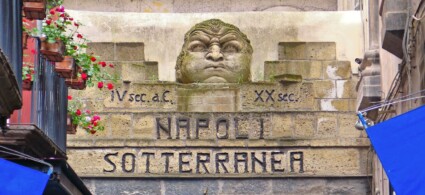
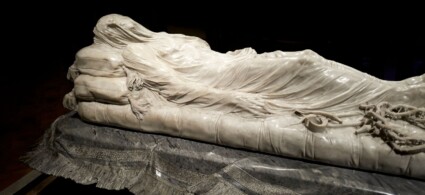
The National Archaeological Museum of Naples is located in the city centre, not far from other attractions such as Underground Naples and the San Severo Chapel.
The simplest way to reach the museum is to take Metro Line 1 and get off at Museo station, then walk 100 metres, or take Line 2, get off at Piazza Cavour station and walk about 100 metres.
The building currently housing the museum was originally constructed in 1585 to serve as a cavalry barracks, but became an important university seat in the following century. King Charles III of Bourbon, who ruled the Kingdom of Naples from 1734, pursued a cultural policy that not only promoted excavations at Pompeii and Herculaneum, two cities buried by the 79 AD eruption, but also sought to transfer part of the collection inherited from his mother, Elisabetta Farnese, from Bourbon residences in Rome and Parma to create a Farnesian Museum.
From 1777 onwards, the building underwent restructuring and expansion work and thanks to Ferdinand IV, the two core elements of the Farnese collection and the collection of Vesuvian finds from the Herculaneum Museum at the Palace of Portici were finally brought together here. Following years of French rule (1806-1815), upon the Bourbons’ return to Naples, the museum assumed the title of Royal Bourbon Museum, which housed the Royal Library, the Academy of Design, the Picture Gallery, the Papyri Workshop and various laboratories.
With Italian unification, however, the Royal Bourbon Museum became the National Museum and its collections were enriched with artefacts from private collecting and excavations from Campania’s archaeological sites and other cities of southern Italy. In 1957 the Library, Academy of Design and Papyri Workshop were relocated elsewhere, whilst the Picture Gallery was transferred to Capodimonte. Following these transfers, the National Museum was renamed the National Archaeological Museum.
The National Archaeological Museum is located in Naples at Piazza Museo Nazionale 19. The museum sits roughly 2 km from Naples Central Station and less than 2 km from Piazza del Plebiscito.
 Hotel
Hotel  Budget accommodations
  Apartments
  Family Hotel
  Luxury Hotel
  Resorts