Bestseller
Naples: Royal Palace Entry Ticket with Digital Audio Guide
From 23,50 €
Buy the ticket
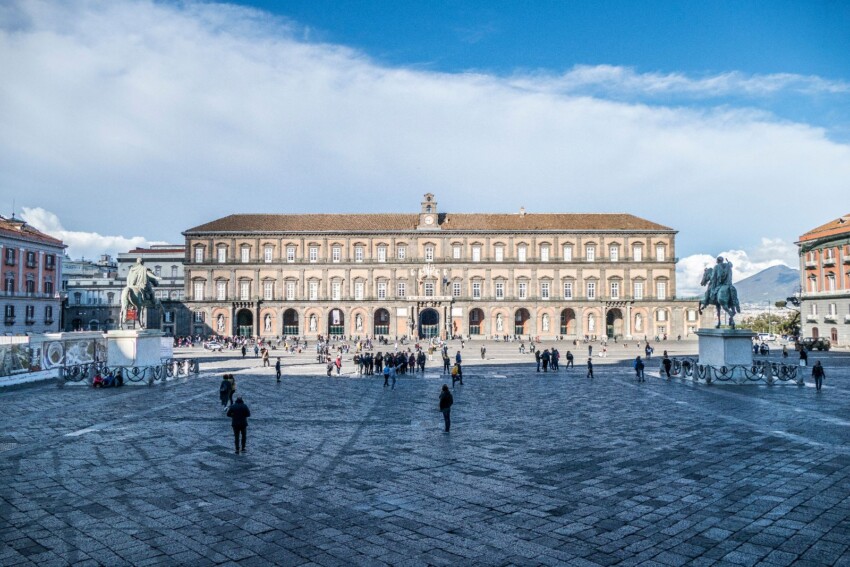
The Royal Palace of Naples is located in Piazza del Plebiscito, opposite the Basilica of San Francesco di Paola.
The Royal Palace is one of Naples’s most visited attractions, as it houses objects, paintings, frescoes and tapestries of great value, along with beautifully furnished rooms that tell the story of the city from the 17th century through the arrival of the House of Savoy.
The Palace was commissioned by the Viceroy of the Kingdom of Naples Fernando Ruiz de Castro, who wanted to build a residence worthy of hosting the Spanish King Philip III of Habsburg. The strategic location of the building, right next to Naples Harbour, allowed the royal family to leave the city by sea in case of enemy attack.
The Palace housed the Bourbon family from 1734 until Italian unification, including ten years of French rule under Joseph Bonaparte and Joachim Murat. The Palace was designed in 1600 by Domenico Fontana, though what we can admire today is the result of various alterations carried out over nearly two centuries.
The façade was created using rosy terracotta brick and volcanic stone from the Campi Flegrei, with a late Renaissance style. Divided vertically by pilasters inspired by Vitruvian principles, the façade is also divided horizontally by string courses that define its three orders: Tuscan on the ground floor, Ionic in the middle, and Corinthian above.
At the centre of the façade is the entrance portal, topped with the coat of arms of Philip III of Habsburg, which leads to the so-called Honour Courtyard, square in shape and connected to further courtyards built later: the Carriage Court and the Belvedere Court.
On the noble floor of the Palace is the Royal Apartment, which was used as a reception area by the Spanish viceroys, as a private residence of the Bourbons, and after Italian unification, as the residence of the House of Savoy. The interior decoration reflects the events of prominent figures from the royal dynasties and evokes the tastes and fashions of the various periods of construction. Not to be missed are the magnificent Grand Staircase, the King’s Apartment, the Queen’s Apartment, the Palatine Chapel and the hanging gardens.
Currently, part of the Royal Palace houses the National Library of Naples, with its entrance in Piazza Trieste e Trento. The complex also includes the nearby San Carlo Theatre, built by Giovanni Antonio Medrano in the 18th century and inaugurated on 4 November 1737, on the occasion of the king’s name day. Over time, the theatre has undergone numerous alterations, both externally and internally.
The Royal Palace of Naples is open daily except Wednesday from 9:00 to 20:00 (last admission at 19:00). The ticket for the Royal Palace of Naples includes access to the complete museum route: Historic Apartment, Court Theatre and temporary exhibitions, and is free for under-18s, disabled visitors with an accompanying person, authorised tour guides and Italian teachers.
We recommend purchasing it online in advance on this page if you plan to visit the Royal Palace during holidays or peak season.
The Royal Palace is one of the attractions included in the Campania Artecard, the tourist pass for the Campania region that also includes entry to must-see attractions such as the Royal Palace of Caserta, the archaeological parks of Pompeii, Herculaneum and Paestum, and other Naples attractions such as the National Archaeological Museum.



 Hotel
Hotel  Budget accommodations
  Apartments
  Family Hotel
  Luxury Hotel
  Resorts