Bestseller
Naples: Catacombs of San Gennaro Entry Ticket & Guided Tour
From 13,00 €
Buy the ticket
Many areas of Naples conceal the marks of the millennia-old history that characterises this city beneath the surface. Among the must-visit stops to better understand the religious bond between Naples and its patron saint San Gennaro is the Catacombs of San Gennaro.
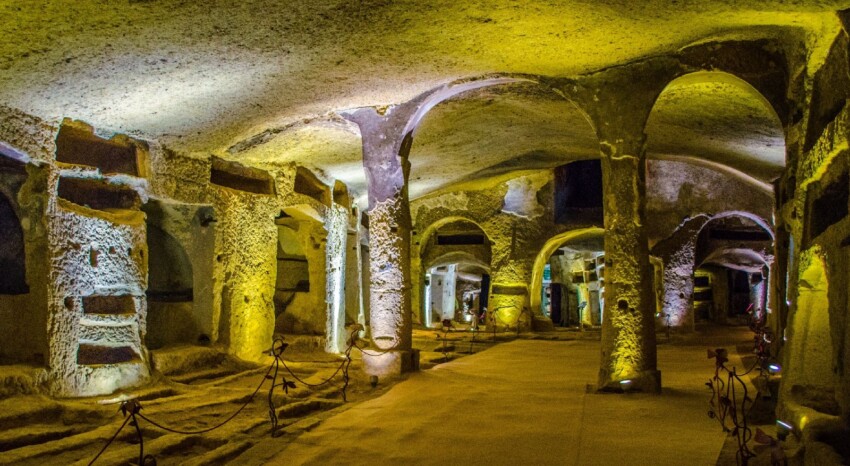
The Catacombs of San Gennaro are ancient burial grounds located beneath Naples and were constructed between the II and IV centuries. Beneath the hill of Capodimonte, some 5,600 square metres of tufa have been excavated, housing around 2,000 burial niches and 500 arcosoliums. This underground cemetery is one of the most important monuments testifying to Christianity’s relationship with Naples.
The Catacombs of San Gennaro most likely emerged around the II century AD as a burial ground for a noble family, who later donated the space to the community. From the IV century onwards, the area expanded following the burial here of the remains of Sant’Agrippino. A lower level was constructed beneath the first to house the body of Sant’Agrippino, who was Naples’s first patron saint, and a Hypogean Basilica featuring a single nave carved into the tufa was built for him.
In the IV century, the remains of San Gennaro were also buried here, and from that moment this place became known as the “Catacombs of San Gennaro”. In the IX century, after Sicone, the Prince of the Lombards, decided to move the Saint’s remains to Benevento, the Catacombs entered a period of abandonment until the Second World War, when they were used as an air-raid shelter.
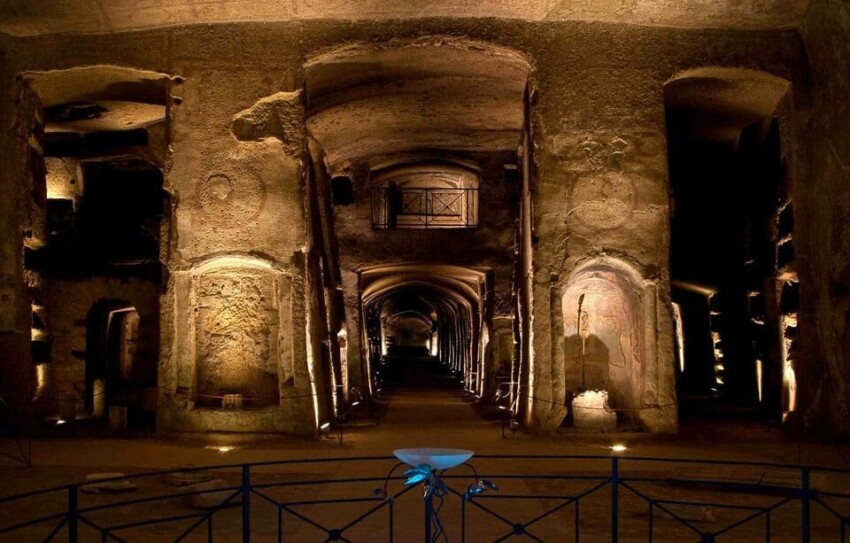
The Catacombs now spread across two levels: the upper and lower. The visit to the Catacombs of San Gennaro begins with the lower catacomb, which develops around the Basilica of Sant’Agrippino. The Hypogean Basilica, unique of its kind, has been entirely carved into the tufa. Beyond this, here lies “the lower vestibule” which houses a baptismal font commissioned by Bishop Paolo II.
The upper catacomb, meanwhile, houses the Crypt of the Bishops, which preserves the remains of representations of the first 14 Neapolitan bishops. The Tomb of San Gennaro is believed to have been discovered directly beneath the Crypt of the Bishops. The route then leads to a visit of the Basilica Adjecta, an underground basilica with three naves that was built following the translation of San Gennaro’s remains.
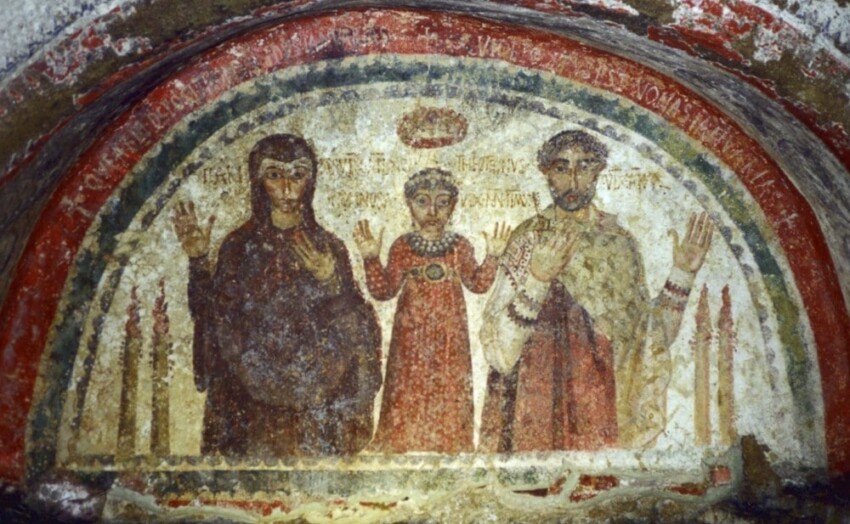
Among the most interesting features within the complex is certainly the pictorial heritage that has survived to us. Beyond the ancient portrait of San Gennaro dating from the V century, there is an artistic legacy spanning from Early Christian works to Byzantine paintings of the IX–X centuries. In the Crypt of the Bishops, moreover, a magnificent V-century mosaic is preserved, depicting San Quodvultdeus, the bishop of Carthage.
The Catacombs of San Gennaro are open daily from Monday to Sunday, 10:00 to 17:00. The Catacombs are accessible via guided tours conducted in both Italian and English and must be booked in advance through the website.
The ticket prices for entry to the Catacombs are as follows:
By purchasing your entry ticket online, you’ll be able to secure your visit and avoid queues at the ticket office. The entry ticket also includes a visit to the Catacombs of San Gaudioso and the Basilica of Santa Maria della Sanità.
The main entrance and ticket office for the Naples Catacombs are located at the Basilica del Buon Consiglio. To reach the site from central Naples, you can take bus lines No. 168, 178, C63 and R4.
The site is also reachable by car along Naples’s ring road to exit No. 5 – Capodimonte. There is free parking on site.
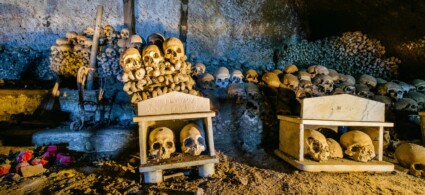
The Naples underground also conceals other sites of great interest that can be visited and which tell much about the city’s history. Alongside the Catacombs of San Gennaro in the Rione Sanità are also the Catacombs of San Gaudioso and the Cemetery of the Fontanelle.
Among the other itineraries you can take is a visit to Naples Underground, where you can admire the remains of the Roman aqueduct and the ancient Theatre where the Emperor Nero performed. This site also hosts an interesting museum that tells much about the years when the underground became a refuge against bombardment during the Second World War.
Beyond these, in the Naples underground you’ll also find the famous “Galleria Borbonica”, a tunnel built in the mid-nineteenth century by King Ferdinando II of Bourbon. The sovereign wanted an underground escape route connecting the Royal Palace to Piazza Vittoria, which was close to both the seafront and the military barracks.
The entrance to the Catacombs of San Gennaro is located near the Basilica del Buon Consiglio at Via Capodimonte n.13, at the foot of Capodimonte hill, not far from the historic centre. The site sits within Rione Sanità, one of the city's oldest quarters, which has served as a burial ground since Greco-Roman times.


 Hotel
Hotel  Budget accommodations
  Apartments
  Family Hotel
  Luxury Hotel
  Resorts