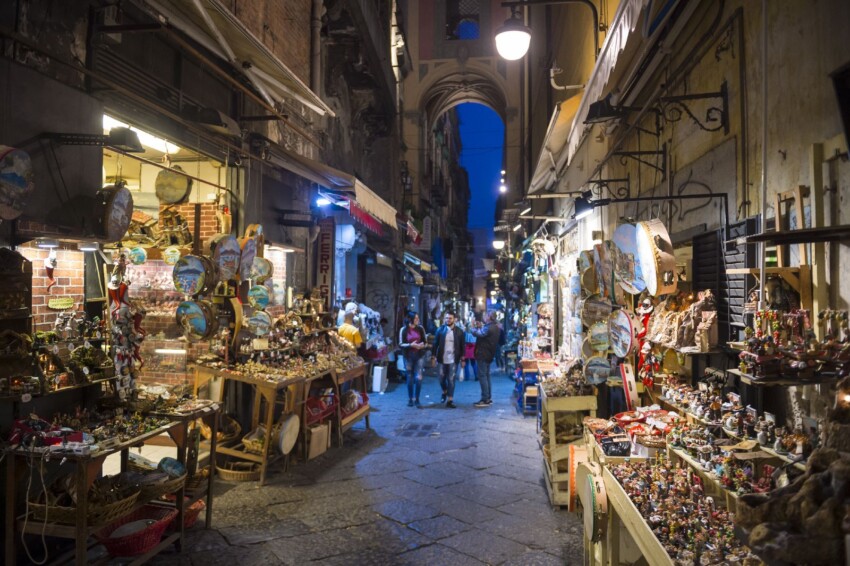
Located in the heart of Naples between Via dei Tribunali and the famous Spaccanapoli, San Gregorio Armeno – also known as Via San Liguoro or Strada Nostriana – is one of the most celebrated streets in the city of Naples.
Walking along San Gregorio Armeno is a must during Christmas in Naples: here you can experience the festive atmosphere at any time of year thanks to the numerous shops where master nativity craftsmen handcraft figurines that represent the characters of the Neapolitan nativity scene. An ancient tradition that has remained alive over the years thanks to the passion of many artisans who have adapted to modern times and now reproduce not only classical Nativity characters but also figurines depicting politicians, athletes and famous contemporary figures.
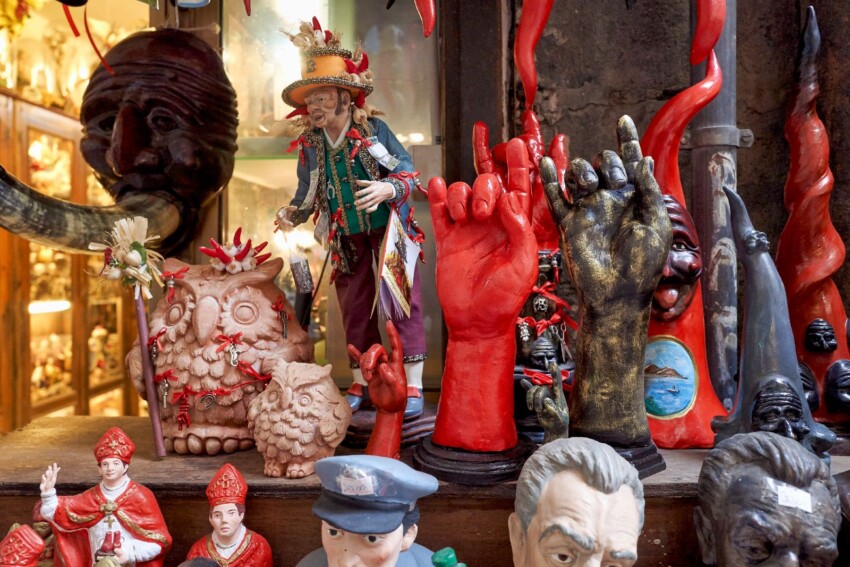
San Gregorio Armeno is an ancient Roman street that once housed a temple dedicated to Ceres, the goddess of fertility and the earth. Citizens would leave terracotta figurines as votive offerings at the temple, which is why the street was filled with workshops of artisans crafting these devotional pieces.
In the tenth century, however, a monastery was built on the foundations of the ancient Roman temple, where nuns from the order of Saint Basil, who had fled Constantinople due to iconoclastic persecution, deposited the relics of San Gregorio, bishop of Armenia. With the spread of Christianity and the concept of representing the Nativity, local artisans were commissioned by wealthy Neapolitan families to produce not votive figurines, but characters from the Christian Gospels. The development of the Neapolitan nativity tradition in the mid-eighteenth century established San Gregorio Armeno as famous as “the street of nativity scenes” thanks to the craftsmen who crafted, and continue to craft by hand, distinctive figurines.
On this street you can purchase everything needed to create a nativity scene from scratch or just a few figurines to enhance and enrich the one you already own. Typically, the cost of a single figurine starts from €35-45 for simple pieces, though always executed with great care and precision, up to higher prices for more complex and larger models.
The best time to visit San Gregorio Armeno and see the workshops at their finest is the Christmas season, when you can admire genuine works of art created by hand by skilled artisans. However, San Gregorio Armeno can be visited throughout the year since almost all the shops are always open and display their products. During quieter months the street is less crowded, making it possible to watch the artisans at work and observe all the creations with greater ease and tranquillity.
One of the oldest artisan workshops on San Gregorio is Rosario e Gennaro Di Virgilio, a place where this craft has been passed down from father to son through generations. Genny Di Virgilio continues the trade taught to him by his father using quality raw materials and working with passion, love and precision. The distinctive feature of Di Virgilio, however, also lies in its innovation, as figurines of shepherds with faces that embody characters from the current television scene are also produced here.
Founded in 1840, the Fratelli Capuano workshop is another historic business on San Gregorio Armeno that has devoted itself passionately to this craft for almost two centuries. Over time, the artisans at this workshop have specialised not only in creating ceramic figurines, but also in crafting scenery and landscapes in both cork and wood.
Over the years, Fratelli Capuano has had the opportunity to create works of considerable merit, including the nativity scene of Pietralcina, the permanent nativity scene in San Giovanni Rotondo and the nativity scene installed in 2002 at the Royal Palace of Madrid at the request of King Juan Carlos.
Since the late nineteenth century, the Gambardella family has worked with dedication and precision to create characters from the Neapolitan nativity scene. Currently the workshop is run by Luciano, who has specialised in designing nativity scenes inside glass domes. In addition, Gambardella also offers the possibility to request the creation of a personalised shepherd with a face that represents yourself or someone dear to you.
Visiting the workshop of the Ferrigno family means stepping into a real art gallery. In this place, the work and tradition have been passed down for years from father to son to produce nativity figurines that are genuine collector’s pieces. Marco Ferrigno, having learned the craft from his father, now creates works using the same materials his family has used for 150 years: terracotta, wood and the renowned silks of S. Leucio, a medieval village in the province of Caserta. For his extraordinary abilities, Ferrigno has won the “First Prize San Gregorio Armeno” for three consecutive years and the title “The First Award Europe”
L’Arte Del Pastore is a cornerstone on Via San Gregorio Armeno, as this ancient workshop was founded around a century ago. This is one of the shops you shouldn’t miss, as the artisans manage to combine tradition and innovation in their works. At L’Arte Del Pastore you can find high-quality handcrafted pieces, created with techniques and materials that have been passed down from generation to generation and are worked with passion, precision and professionalism.
Sciuscià is the workshop of Lina Manzavino and Lello Vinci, who produce not only nativity figurines but also unique pieces of artistic craftsmanship.
Lina Manzavino passionately creates shepherd figurines in terracotta, paying meticulous attention to every detail. Alongside classical characters, Lina also crafts figures from popular tradition, such as the bagpiper, Benino, and noblemen and women or commoners.
Lello Vinci, on the other hand, thanks to his excellent manual skills, creates the so-called “scogli”, landscape vignettes and settings that depict seventeenth-century Naples.
In the following map you can see the location of the main places of interest mentioned in this article.
Nowadays on Via San Gregorio Armeno, in addition to admiring the art of numerous artisans and nativity masters, you can also visit the Monastery of San Gregorio Armeno. The Church of San Gregorio Armeno is also known by the name of the Church of Santa Patrizia, co-patroness of Naples and protector of girls and the needy. In 1864, in fact, after Italian unification, the nuns of the order of S. Patrizia joined this monastery, bringing here the body and blood of the Saint.
The Monastery of San Gregorio Armeno is built around a cloister with a beautiful fountain in Baroque style. The cloister of the monastery opens onto the private rooms of the nuns, all on the first floor with a balustrade, the kitchen, the pharmacy and the abbess’s sitting room, which features Rococo-style decorations. The construction of the Church of San Gregorio Armeno as we know it today, instead, dates back to the time of the Council of Trent, during which it was decreed that the church, the heart of the religious complex, should be external to the convent; thus, the previous church that stood in the centre of the monastery was torn down and what we can admire today was built outside.
Work to embellish the Church of San Gregorio began as early as the mid-sixteenth century when the painter Teodoro il Fiammingo was called to decorate the carved wooden ceiling. In the eighteenth century the church was further enriched with stuccos and marbles in the style typical of Neapolitan Baroque and an organ and two cantories in carved wood were also added.
Every day, from 9.30 am to 1.00 pm it is possible to visit the cloister of the Monastery of San Gregorio Armeno.
The ticket cost is €4.00, reduced to €3 for school groups up to 18 years old, whilst children up to 5 years old and those over 65 enter free.
From Naples Central Station you can easily reach San Gregorio Armeno with a pleasant walk through Corso Umberto I, Via Duomo and then continue along Via dei Tribunali or Spaccanapoli, two particularly interesting streets.
Alternatively, you can reach this area by taking metro line 1 and getting off at Museo or Cavour station.
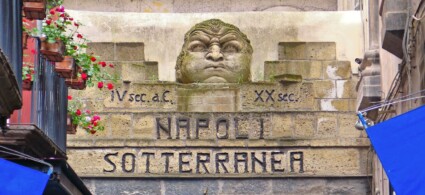
San Gregorio Armeno is a street in Naples' historic centre that connects Via dei Tribunali with Piazza San Gaetano and Via San Biagio dei Librai (better known as Spaccanapoli). Nearby attractions include Naples Underground and the San Lorenzo Maggiore Complex.

 Hotel
Hotel  Budget accommodations
  Apartments
  Family Hotel
  Luxury Hotel
  Resorts