Maradona Murals
Maradona's mural in Naples, on Via Emanuele De Deo in the Spanish Quarter, is the city's most visited secular shrine: history, curiosities and how to get there.
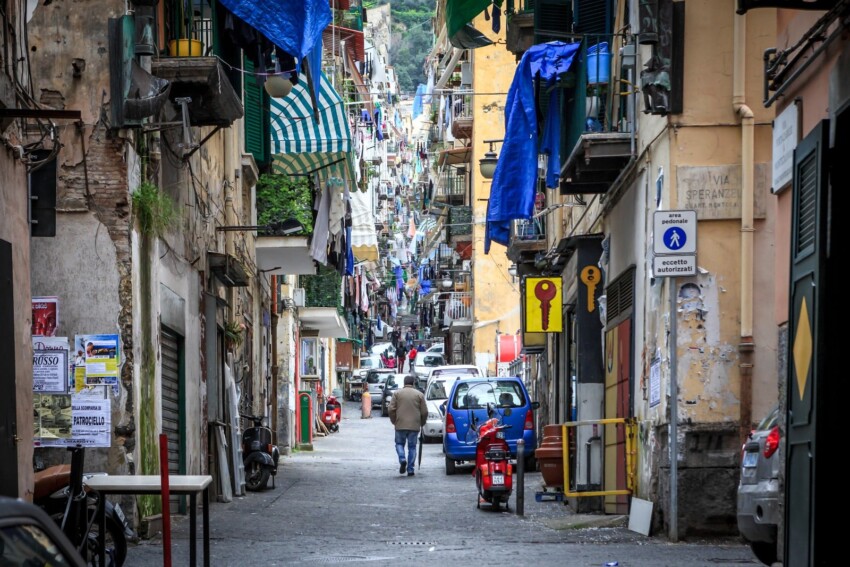
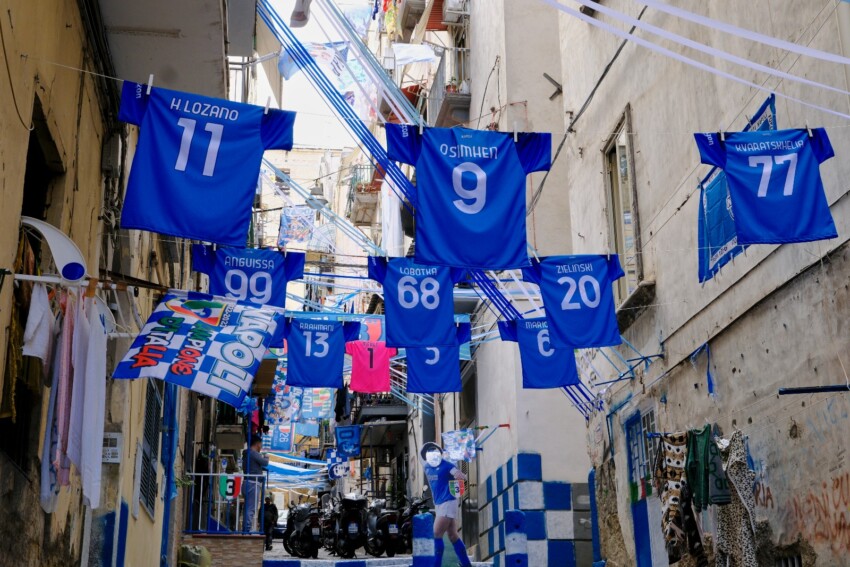
Once considered a notorious and dangerous neighbourhood, the Spanish Quarters have now become one of the most charming and vibrant areas of Naples. Here, among narrow alleyways, clotheslines strung between buildings, tiny cafés and characterful independent shops, you’ll discover an authentic and genuinely Neapolitan Naples – it’s a quarter you absolutely cannot miss when exploring the city and its true spirit. The Spanish Quarters’ origins date back to the 16th century when viceroy Pedro de Toledo ordered this area to be set aside for Spanish garrisons, who were stationed in Naples to suppress potential uprisings and as a temporary camp for soldiers heading to other theatres of war.
This led to the emergence of criminal activity in the area, particularly centred on prostitution and gambling. Despite the introduction of specific laws aimed at eliminating these problems, the neighbourhood remained a zone of significant social hardship. Even after military presence withdrew, the Spanish Quarters retained a high crime rate and became increasingly densely populated, partly due to immigration from surrounding areas.
Over time, however, the Spanish Quarters underwent regeneration. In the 2000s, excavations began for the construction of the Toledo metro station (part of Line 1) and during this work numerous ancient artefacts were discovered. Notably, in Piazza Montecalvario, Bronze Age settlement remains were unearthed, whilst medieval Neapolitan finds were discovered in Piazzetta Santa Maria degli Angeli. The area thus began to experience a complete transformation, particularly from a tourism perspective, and over time the Spanish Quarters have entirely reinvented their image. Street artists have created renowned works throughout, independent artisan shops have opened, market stalls now sell authentic Neapolitan street food, and various trattorie serve local specialities.
The Spanish Quarters currently comprise three neighbourhoods: San Ferdinando, Avvocata and Montecalvario. In this article you’ll find the main points of interest and attractions you absolutely shouldn’t miss when exploring this characterful area of Naples.
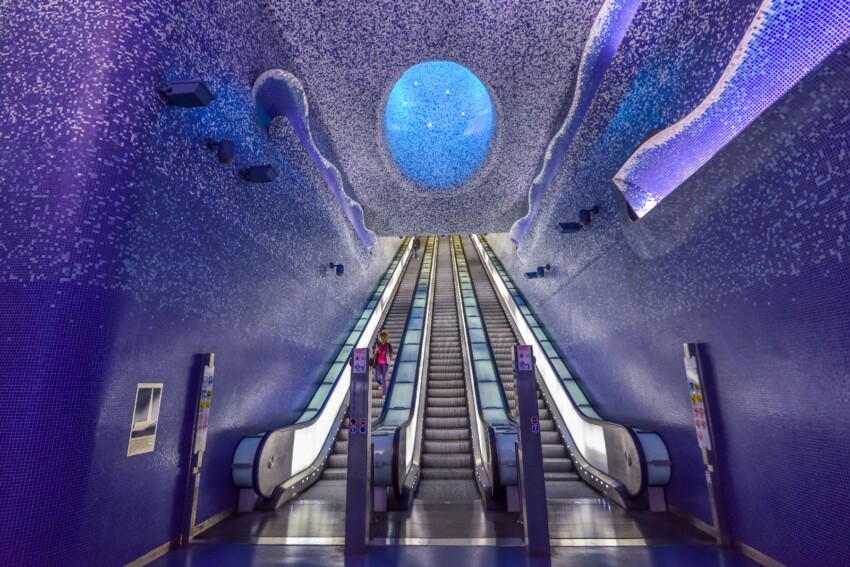
A tour of the Spanish Quarters often begins at the Toledo metro station, one of Naples’ most acclaimed underground stations. Its proximity to the Quarters makes it the perfect starting point to explore the area. Praised by international media including The Daily Telegraph and CNN, Toledo station is considered one of Europe’s finest, let alone Italy’s. Inside, you can take a genuine journey through Naples and its history. The lowest level is adorned with stunning blue mosaics evoking water; ascending further, you’ll find ochre walls echoing the tufa stone on which the city was built, followed by a black asphalt layer. The station also preserves sections of Aragonese city walls that emerged during its construction.
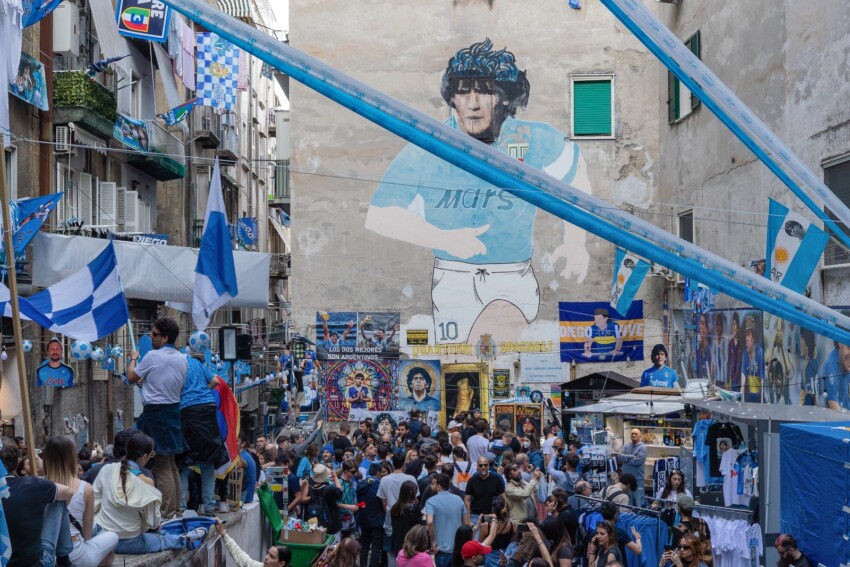
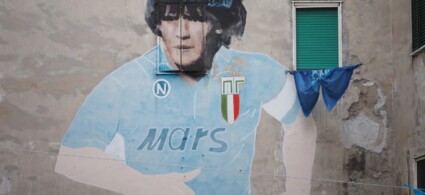
Walking through the Quarters’ alleyways, you’ll stumble upon stunning murals and numerous street art pieces. The most famous are those depicting Maradona and Pudicizia. The Maradona Murals2 was created in 1990 by young artist Mario Filardi to celebrate Naples’ second Scudetto, won thanks to El Pibe de Oro. In the 2000s, street artist Francisco Bosoletti created Pudicizia, a tribute to the sculpture by Antonio Corradini housed in the Sansevero Chapel near the Veiled Christ.
Throughout the Spanish Quarters, you’ll find nearly 200 murals by Cyop&Kaf, two renowned representatives of Neapolitan street art and among the first to create murals in these streets. Along Vico Totò3, you can admire roughly 20 murals dedicated to Totò and his films.
The Pignasecca Market stands in Montecalvario just a short distance from Via Toledo and is open daily from around 8am to 6pm. Here you’ll find stalls selling fruit, vegetables, fish, fresh produce, as well as clothing and household items. Several small kiosks offer fried snacks and typical Neapolitan street food such as cuoppo fritto or pizza a portafoglio.
The market’s name derives from the fact that a pine grove once stood here, populated by numerous magpies. One day the city’s bishop decided to meet a lover in this spot, but the magpies stole the bishop’s ring – despite his efforts, he couldn’t retrieve it. Worried about being discovered, the bishop excommunicated the magpies and prayed they would leave the area. Over time, his prayers were answered and the pine grove dried up (hence “Pignasecca”), causing the magpies to depart.
The Church of Santa Maria Francesca delle Cinque Piaghe was built in the late 18th century, converting a former noble palazzo into a place of worship. Inside hangs a painting depicting the death of Santa Maria Francesca, who, like Saint Francis, was considered stigmatised but during Lent regularly experienced the physical pain of Christ’s Passion. A chapel here contains a chair where Santa Francesca would sit to find relief from her Passion-related suffering. Today the church is a destination for pilgrimages by young women who come to pray at the chapel, requesting the saint’s intervention for the miracle of motherhood.
In Largo Montecalvario stands the Church of Santa Maria della Mercede, erected in 1560 by noblewoman Ilaria D’Apuzzo but subsequently altered numerous times. The religious building displays typical Neapolitan baroque style, with a façade that once featured an impressive staircase, now destroyed. Inside, the church has a Greek cross layout with a single nave and five richly frescoed chapels per side. The apse displays the high altar, created by artist Domenico Antonio Vaccaro.
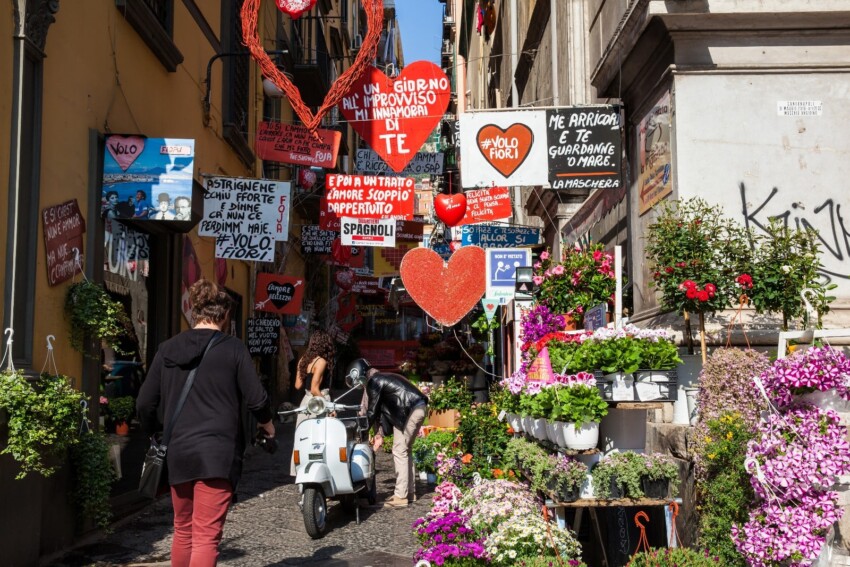
Strolling through narrow streets and alleyways, you’ll glimpse Neapolitans going about their daily lives amid clotheslines, votive shrines and the aroma of pizza wafting from local eateries. It’s only by wandering the Spanish Quarters that you can discover the “Bassi Napoletani” (also known as ‘o vascio), small one or two-room dwellings on a building’s ground floor with direct street access. Many families lived in these tiny, cramped spaces without windows, whilst other “Bassi” housed shops and craftsmen. These characteristically always had their doors open to let in natural light from the street.
Don’t miss the numerous churches in the area either, such as the Church of Sant’Anna di Palazzo, the Church of Santa Teresella degli Spagnoli and the Spanish Quarters Park, which houses one of Naples’ most extensive monastic complexes.
The Pedamentina is a flight of steps leading from the Spanish Quarters up to the San Martino Charterhouse and Castel Sant’Elmo (Vomero), a fortress built in the 14th century by architects Tino di Campione and Francesco de Vito. Originally these staircases were intended to transport materials for the Charterhouse’s construction up the hill, but later served as a defensive outpost against potential sieges of Castel Sant’Elmo. Today, the Pedamentina connects two distinct areas of Naples: the Vomero quarter on the hillside and the historic centre below. Once you reach the top, you’ll be rewarded with breathtaking views over the Bay of Naples.
In the Spanish Quarters you won’t struggle to find a host of venues where you can enjoy excellent food at remarkably reasonable prices. Between the alleyways are numerous bars, pizzerias and restaurants serving the region’s most celebrated specialities. For authentic Neapolitan cuisine, the Trattoria Antica Capri8 comes highly recommended – a 25-cover trattoria open since 1968. They serve fried pacchero with ricotta filling, spaghetti allo scoglio, polpo alla luciana, fritto di paranza, fried zeppoline and scagliozzi.
Another spot is Pizzeria Friggitoria 'Ntretella9, housed in a space that at the turn of the 20th century was a sawmill. The spatial layout, tufo stone walls, vintage lamps and numerous other details have been preserved to maintain the atmosphere of yesteryear.
For a historic venue, Trattoria da Nennella10 in Vico Teatro Lungo is your answer. Operating since 1949, steps away from Toledo metro and the Nuovo Theatre, this trattoria doesn’t accept reservations and is known for its lively, irreverent atmosphere. Prices are economical, portions generous, and the menu changes almost daily based on local fresh produce availability. Regardless of the day’s menu, certain dishes are always on offer: pasta e fagioli, spaghetti with olives and capers, scarole and bean soup, vermicelli with clams and friarielli sautéed with chilli.
For a snack (or full seafood meal), try Pescheria Azzurra11. This small fishmonger eatery, with a few outdoor tables, serves excellent seafood dishes at budget-friendly prices. Must-try options include Frittura del Golfo with the day’s catch, polpetti alla Luciana, Neapolitan mussels soup and paccheri alla positanese.
Other places worth discovering include Trattoria A Pignata, Osteria al Gobbetto and Trattoria Speranzella – all serving Neapolitan traditions at good value.
In the following map you can see the location of the main places of interest mentioned in this article.
 Hotel
Hotel  Budget accommodations
  Apartments
  Family Hotel
  Luxury Hotel
  Resorts