Bestseller
Pompeii: Entry Ticket with Audio Guide
From 34,50 €
Buy the ticket
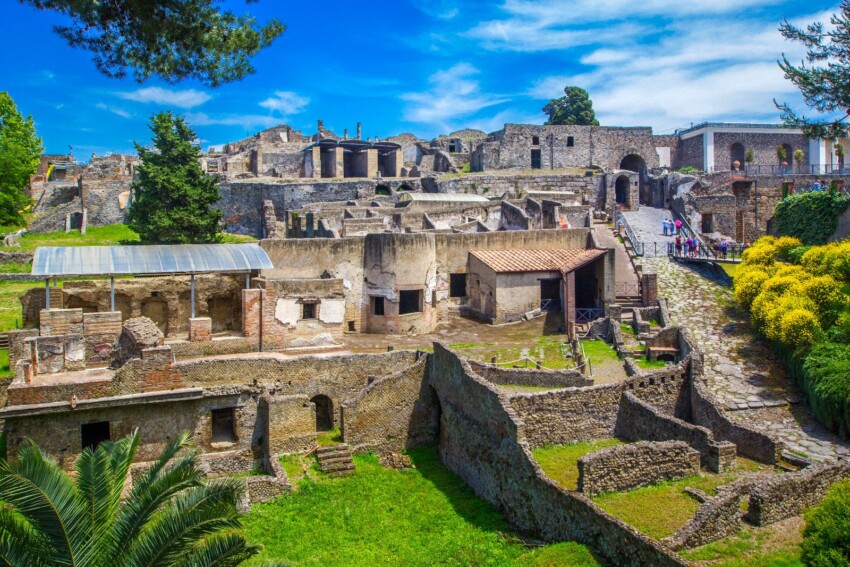
Pompeii is an ancient city that, during the Roman era, produced and exported local goods such as olive oil and wine. Trade in these commodities made it a wealthy and prosperous city, and a popular holiday destination for many Roman patricians.
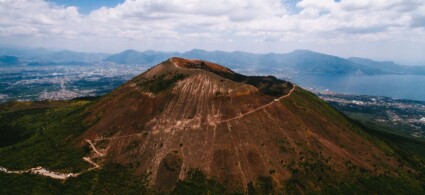
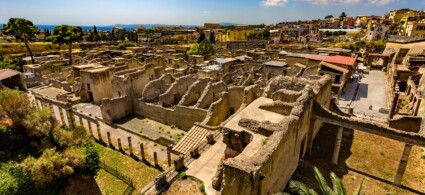
Unfortunately, in 79 AD Mount Vesuvius, which at the time nobody realised could be a dangerous volcano but which everyone thought was simply a mountain, destroyed the city with a violent eruption famously documented by the Roman writer Pliny the Younger. Ash and pumice covered ancient Pompeii, which remained hidden for years and was only discovered from the eighteenth century onwards. Today, the ancient town stands protected within a vast archaeological site declared a UNESCO World Heritage Site. Other cities in the area were also affected by the eruption, such as Herculaneum and Stabiae, and these too host archaeological parks that preserve the remains of ancient civilisations.
Visiting the Pompeii excavations allows you to take a journey back in time and admire the city as it appeared to its ancient inhabitants shortly before the catastrophe. The archaeological site hosting the excavations is truly vast, so we recommend planning an itinerary of the main sites to visit before you go.
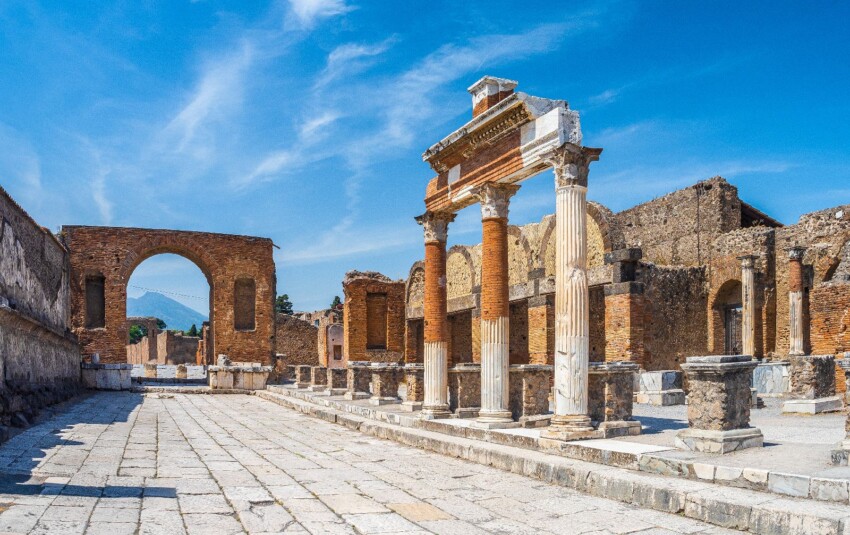
The hub of the city’s commercial activities and the political, religious and cultural heart of Pompeii, the forum housed artisans’ shops, thermal baths and political and administrative buildings. This is one of the city’s oldest locations, and overlooking the piazza are three temples: the Temple of Apollo, the oldest temple in Pompeii; the Temple of Venus; and the Temple of Jupiter.
Following Via dell’Abbondanza, Pompeii’s main street, you can reach the amphitheatre, which dates back to 80 BC and is one of the oldest stone structures. The Pompeii Amphitheatre could hold 20,000 spectators and was the venue for gladiatorial combat. In the upper section, there are still openings that were used to mount a covering that protected spectators from both sun and rain.
Near the forum stands the House of the Faun, which covers approximately 3,000 square metres and is one of the city’s oldest and most impressive residences. The house is named after a small bronze statue representing Faunus, the Roman god of woodlands and nature.
The domus most likely belonged to a noble Roman family who had luxurious rooms built to receive guests, and floors decorated with precious mosaics, among which stands out the one depicting Alexander the Great’s victory over Darius, King of Persia. Currently, the mosaics and many of the objects found are displayed at the Naples Archaeological Museum for conservation purposes.
The Large Theatre and the Small Theatre are two Pompeian theatres dating from the second and first centuries BC, which could accommodate 5,000 and approximately 1,300 spectators respectively. The theatres stood in the district of the city dedicated to leisure and entertainment. The Large Theatre remains an active venue for music and theatrical performances today.
Originally an ancient residential quarter that contained a vineyard, this area was only named ”Garden of the Fugitives” following its discovery. Here you can observe plaster casts of Pompeian men and women attempting to flee the eruption of Vesuvius in 79 AD. The casts were made during excavations carried out in the 1960s and 1970s using the plaster injection technique.
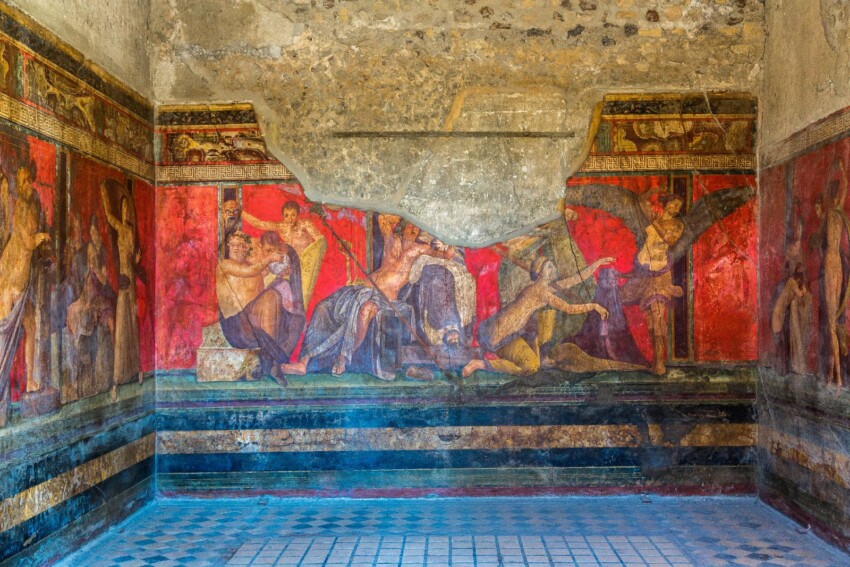
The Villa of the Mysteries was built in the second century BC in a panoramic location just steps from the sea, and over the years underwent several expansions and renovations. This domus contained both a residential area and an area dedicated to processing and transforming agricultural produce, where a grape press, large kitchens and two ovens have been found.
The villa’s name derives from the Hall of the Mysteries located in the residential section, where across three long walls stood an extraordinary pictorial cycle (megalography) depicting a mystery rite, hence the name ”Villa of the Mysteries”. Considered one of the best-preserved artistic works on this site, the fresco depicts on the central wall the God Dionysus with his bride Ariadne, whilst on the side walls are female figures such as fauns, maenads and winged figures engaged in various ritual activities.
There are various ways to visit the Pompeii excavations. We’ve gathered below the most common options: from simple admission tickets to packages that include audioguides, tours with official guides, and even transfers from Naples and Rome, for maximum convenience.
If you enjoy listening to Pompeii’s story during your visit, choose the ticket with audioguide: plan your route as you prefer whilst a voiceover explains the places you visit.
To make the most of your visit to the Pompeii excavations, consider booking a guided tour: qualified staff will take you through a complete discovery of all the excavations, perhaps combined with other attractions around Naples. Choose the one that suits you!
Alternatively, if you’re unsure how to reach the Pompeii excavations or want the convenience of a private transfer, get a complete ticket that includes admission, guided tour, and transfer from Naples or Rome.
The Pompeii Archaeological Park is one of the attractions included in the Campania Artecard, the tourist pass of the Campania Region that also includes admission to unmissable attractions such as the Royal Palace of Caserta, the parks of Herculaneum and Paestum, and Naples attractions such as the Royal Palace and the Capodimonte Museum and Royal Wood.
The Pompeii excavations are open every day from 9:00 to 17:00 from 1 November to 31 March, whilst from 1 April to 31 October opening hours are 09:00 to 19:00 with the last entry permitted at 17:30. The archaeological site is closed on 1 January, 1 May and 25 December.
The Sanctuary of the Madonna of the Rosary was built between 1876 and 1891 by Bartolo Longo and is one of the key places of reference for the faithful devoted to the cult of the Blessed Virgin. The complex has been enlarged several times over the years to accommodate the ever-growing number of pilgrims who visit.
The Basilica features three naves accompanied by three altars that join together behind the apse, whilst the central nave culminates in a dome 57 metres high. On 8 May and the first Sunday in October, the Sanctuary welcomes thousands of pilgrims from around the world to celebrate the Supplication to the Madonna of Pompeii.
Pompeii offers a vast range of accommodation, especially in the historic centre, near the excavations and the Pompeii Sanctuary. However, as in many other tourist destinations, proximity to the centre and main attractions pushes prices up.
Bear in mind that Pompeii is a city you can visit in a day from Naples, so you might also consider staying in the city itself, which offers a wide range of options.
For those arriving from Naples, you can take the Circumvesuviana line from Naples Central Station and reach the excavations on a train on the Naples-Sorrento route, getting off at Pompeii Scavi – Villa dei Misteri. Alternatively, you can take the Circumvesuviana Naples-Poggiomarino line and get off at Pompeii Sanctuary station, or take the FS line Naples-Salerno train and get off at Pompeii station.
For those who prefer travelling by bus, whether from Naples or Salerno, you can take a SITA bus that goes to Pompeii. By car, we recommend taking the A3 Motorway Naples-Salerno and taking the Pompeii west exit.
In 1748, after ancient city remains were accidentally discovered in Herculaneum, King Charles of Bourbon ordered the excavations at Pompeii to begin. The King’s aim was to discover archaeological remains that would bring prestige to the royal family and increase its artistic heritage. Initially, however, the excavations were not conducted systematically and brought to light coins, statues and other small artefacts, prompting the sovereign to order work to be suspended.
With the rise to power of Ferdinand I of the Two Sicilies, thanks in large part to the interest of his wife Maria Carolina, a new, more systematic excavation method was employed between 1759 and 1799, which brought to light much of Pompeii’s city. In the early nineteenth century, due to political and economic difficulties, excavation work was suspended until 1806, when it resumed thanks to the initiative of Joseph Bonaparte. During the years of French rule, the road between the Villa of Diomedes and the House of Sallust was discovered, as well as the homes of the Tragic Poet, the House of the Faun with the mosaic depicting Alexander’s battle, the forum and the basilica.
Returning to Bourbon rule, Pompeii became a sort of “open-air museum” for their illustrious guests and excavation work slowed once again. With the proclamation of the Kingdom of Italy, management of the excavations was entrusted to Giuseppe Fiorelli, who brought order to the work and was the first to divide the city into insulae (house blocks) and regiones (districts). Since then, work at the Pompeii excavations has never stopped, although in recent years has been more focused on the restoration and restructuring of artefacts that have already emerged.
Pompeii is a city situated at the foot of Vesuvius, 30 km south of Naples, 18 km from Herculaneum and 26 km from Sorrento.
City Card allow you to save on public transport and / or on the entrances to the main tourist attractions.

 Hotel
Hotel  Budget accommodations
  Apartments
  Family Hotel
  Luxury Hotel
  Resorts