Sorrento
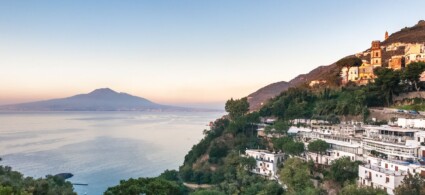
Sorrento is a beautiful town overlooking the Gulf of Naples. Beyond its significant historical and architectural heritage, the city serves as the gateway to the Sorrentine Peninsula.
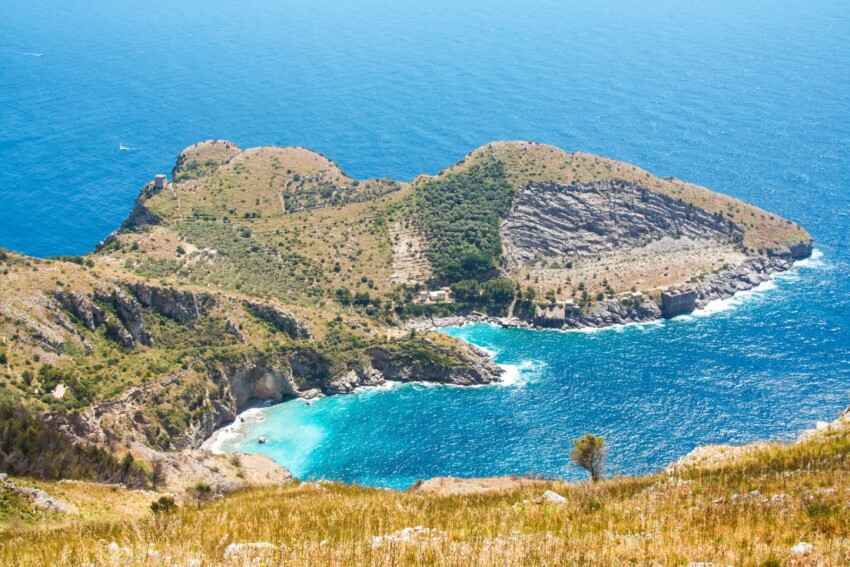
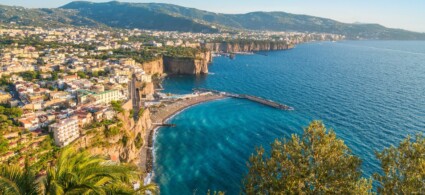
A land that with its beauty has captivated writers, poets, painters and artists, the Sorrento Coast is a stretch of Campania’s coastline characterised by an ancient history, crystalline waters and a long gastronomic tradition. Bordered on one side by the Tyrrhenian Sea and on the other by green hillsides, the Sorrento Coast is a real gem to explore at a leisurely pace, letting yourself be seduced by the charm of its picturesque towns. The name of this beautiful area derives from the city of Sorrento, which is considered the central location of the coast and also the most important town.
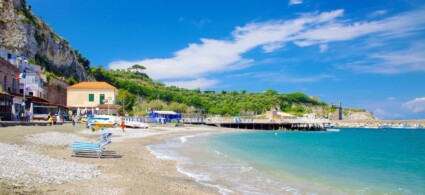
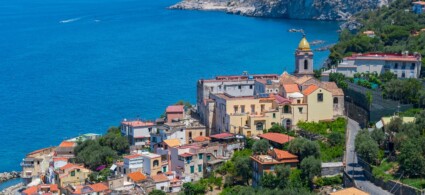
Over the years, most of the fishing villages along the Sorrento Coast have evolved from small fishing hamlets into renowned tourist centres famous for their beautiful beaches and turquoise waters. Visiting these towns means wandering through narrow streets scented with lemon blossoms, discovering age-old traditions, swimming in secluded coves and savouring excellent local cuisine.
This stretch of coast is also famous for several typical products such as limoncello, a liqueur made from lemons grown on the Sorrento Coast using methods passed down intact through generations, Gragnano pasta, Campania buffalo mozzarella DOP and Monaco provolone DOP. In summer the Sorrento Coast can be a very popular destination, so given the mild climate, we recommend visiting this area during the shoulder seasons.
This beautiful corner of Campania, washed by the Tyrrhenian Sea, overlooks the Gulf of Naples and is bordered to the north by Vico Equense and to the east by Sant’Agata sui Due Golfi, a hamlet of Massa Lubrense.
Those who visit the Sorrento Coast describe it as a true earthly paradise that captivates everyone with its stunning natural and landscape beauty.
This marvellous stretch of coast, which has enchanted figures such as Goethe, Dickens, Nietzsche and D’Annunzio, is made up of towns and small villages that over the years have managed to preserve intact age-old traditions and their historical and cultural identities.
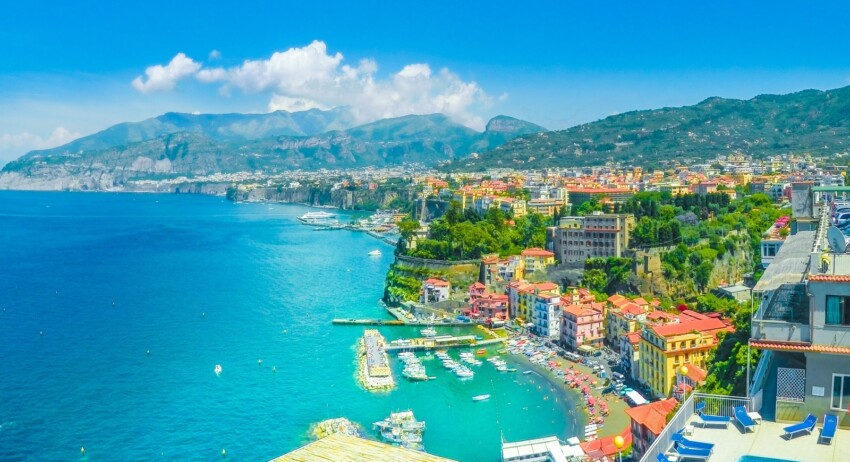
Considered since ancient Roman times a favourite destination of the aristocracy, Sorrento is a city that perfectly combines history, culture, entertainment and relaxation. Regarded as the main town in this stretch of coast, Sorrento, thanks to its climate and excellent infrastructure, is an ideal destination at any time of year.
The main square in Sorrento is Piazza Tasso, the heart of city life, named after the celebrated writer Torquato Tasso who was born here in 1544. Sorrento’s centre is characterised by shops, artisan workshops and historical monuments such as the Sedile Dominova, a mediaeval institution dedicated to city administration, the Cathedral from the 15th century and the Franciscan convent complex.
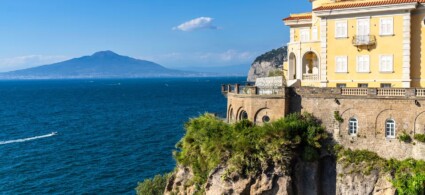
Don’t miss a visit to the beautiful Villa Comunale, which sits right on the cliff edge overlooking the Gulf of Naples, offering spectacular views. From here both a scenic pathway and a convenient lift lead down to Marina Piccola, a Sorrento beach where you’ll find numerous bathing establishments. Close to the beach is also the port, from where ferries and hydrofoils depart for Capri and Naples.
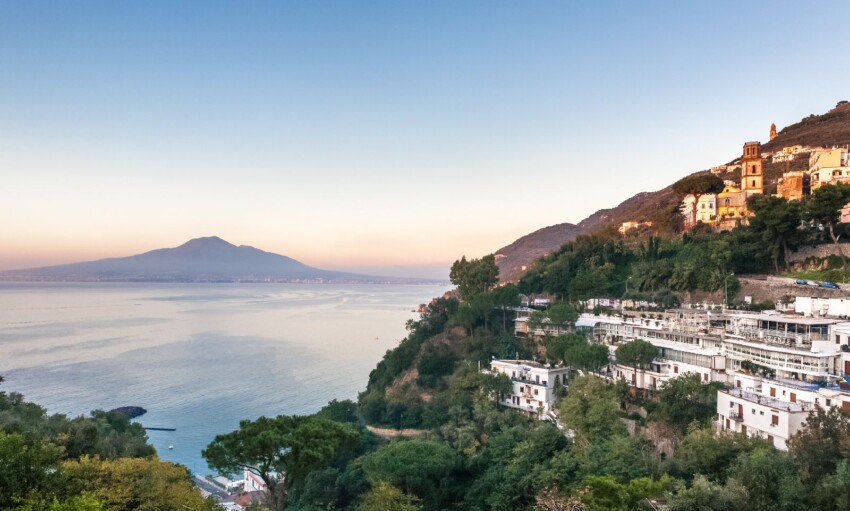
Regarded as an important commercial hub already by the ancient Etruscans and Greeks, Vico Equense is a town that presents itself as a true open-air museum. Vico Equense sits on a tuff block 90 metres above sea level and is nestled between the Gulf of Naples, the Lattari mountains and the Gulf of Salerno.
Its mediaeval old town is home to the magnificent Cathedral of the Annunciation, the only religious building in the Gothic style along the entire Sorrento Coast, Castello Giusso, founded by the Angevins, and the Antiquarium, a museum where you can admire archaeological artefacts from a necropolis. The town also hosts the famous Scrajo thermal springs, which thanks to sulphured water springs, offer therapies for respiratory and dermatological conditions.
Over the years, around the old town, among the hills surrounding Vico, small hamlets have developed, organised as miniature towns where many craftspeople live and produce numerous dairy products using ancient methods passed down from generation to generation.
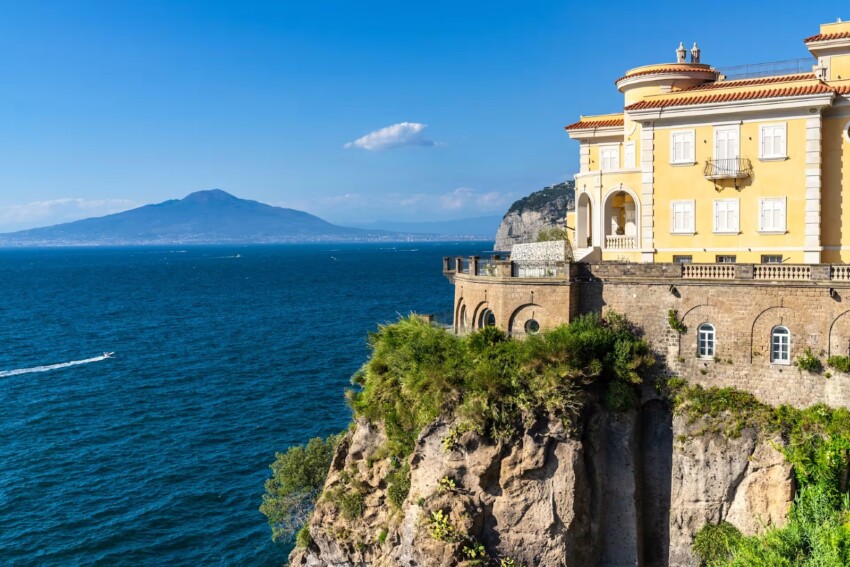
A small village on the Sorrento Coast, Sant’Agnello sits perched on a tuff outcrop overlooking the sea and offers magnificent views of the Gulf of Naples and the Gulf of Salerno. The town centre is located in Piazza Matteotti, where the municipal offices are situated, but Sant’Agnello is divided into five districts: Rione Angri, Rione Cappuccini, Rione Colli di Fontanelle, Rione Maiano and Rione Tordara-Trasaella.
Rione Angri, in particular, is the oldest district in the town and hosts numerous historic buildings such as the Church of the Annunciation, in neoclassical style, and the Sessa candle factory, the only candle-making workshop that maintains traditional beeswax craftsmanship. Located in Rione Angri, perched dramatically above the sea, is Villa Crawford, which was originally a farmhouse but was later renovated by American writer Francis Marion Crawford, who described the beauties of the entire coast in his novels. In Rione Cappuccini, you’ll find the Church and convent of the Capuchins, built in 1586 perched above the sea, and Belvedere Marinella, one of the most evocative panoramic viewpoints in the entire town.
Piano di Sorrento is a lively town located in the central part of the Sorrento peninsula and is a location with truly ancient origins that appear to date back to the Palaeolithic period.
The town is rich in evocative places such as the famous Villa Fondi de Sangro, an elegant historic building in neoclassical style built on a panoramic terrace and surrounded by a centuries-old park full of citrus trees, olive groves and particular botanical species. Inside, the villa houses the archaeological museum of the Sorrento peninsula, named after Georges Vallet, where you can admire artefacts found across the Sorrento peninsula from prehistoric to Roman times.
Also worth visiting is the Basilica of San Michele Arcangelo, built around the 9th century on the remains of a pagan temple, which houses frescoes from the 16th and 17th centuries inside, the Church of the Holy Trinity with a square bell tower that houses a clock from 1765, and the Church of Mercy which features a polychrome marble altar with a painting from the mid-18th century.
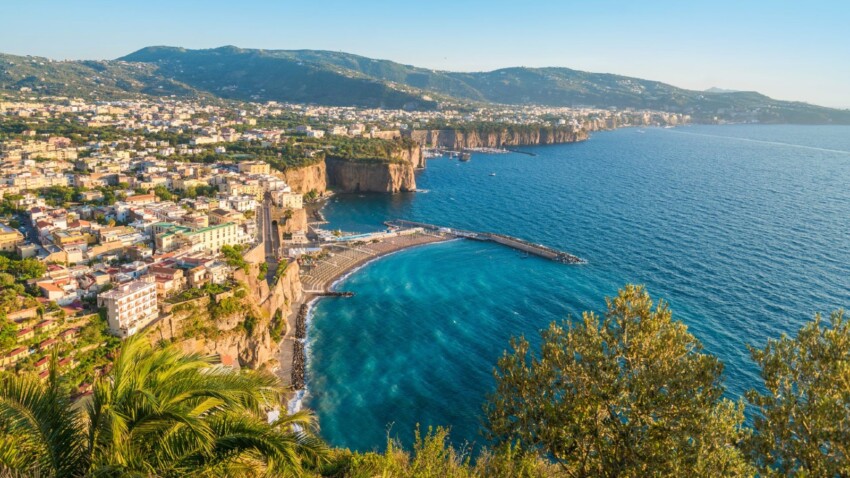
Meta is a fishing village overlooking the Gulf of Naples that became renowned in the 9th century AD for the excellence of its merchant marine. Though a small village, Meta offers several places of interest and monuments to discover.
The old town is a tranquil area to explore on foot and is characterised by narrow streets, adjoining cottages and numerous churches. Worth visiting are the Basilica of Santa Maria del Lauro, so named because it stands on the spot where an old peasant woman found a golden statue of the Madonna next to a laurel bush, and the Church of the Annunciation with a chapel built entirely in tuff.
Meta is traditionally divided into two distinct parts: Meta “upper” and Meta “lower”. Meta “upper” encompasses the higher part of the village, while Meta “lower” is made up of the coastal zone that is home to two beaches, Marina di Alimuri, a large sandy beach, and Meta beach, which instead consists of pebbles.
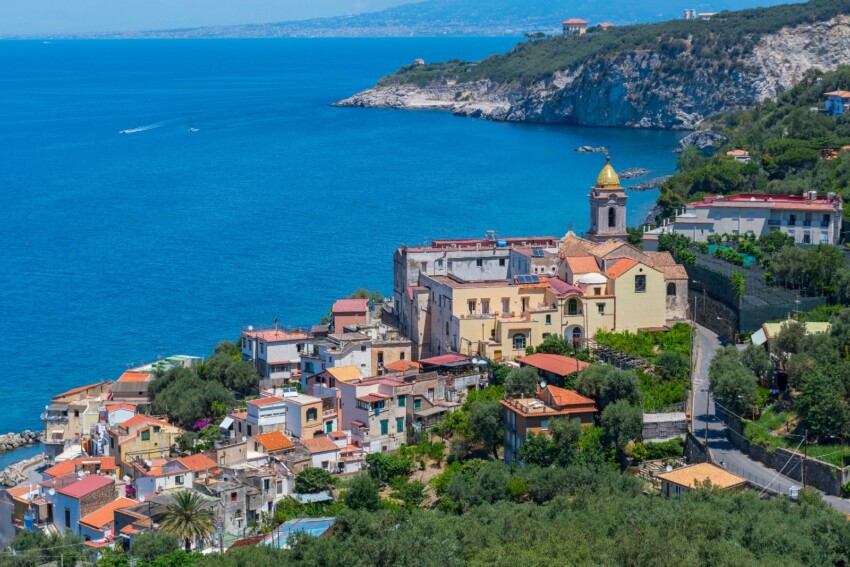
Washed by both the Gulf of Naples and the Gulf of Salerno, Massa Lubrense is a peaceful village on the Sorrento Coast that has managed to preserve a genuine environment steeped in ancient traditions. Its old town is characterised by buildings and 19th-century palaces, whilst all around the town there are numerous hiking trails immersed in the natural landscape. Massa Lubrense is a place that combines evocative and fascinating natural scenery with a rich artistic and architectural heritage.
Among the visits we recommend are the Cathedral of Santa Maria delle Grazie, which preserves a prized 18th-century majolica floor from the Neapolitan school, the picturesque village of Marina della Lobra, with typical houses built right against the small port, and Marina di Puolo where you can see the remains of columns from a temple dedicated to Hercules.
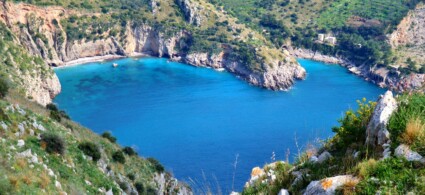
Nestled between turquoise waters and green olive groves, the town is famous for the beautiful protected marine reserve of Punta Campanella, which has been included in the WWF heritage. This nature reserve is home to the Tower of Punta Campanella, an ancient Saracen watchtower, and the famous Ieranto Bay, an Italian marine park protected by the FAI.
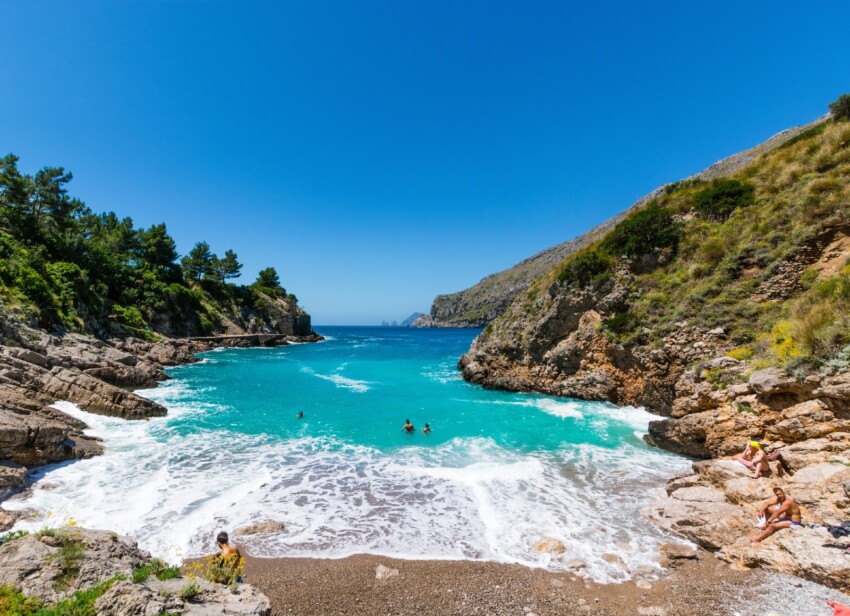
Nerano is a hamlet of the town of Massa Lubrense and is a locality that captivates all visitors with breathtaking views and wonderful landscapes. The name Nerano appears to derive from a villa that the Emperor Nero had built in this area of the coast. From Nerano, you can also take a hiking path that in just over an hour’s walk allows you to reach the marvellous Ieranto Bay.
The village is mainly famous for the beach of Marina del Cantone, where according to legend the sirens lived who had tried to enchant Ulysses during his journey home from Troy. Scuba diving enthusiasts frequently visit this beach, which is composed of several rocky coves with stony and pebbly seabeds and transparent water. At Marina del Cantone, you’ll also find the start of the path that leads to the beautiful Recommone beach.
In the following map you can see the location of the main places of interest mentioned in this article.
 Hotel
Hotel  Budget accommodations
  Apartments
  Family Hotel
  Luxury Hotel
  Resorts