Pompeii: Entry Ticket with Audio Guide
13.560 reviews
Buy now
From 34,50€ per person
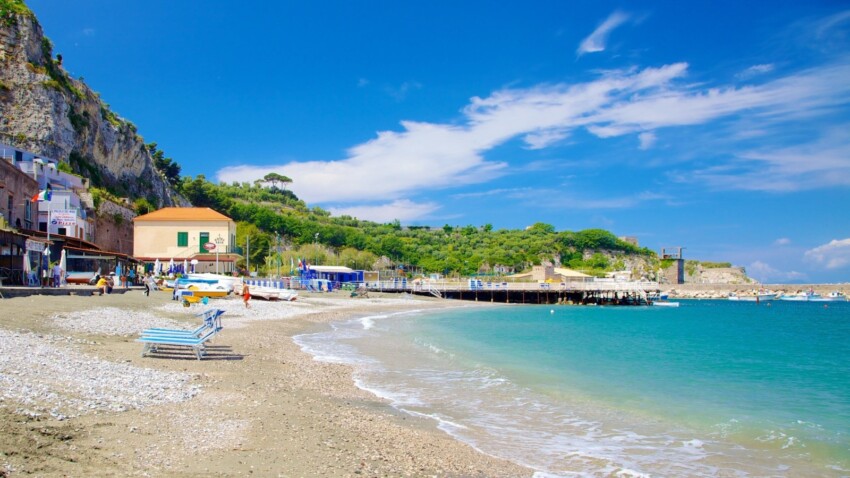
First-time visitors to Sorrento are often struck by its unusual geography: the historic centre sits on a tuff plateau some 40–50 metres above sea level, offering extraordinary views across the Bay of Naples, towards Mount Vesuvius and Capri, yet reaching the water requires stairs, lifts or a water taxi.
The beaches of the Sorrentine coast are not the long stretches of white sand you might imagine. The coastline is predominantly rocky and steep, with small coves of dark volcanic pebbles, tuff platforms that drop sheer into the water, and beach clubs built on stilts. This geological formation means every swim is something of an achievement and every inlet feels like a private corner carved from the rock.
The advantage is that the waters around the Sorrentine Peninsula, particularly within the Punta Campanella Marine Protected Area, which safeguards the stretch of sea between Sorrento and the Amalfi Coast border, are among the clearest and best-monitored in Campania.
The most beautiful and wildest beaches lie several kilometres from the town centre, heading towards Massa Lubrense: inaccessible coves, natural bays protected by reserves, and one of southern Italy’s finest beaches, Baia di Ieranto, reachable only on foot or by sea.
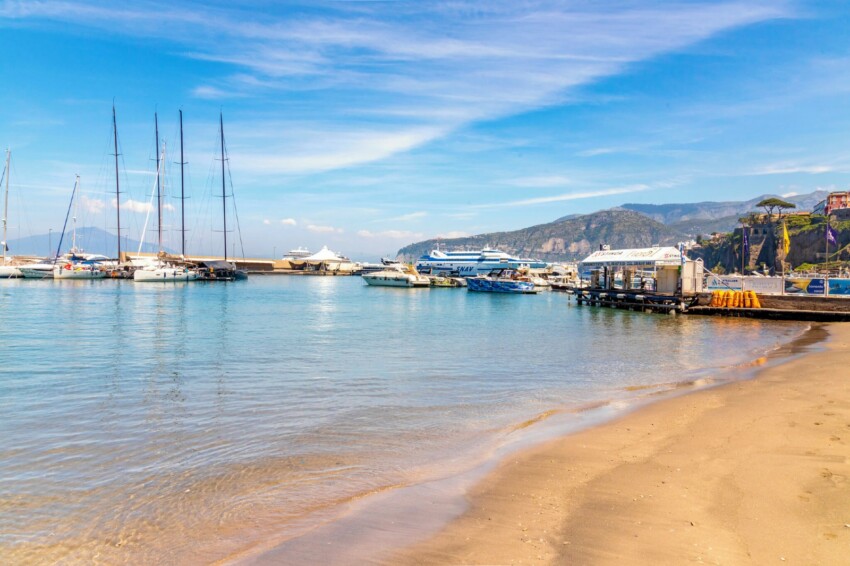
Marina Piccola is Sorrento’s most convenient and central beach, located directly beneath the historic centre near the harbour. It’s reached from above in two ways: via the lift in Villa Comunale (the public park on the cliff edge) or by walking down the stairs from Piazza Tasso and the waterfront.
The beach itself is a narrow strip of black volcanic sand and pebbles, mostly taken up by private beach clubs that have built wooden platforms and stilted structures over the water to maximise space.
The free section is tiny and is traditionally reserved for residents. A sunbed at one of Marina Piccola’s establishments costs around €20 on average, with facilities, showers and often a poolside bar. The harbour at Marina Piccola is also the departure point for boats to the islands and the Amalfi Coast, making the area lively and far from quiet.
It’s the choice for those who don’t want to venture far but aren’t after a swim in nature.
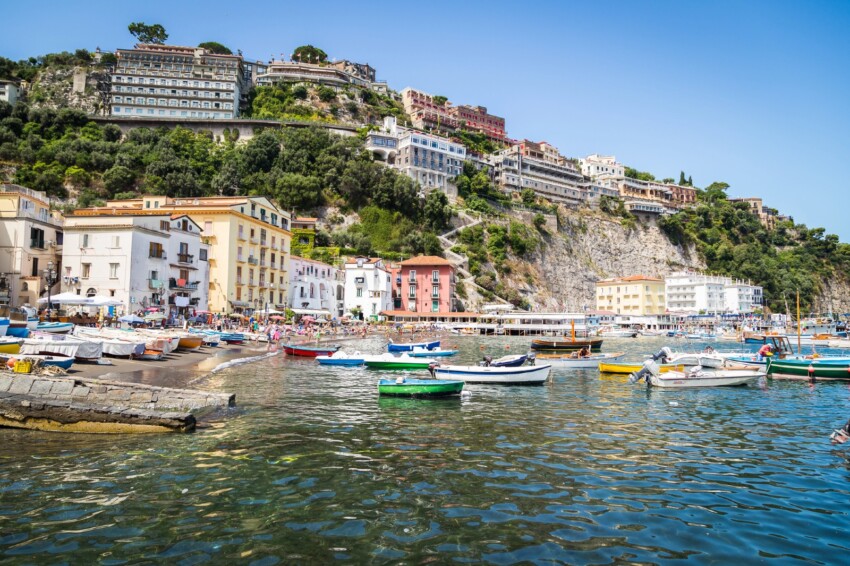
About 15–20 minutes’ walk from Sorrento’s centre heading northwest lies Marina Grande, one of the town’s most authentic and beloved spots: a fishing village with tall, narrow colourful buildings set directly on the waterfront, boats pulled up on the shore, nets being mended, and the scent of fresh fish drifting from the waterside restaurants.
The beach is made of coarse dark sand and pebbles (the typical volcanic sand of the area), with an accessible free section and several equipped establishments. The seabed slopes gently and the water is clean, with views of Mount Vesuvius and the gulf offering one of the most classic perspectives of the Sorrentine Peninsula.
Marina Grande has kept a more authentic atmosphere than Sorrento’s busy centre: the seafood restaurants here are frequented by locals too, prices are more reasonable, and the mingling of swimmers, fishermen and passers-by creates a spontaneous energy the historic centre lacks.
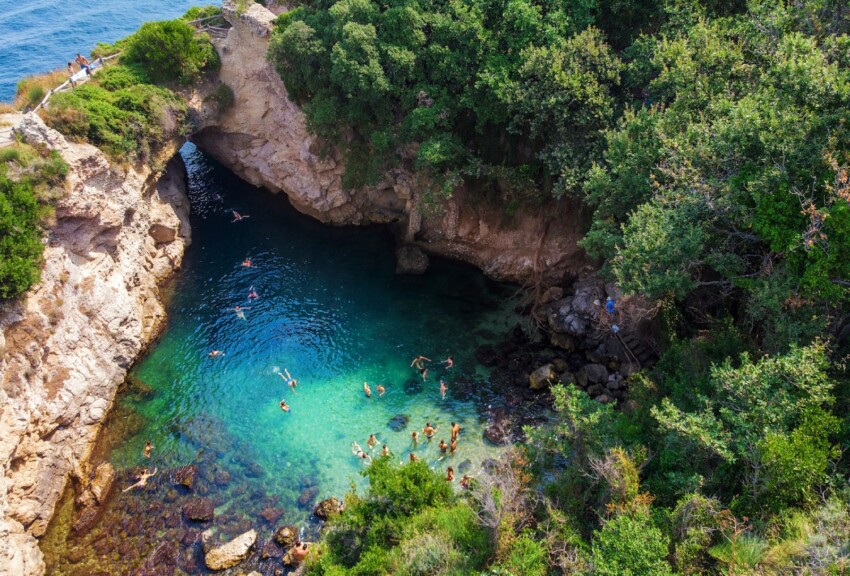
The Bagni della Regina Giovanna are the most enchanting beach in the Sorrentine area, about 3 kilometres from the centre heading towards Massa Lubrense. The site’s story has two dimensions: one archaeological, one rooted in medieval legend.
The promontory of Capo Sorrento, reachable on foot in 15–20 minutes along a path from the small hamlet of Capo di Sorrento, contains the remains of Pollio Felice’s maritime villa, a wealthy patrician from Pozzuoli who had this residence built here during the reign of Emperor Domitian. It once covered about 30,000 square metres with a dual structure: a seaside mansion facing the sea and a country house for producing oil, wine and citrus fruits, connected by passages carved into the rock.
Today only ruins remain, but a walk among the crumbling walls on the clifftop promontory overlooking the gulf is itself a remarkable experience.
Within the ruins, a stairway carved from the rock descends to a natural pool: a lagoon of seawater enclosed by limestone walls and connected to the open sea by a natural rock arch. This is the heart of Bagni della Regina Giovanna. The inlet’s formation, almost entirely screened by rocky walls, made it naturally a private bathing pool. Today anyone can enter free of charge, though access is controlled and the lagoon remains in shadow for much of the day due to the wall configuration. Beyond the stairs lies the La Solara area, with broader, flatter rocks suitable for sunbathing and easier access to the sea than the lagoon, plus a private establishment with sunbeds. No services whatsoever are available in the natural section: bring water, food and everything you need.
How to get there: bus from Sorrento’s main square (line A, Capo di Sorrento stop), then on foot following signs for the Roman Ruins along Traversa Punta Capo (about 15–20 minutes). Arriving by car is not recommended due to extreme parking difficulties. Entry is free.
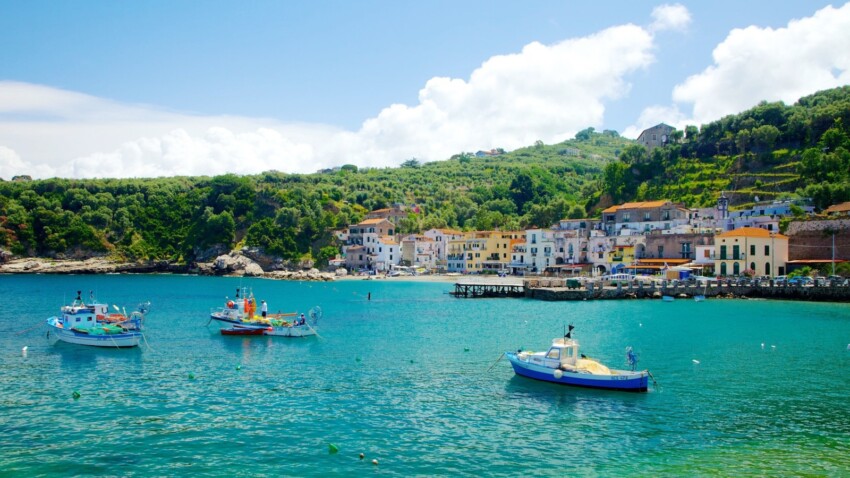
Marina di Puolo, in the municipality of Massa Lubrense about 2 kilometres southwest of Sorrento, is where locals head for a family beach day: a small fishing village nestles in a sheltered bay with shallow, clear waters, a gentle-sloping seabed perfect for children, and a mix of sand and pebbles with free sections and equipped establishments.
The atmosphere is more authentic and less touristy than Sorrento centre’s beaches. The waterfront restaurants serve traditional seafood at reasonable prices, and the little harbour with fishing boats adds charm.
Access is easy by car (parking nearby) or bus from Sorrento. Kayak and paddleboard hire is available for those wanting to explore the surrounding coast. From Marina di Puolo you can kayak to Bagni della Regina Giovanna and other rocky coves in the area.
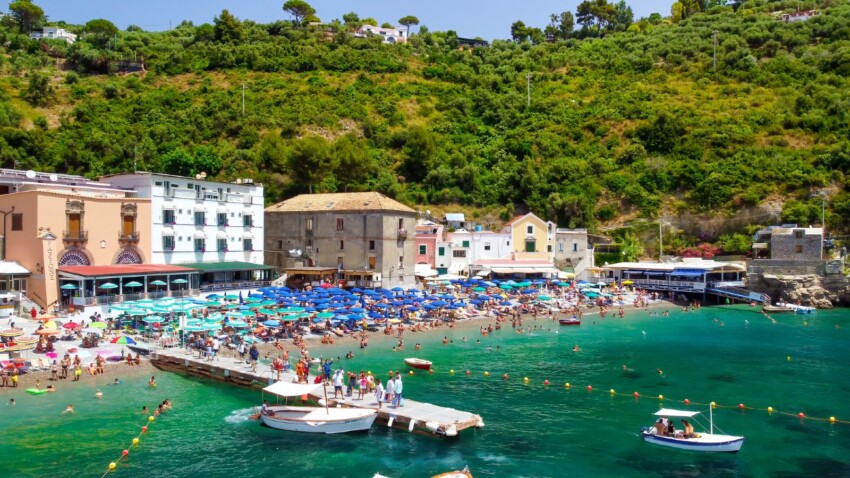
When a Sorrentine decides to spend a carefree day at the beach, they almost invariably head to Marina del Cantone, the beach of the Nerano hamlet in Massa Lubrense municipality, about 15 kilometres from Sorrento via a winding scenic drive.
The bay is spacious and sheltered from the winds, with intensely turquoise water and two adjacent beaches: the larger “Grande” beach and the smaller, more intimate Spiaggia dei Tedeschi, separated by a jetty. Both have pale pebbles with free sections and equipped establishments. You can hire boats directly from the beach to reach Capri or explore the coast towards Positano.
But Marina del Cantone is famous for more than just the beach: according to many, this is where you’ll eat the Sorrentine Peninsula’s most renowned dish. Spaghetti alla Nerano—pasta cooked with fried courgettes, Provolone del Monaco cheese, basil and fresh cream—was invented by Maria Grazia, the chef at the eponymous restaurant that opens directly onto the beach, in the earliest 1950s. The story is documented and proudly claimed: spaghetti alla Nerano was born here, in this bay, and the beachfront restaurants still serve it in its traditional form.
A roughly one-hour trail to Baia di Ieranto also starts from Marina del Cantone.
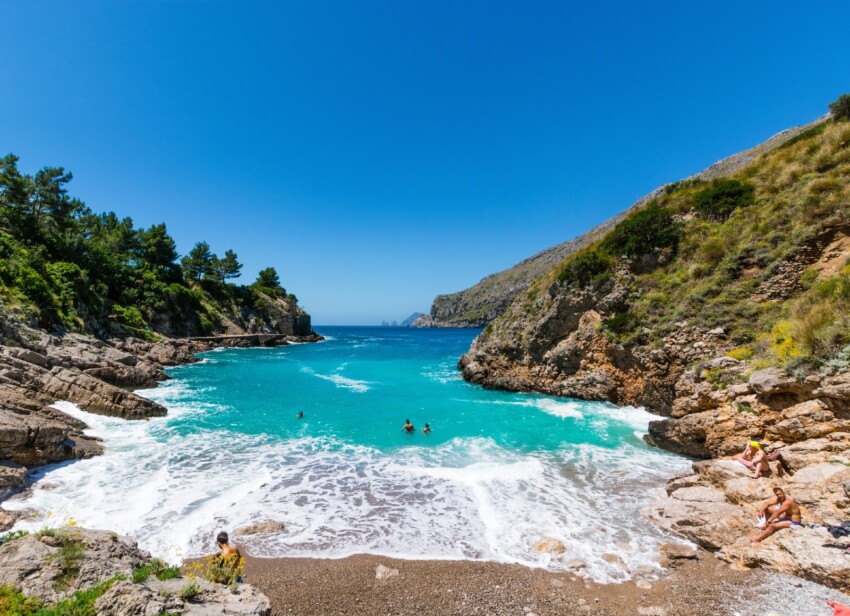
The Baia di Ieranto, between Punta Penna and Punta Campanella, is considered by many the finest beach on the Sorrentine Peninsula and among the most spectacular in all of Campania: a small beach of white pebbles and gravel nestled between sheer limestone cliffs, with water the colour of which shifts with the light and Capri‘s silhouette as a backdrop.
It’s a nature reserve managed by the FAI – Fondo Ambiente Italiano and part of the Punta Campanella Marine Protected Area: there are no structures or facilities, access is monitored and visitor numbers are limited.
It’s reached on foot from Nerano via a path of roughly 4–6 kilometres through Mediterranean scrubland with sea views (about 1 hour’s walk), or by small boat. It’s not suitable for young children due to the distance and lack of facilities. Bring everything you need—water, food, sun protection—and pre-register your visit on the FAI website if required. Early morning and weekday visits make it far more pleasant than summer weekends.
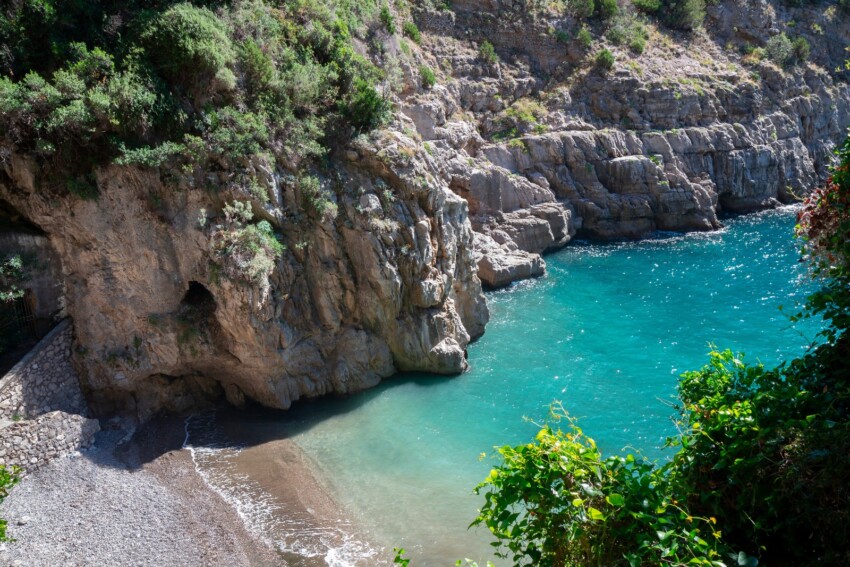
In Massa Lubrense’s territory, towards the peninsula’s far tip, opens the Fiordo di Crapolla: one of Campania’s most spectacular and least-visited inlets.
Access is via roughly 700 stone steps, numbered with hand-painted ceramic tiles—a typically Campanian artisanal detail that transforms the descent into applied art. The fjord is a deep crack in the limestone rock with a small medieval harbour still recognisable in the remains of ancient structures.
The water is a particularly vivid green-blue thanks to its depth and the way the walls filter light. It’s also reachable by small boat. The climb back up 700 steps is demanding: consider your energy before heading down, especially on hot days.
In the following map you can see the location of the main places of interest mentioned in this article.
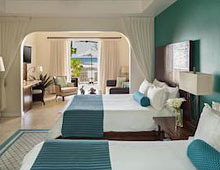 Hotel
Hotel 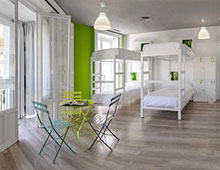 Budget accommodations
 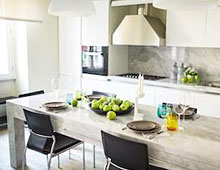 Apartments
  Family Hotel
 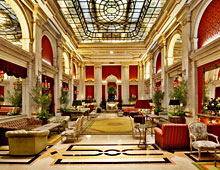 Luxury Hotel
  Resorts