Hotel Giosue' a mare Sorrento
Meta - Via A. Caruso 2
Book now
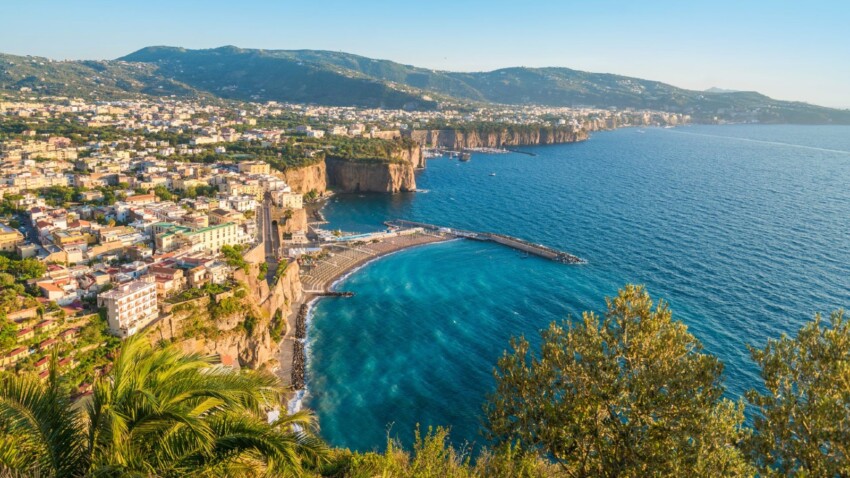
Meta di Sorrento is the town that closes the Sorrento Peninsula towards the east: the second municipality you encounter coming from Naples, after Vico Equense, overlooking the Gulf of Naples at approximately 111 metres above sea level with an 800-metre coastline home to the peninsula’s largest sandy beach.
The name is no accident: Meta derives from the Latin meta, the terminal milestone, the boundary stone that marked the final point of the road in ancient times. And it is precisely where the Basilica of Santa Maria del Lauro now stands that the Romans had placed that boundary stone, on the site, coincidentally, of an ancient temple dedicated to the goddess Minerva.
This layer of overlapping meanings—Greek, Roman, medieval Christian, Bourbon, maritime—is the key to understanding Meta: a town of approximately 7,800 inhabitants that has intelligently transformed itself over the centuries, from merchant seafaring to shipyards, from the Grand Tour to modern beach resort appeal, without ever entirely losing the sober, industrious character that distinguishes it from its more glamorous neighbours.
What Meta offers those who stay longer than a morning is an intact historic centre with shipowners’ palaces, interior courtyards where sails were sewn, doorways in dark volcanic stone and a basilica that dominates the entire town with its majolica dome and baroque bell tower.
And the beach at Alimuri, where for centuries ships destined to carry oil, citrus fruits and wine were launched to America, Australia, the Baltic, and which today is the most equipped and accessible beach on the Sorrento Coast.
Meta can be read on two overlapping levels: the upper level of the historic town, with the Basilica, noble palaces and the maritime alleyways, and the lower level of the marina, with the beach and waterfront. The two levels are connected by a public lift and stairs.
Those with half a day can combine them without difficulty; those wanting to make it a base for a beach stay will discover that Meta is the most logistically convenient starting point on the peninsula for visiting Sorrento, Capri, Pompeii and the Amalfi Coast.
The Basilica of Santa Maria del Lauro is Meta’s principal monument and its visual landmark from any point on the peninsula: the baroque bell tower and dome clad in coloured majolica announce arrival in town to those driving down the Corso Italia from Naples. The church stands on the site where, according to historians, an ancient temple dedicated to the goddess Minerva once stood, confirming the overlap between pagan and Christian sanctity typical of the entire Sorrento Peninsula.
In the early 1200s a chapel was dedicated to Santa Maria del Lauro; in the second half of the sixteenth century the medieval chapel was demolished and replaced by a much larger structure; the current neoclassical façade dates from a later restoration. The interior is laid out in Latin cross form with three aisles connected by columns topped with arches, with stuccoes and decorations typical of Campanian taste.
The church’s founding legend is among the most vivid on the peninsula: in the eighth century, an old deaf and mute peasant woman was taking her cow to pasture when she found at the foot of a laurel bush a statue of the Madonna surrounded by a hen with twelve golden chicks. After the discovery, the shepherdess regained her hearing and speech. The bishop of Sorrento ordered that the statue be taken to the cathedral, but the following morning the statue was again at the foot of the laurel. This miraculous return led to the construction of the church on that very spot. The wooden statue preserved in the basilica is believed by tradition to be the one found by the shepherdess. Our Lady of Laurel is the protector of sailors: no trivial detail in a city that for centuries built ships and sent its men to sea.
The heart of Meta’s historic centre is reached by descending Via del Lauro, the ancient sloping street that starts from the Basilica and leads to Piazza Casale, the hub of the town’s civic life for centuries. From here branch off the alleyways and narrow streets of the medieval village, where you encounter visible signs of the prosperity brought by seafaring: noble palaces with doorways in volcanic stone, the dark grey lava rock from Vesuvius, which open onto internal courtyards with arches and vaults. These courtyards were not merely decorative: they were the places where women sewed, mended and hung out the sails of ships built at Alimuri, waiting for departure. They are still visible today and suffice to understand how entirely Meta’s life was organised around the sea.
Among the historic centre’s palaces worth attention are Villa Liguori, Palazzo Fienga, Villa Elisa, Palazzo Maresca and Villa Valletta Martini, baroque buildings with façades on alleyways that suddenly open onto glimpses of the sea. Along Via del Lauro you also find some of the village’s minor churches: the Church of the Assumption, the Chapel of Guardian Angels and the Church of the Holy Annunciation (also called Santa Lucia), with a chapel built entirely in tufa and an old clock on the bell tower. The atmosphere of the historic centre is that of a town that has remained outside mass tourism: grocery shops, elderly men playing cards, streets you walk without haste. Meta offers a perspective on local life on the Sorrento Peninsula that neither Sorrento nor Positano can any longer provide.
Palazzo Cosenza, better known as Villa Giuseppina, is Meta’s most important civic monument: a neoclassical building of great visual impact designed by architect Luigi Vanvitelli in 1739, the same Vanvitelli who in the same decade was building the Royal Palace of Caserta for Charles III of Bourbon. The Sorrento commission is of an entirely different order of magnitude, but bears the same signature and formal clarity that characterises the mature Vanvitelli. The palace stands along Via Caracciolo, on the road that descends from the Basilica del Lauro towards the sea, and its imposing façade is clearly visible even to those not looking for it. Palazzo Cosenza’s contemporary fame is however chiefly linked to cinema: director Dino Risi chose it as the main set for some scenes of Bread, Love and… (1955), the comedy with Sophia Loren and Vittorio De Sica that was one of the greatest successes of post-war Italian cinema. A plaque and still photographs inside recall this connection.
The beach at Alimuri that tourists today frequent for sunbathing was not always a beach. For centuries that stretch of coast was one of the most active shipyards in the southern Mediterranean. The Alimuri Shipyards were born in the twelfth century, exploiting the particular shape of the coastline; the name “Alimuri” comes from ancient Greek alimurei, which the Greeks used to indicate one of five landing points on the peninsula, characterised by a waterfall that emptied directly into the sea, and grew to become one of the most important shipbuilding poles in the Gulf of Naples. The yard was formally opened in 1650 and on 31 December 1866 covered an area of approximately 9,000 square metres, with eight building slips and a daily workforce requirement of 240 workers. By that date it had built 256 sailing ships for a total of 64,251 tonnes of displacement.
The ships of Meta were two-masted sailing vessels, sturdy and fast, built to carry oil, citrus fruits, nuts and wine. They sailed to the Mediterranean, Northern Europe, the Baltic, the United Kingdom, the Americas, China and Australia, and the list of ports reached is a measure of how central Meta was to global trade in the nineteenth century. Shipping enterprises were family-run: often the shipowner was also the captain, and family members occupied the most humble roles on board. In 1798 the Association of Metan and Sorrentine Shipowners was founded, remaining active until 1923. The memory of this epic is preserved in the “Mario Maresca” Naval Museum, housed in Vico San Stefano in the historic centre: models of sailing ships, nautical charts, navigation instruments and archival documents reconstruct the history of a community that built and commanded ships for over six centuries.
Where once sailing ships were launched, bathing takes place today. The Marina di Alimuri is the largest and most equipped beach on the Sorrento Peninsula: a coastline extending for nearly a kilometre with emerald-green water, sandy seabed that slopes gradually and an organisation of services, beach establishments, restaurants, showers, water sports, car parks, that no other beach on the peninsula can offer to the same extent. The beach divides into two zones: the Marina di Alimuri proper, predominantly sandy, and the Resegone area, with pebbles and some jetties extending into the sea. Both have free areas and equipped establishments. Meta is the only municipality on the Sorrento Peninsula to have accommodation directly beachside or within walking distance, which makes it the most logical choice for those wanting to combine a beach stay with the convenience of the Circumvesuviana connections.
It is reached from the upper town by taking the public stairs or the lift that connects Corso Italia to the waterfront, a vertical link that greatly simplifies life during a stay. From the beach you can see Vesuvius’s profile, the peninsula’s hills beyond and, on clear days, Capri’s profile across the gulf.
The upper part of Meta, the so-called Meta uphill, which includes the Alberi district and the slopes of the Lattari Mountains, is almost entirely unknown to passing tourism but offers a completely different perspective on the peninsula. A few kilometres from the centre, in the direction of the Lattari Mountains, trekking routes open up through lemon groves, olive groves and Mediterranean scrub with views over the Gulf of Naples and the Amalfi Coast. Monte Vico Alvano (642 metres), which forms part of the municipal territory, offers views far less crowded than the more celebrated Vesuvius. For hikers with more time, Monte Faito, at 1,131 metres, reachable by the scenic cable car from Castellammare di Stabia, is the highest vantage point over the entire gulf, with panoramas that on clear days reach Capri, Ischia, Procida and the Apennine ridge. The cable car operates in season (verify opening times before visiting).
Meta offers a narrower range of accommodation than Sorrento but with a significant advantage: some establishments are directly beachside or just steps away, impossible in nearby towns where the historic centre is uphill and the sea is reached only on foot or by lift.
You mainly find apartments and holiday homes near the waterfront, bed and breakfasts in the historic centre and a few small family-run hotels. Prices are generally lower than Sorrento for comparable category establishments.
Meta di Sorrento is easily reached by train with the Circumvesuviana on the Naples-Sorrento line: the Meta station is served by frequent trains and the journey from Naples takes approximately 55 minutes, with intermediate stops at Herculaneum and Pompeii.
By car, take the Corso Italia (SS 145) from Castellammare di Stabia towards Sorrento: Meta is approximately 5 km from Sorrento and less than 50 km from Naples.
The railway station is located in the upper part of town, near the Basilica del Lauro; from the station a public lift and stairs connect the centre to Alimuri.
What's the weather at Meta di Sorrento? Below are the temperatures and the weather forecast at Meta di Sorrento for the next few days.
Meta di Sorrento sits on the Sorrentine Peninsula, in the Naples metropolitan area, just 5 km from Sorrento, 50 km from Naples and directly across from the island of Capri. It borders Piano di Sorrento to the west and Vico Equense to the east. It's the second town along the peninsula when travelling from Naples.
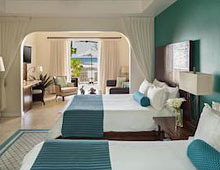 Hotel
Hotel 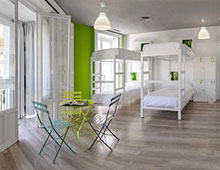 Budget accommodations
 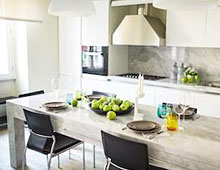 Apartments
  Family Hotel
 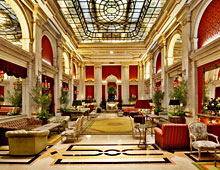 Luxury Hotel
  Resorts