Hotel Mary
Vico Equense - Via Filangieri 132
Book now
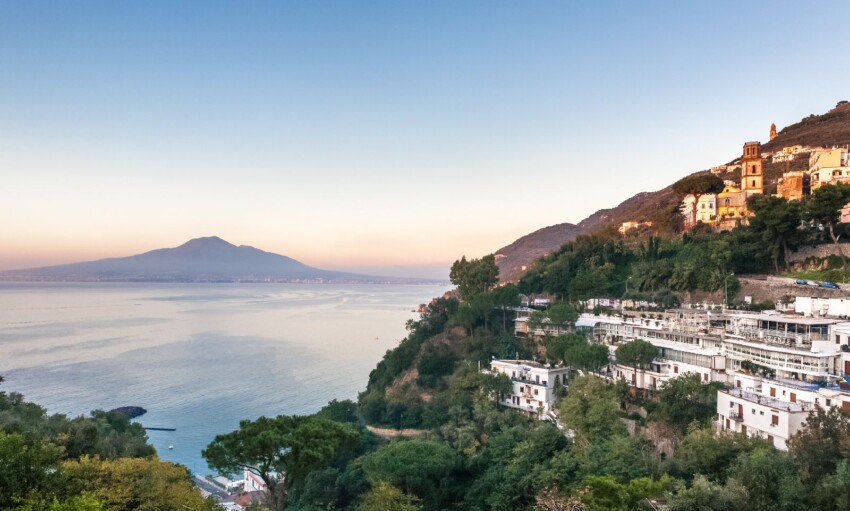
Nestled at the foot of Monte Sant’Angelo, Vico Equense is a picturesque town on the Sorrento Peninsula offering breathtaking scenery, beautiful beaches and a charming medieval old town.
With ancient roots, Vico Equense was first territory of the Etruscans, then the Greeks, who established it as a thriving commercial hub, and finally the Romans, who cherished it as an ideal summer retreat. The town’s appeal to wealthy Roman nobility is evidenced by archaeological remains scattered throughout Vico. In medieval times, a defensive wall was built around the small coastal settlement, enclosing the cathedral and castle within its boundaries.
Over the centuries, casali — small hamlets organised like miniature towns — emerged in the lush hills surrounding Vico Equense, each with its own church, patron saint and self-sufficient infrastructure. These casali remain the heart of artisanal production for dairy products crafted using age-old methods passed down through generations.
Vico Equense is the first town on the Sorrento Peninsula and boasts truly exceptional historical, architectural and natural heritage.
Though tourism has only recently flourished here, Vico offers not merely a medieval village but also peaceful beaches for relaxation and restaurants serving excellent local cuisine. Nature enthusiasts can hike to the summit of Monte Faito, the highest peak of the Lattari Mountains, rewarding you with stunning views across the Bay of Naples.
Vico Equense’s original centre, which also housed the cathedral, once stood in the lower part of town near the beach. However, repeated pirate raids prompted residents to relocate the town centre uphill, moving the cathedral with it. The Cathedral of Santa Maria Annunziata was erected in the early 14th century atop a rocky outcrop roughly ninety metres high, overlooking the sea. The façade was rebuilt in Baroque style during the 18th century, whilst the interior showcases Gothic architecture with a three-nave layout and works by Giuseppe Bonito, Jacopo Cestaro and Francesco Palumbo.
The church served as the episcopal seat and diocesan cathedral until 1818, when it was suppressed and merged with Sorrento’s diocese. Behind this religious building stands the Arciconfraternita Church, home to a magnificent wooden altar adorned with millions of beads, coral and glass paste, crafted in the 18th century by cloistered nuns from the nearby Santissima Trinità convent. Perched on a clifftop overlooking the sea, it offers spectacular panoramic views.
The presence of several sulphurous hot springs led to the opening of the Scrajo Thermal Baths in 1895, renowned for treating musculoskeletal, dermatological and respiratory conditions. Located along the Sorrento coast, the thermal treatments benefit from enhanced therapeutic effects thanks to the marine climate, whilst allowing guests to combine spa stays with time on Vico Equense’s beautiful beaches.
Built between 1284 and 1289 under King Charles II of Anjou for defensive purposes, Castello Giusso served both residential and military functions throughout its history. Of the original complex, only sections of the defensive wall and a terrace overlooking the sea remain, as the castle underwent considerable restoration work that significantly altered its original appearance.
The fortress takes its name from owners Luigi and Girolamo Giusso, who undertook extensive restoration work in the 19th century, resulting in the construction of the Santa Maria della Stella chapel and the creation of magnificent frescoed cycles within several halls.
Also known as the Antiquarium Aequanum, the Antiquarium Silio Italico is a museum displaying archaeological finds unearthed in Vico Equense during the latter half of the 20th century. In 1960, urban expansion works revealed a necropolis dating from the 7th to 5th centuries BC, comprising over two hundred tombs.
The collections here showcase not only finds from the necropolis but also artefacts spanning from the 7th century BC through the Roman period, including tomb furnishings, everyday objects, accessories, amphorae, vessels and weapons.
As a town gracing the Tyrrhenian Sea, Vico Equense boasts excellent beaches for sunbathing and relaxation.
One of the most renowned stretches is Scrajo Mare5, situated near the Thermal Baths. The Scrajo beach is framed by towering rocky cliffs and features a pebbled shore and refreshingly clear waters. Nearby, bordering Castellammare di Stabia, lies the stunning underwater ridge known as the Banco di Santa Croce. Considered one of the Mediterranean’s finest underwater formations, the Banco di Santa Croce hosts numerous animal and plant species, including precious red coral, and is a snorkeller’s paradise.
For those seeking organised beaches, try the Il Bikini6 resort, offering a lovely beach with full facilities. This lido sits within a secluded cove, its shoreline a mix of gravel and sand.
Finally, Pezzolo Beach7 allows you to admire remnants of a 2nd-century AD Roman villa. With shallow waters and golden sand, it’s ideal for families with children.
In the following map you can see the location of the main places of interest mentioned in this article.
From panoramic hotels to bed-and-breakfasts, holiday homes and rental apartments, Vico Equense offers a wide range of accommodation options.
For beach and relaxation lovers, the best areas are the Vico Equense waterfront and Marina di Equa, which also has a port with ferry connections to Capri. The hamlet of Seiano, perched on a clifftop overlooking the sea, is popular during summer thanks to its proximity to Marina di Equa, with numerous restaurants, hotels and campsites.
Those seeking a more cultural experience should consider the historic centre of Vico Equense or small hamlets such as Massaquano, the oldest fraction in Vico Equense. Trekking enthusiasts can choose accommodation near Monte Faito.
Vico Equense is easily accessible by car, train or bus.
To reach the town by car from Naples, take the A3 motorway towards the Industrial Zone/Salerno for approximately 20km, then exit towards Castellammare di Stabia. From there, follow the SS145 Sorrentina coastal road for about 16km before taking the exit towards Vico Equense/Marina di Vico/Vico’s Hamlets and Villages.
If you prefer the train, depart from Naples Centrale station in Piazza Garibaldi on the Circumvesuviana Naples-Sorrento line, which reaches Vico Equense station in roughly forty minutes. From Sorrento, the journey takes around ten minutes.
The town is also accessible by bus, via the Circumvesuviana line (Circolare Sinistra, Sorrento-Vico Equense-Castellammare di Stabia route) or Autolinee Curreri, which operates a shuttle service from Naples airport to Sorrento with a stop at Vico Equense. During summer, maritime connections to Capri and other coastal destinations are available.
What's the weather at Vico Equense? Below are the temperatures and the weather forecast at Vico Equense for the next few days.
Vico Equense is situated on the Sorrento Coast, between the Gulf of Naples, the Lattari Mountains and the Gulf of Salerno. The town lies 40 km from Naples, 11 km from Sorrento and 8 km from Castellammare di Stabia.
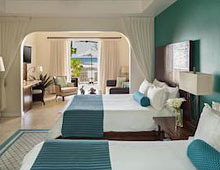 Hotel
Hotel 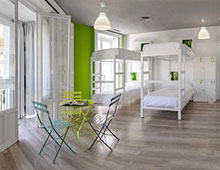 Budget accommodations
  Apartments
  Family Hotel
  Luxury Hotel
 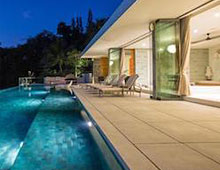 Resorts