Campania: Artecard 3-Day, 7-Day, or Gold/Lite 365 City Pass
Discover Campania and Naples with a pass to visit 40 cultural sites and use public transport (included only in the 3-day pass).
From 27,00 €
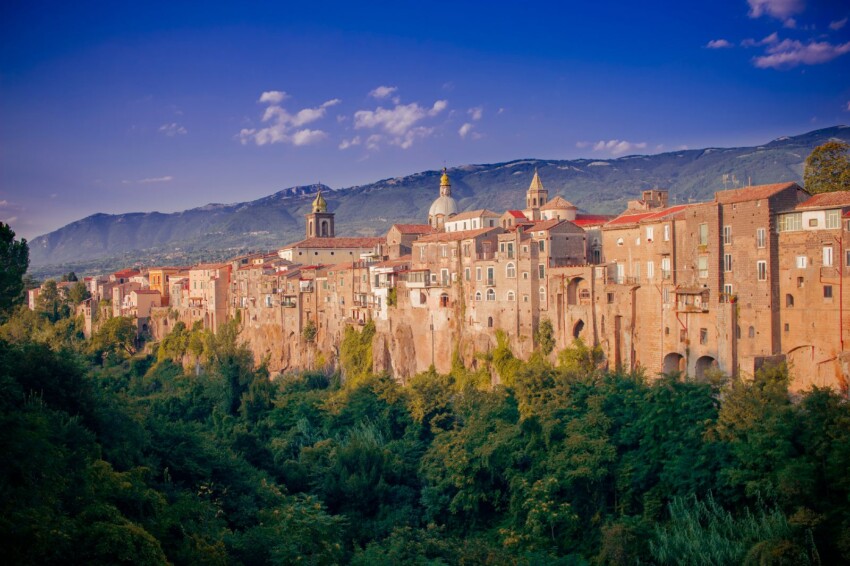
Renowned for its archaeological sites, gastronomic heritage and spectacular beaches, Campania is an Italian region capable of combining a holiday steeped in history, relaxation and fine dining. Amongst breathtaking scenery and UNESCO World Heritage sites, this part of Italy is also home to charming villages that have managed to preserve the most authentic traditions of this land intact over time.
Tourists from around the world know the beautiful Amalfi Coast and often visit Amalfi and the dramatic Positano, but this region is actually home to villages of great charm that are less trodden by the main tourist trails. Campania, in fact, is dotted with small towns characterised by ancient villages with little churches, houses nestled into the rock and a long culinary tradition.
Far from the most famous cities lie centres rich in great character that still bear traces of an ancient and important past. A real journey back in time will allow you to discover, thanks to the tranquillity typical of these villages, places steeped in history and authentic traditions. For those who love exploring and venturing beyond the usual tourist routes, here is a list of the most beautiful villages in Campania.
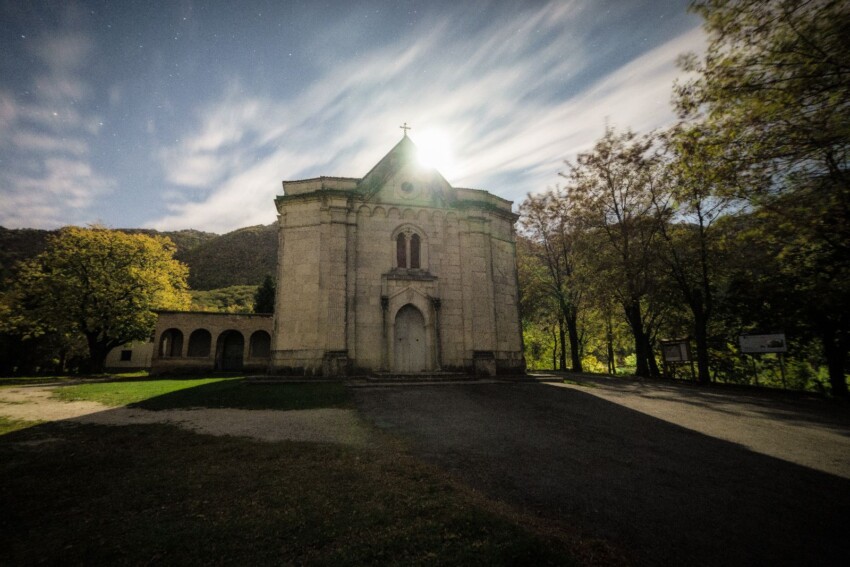
Little known compared to other villages in Campania, Nusco is a small town nicknamed the “balcony of Irpinia” for the stunning views you can enjoy from the upper part of the town. Built around its historic centre, this Campanian village is best explored on foot, admiring stone buildings, votive shrines and ancient noble palaces amongst its cobbled alleyways.
The town once hosted an ancient Lombard castle, of which only the remains of the walls and watchtower now survive. Among the must-see sights we recommend visiting the church of SS. Trinità, the church of S. Giuseppe and the Cathedral of Sant’Amato, a church dating back to the XI century which houses pictorial works from the XIII and XVI centuries.
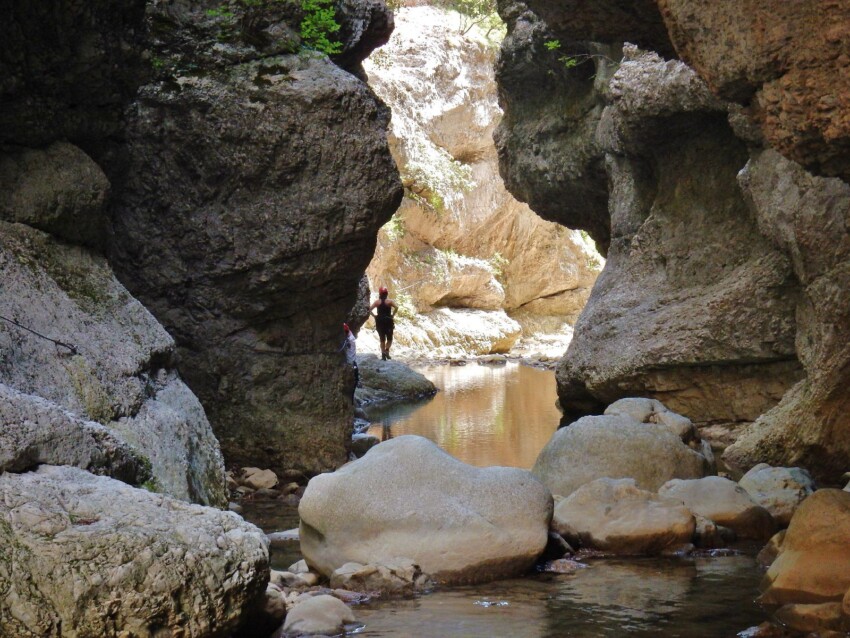
A small village of medieval origins, Cusano Mutri is located in the province of Benevento and is a town that rises on a rocky spur overlooking a valley. The historic centre has managed to preserve its ancient structure with winding alleys, broad staircases, stone houses, historic buildings and portals topped with heraldic crests.
The highest part of the town (Terra Alta) is home to the church of Santi Apostoli Pietro and Paolo, built in 550 and last restored in 1626, and Piazza Lago, where you’ll find the castle ruins demolished during a popular uprising in the XVIII century. From the square, via Ripa winds down, leading to the western part of the village where you can admire a tower of medieval origin and historic buildings perched on the cliff edge. In June, the town hosts the “Infiorata” festival and the main streets of the town are covered with a real carpet of local flowers and numerous floral decorations.
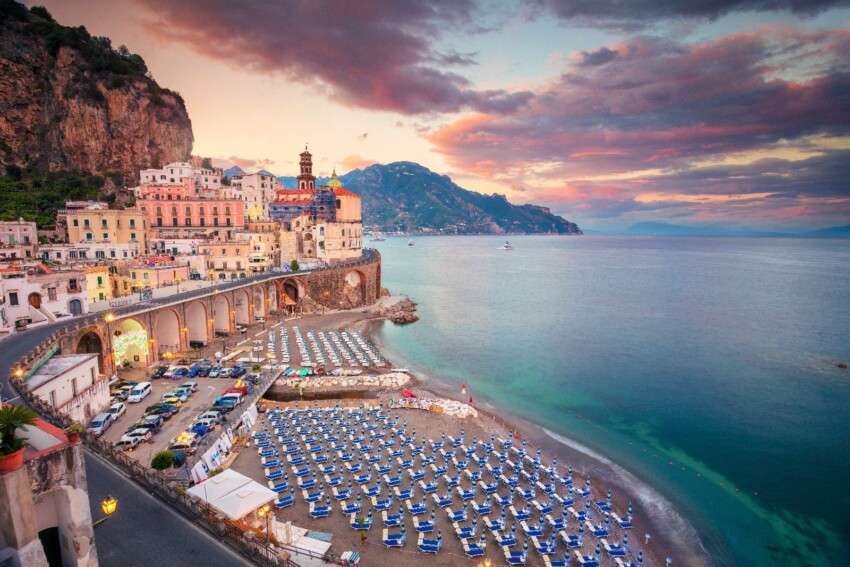
Considered Italy’s smallest municipality, Atrani is an ancient village on the Amalfi Coast that has managed to preserve not only its medieval structure but also many of the local traditions, which is why it is included in the circuit of most beautiful villages in Italy. The town develops between alleyways, small squares and characteristic “scalinatelle” – the steps that lead from the lower to the upper part of the town.
The focal point of the town is Piazza Umberto I, also known as La Piazzetta, a place where both locals and tourists stop for a peaceful coffee. This charming fishing village is home to numerous churches and small chapels, such as the Franciscan monastery of S Rosalia, the church of S. Maria Immacolata and the Chapel of S. Gertrude.
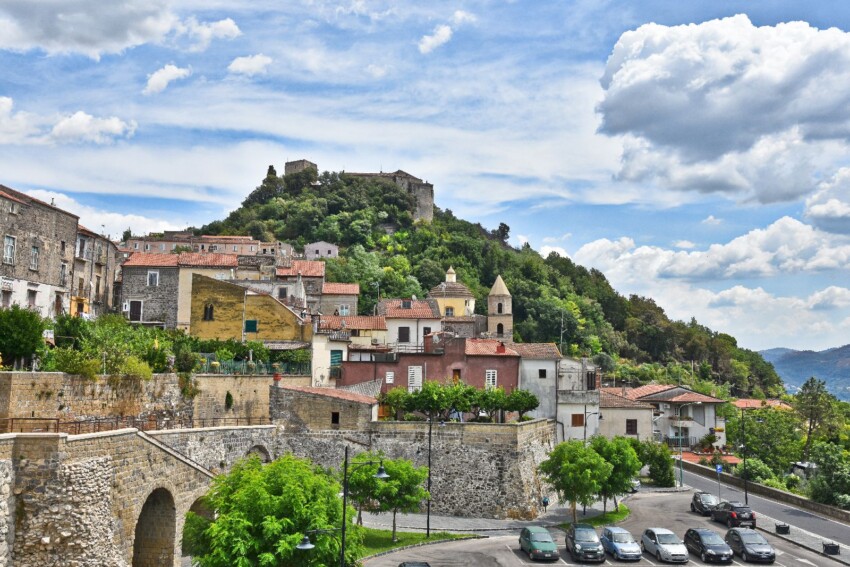
Located in the Volturno Valley less than 20 km from Caserta, Caiazzo is a city with truly ancient origins that was first occupied by the Etruscans, then by the Samnites and finally became, between 312 and 306 BC, a Roman municipality with the ability to mint coins and have its own laws.
Among the most important buildings in the town is the Cathedral dedicated to SS. Maria Assunta, which stands on a spot where there was likely a pagan temple. The religious building features a blend of late baroque style with rococo elements and inside it houses beautiful frescoed chapels, a precious wooden choir and polychrome marble altars.
Playing a starring role in the historical and architectural profile of the city is the Lombard Castle, an imposing fortress that dominates the historic centre and the surrounding valley from above. The centre of this village is characterised by numerous terraces and viewpoints that offer a stunning view over the entire valley as far as the city of Caserta, whilst in Piazza Santo Stefano you’ll find the beautiful Bishop’s Palace flanked by a thousand-year-old olive tree.
Caiazzo’s geographical location has made it a renowned village for the production of extra virgin olive oil thanks to the presence of trees that produce the Caiazzana olive, a truly special autochthonous variety.
Located in the province of Avellino on a hilltop in the Ofanto valley, the beautiful town of Monteverde is a village that is part of the circuit of the most beautiful villages in Italy. The centre of the town develops around the Monteverde castle, which was built in the Middle Ages by the Lombards with a trapezoidal structure. Over the years the structure underwent various restoration and expansion works including the construction of towers, a drawbridge, later destroyed, and a chapel. The castle then became both a bishopric seat and a lordly residence for many noble families of the area such as the Orsini and Sangermano. Currently this fortress is home to the MiGra, the Interactive Museum of Grain and Women in peasant civilisation.
From the castle area, narrow alleys and staircases wind through the village allowing you to explore it whilst admiring ancient palaces and numerous noble buildings, such as the Pelosi and Spirito palaces. In addition to being considered one of the most beautiful villages in the country, Monteverde has also been awarded by the European Union the title of “Italy’s most accessible village” as it has managed to create routes, services and facilities that allow people with disabilities to explore the city with greater ease.
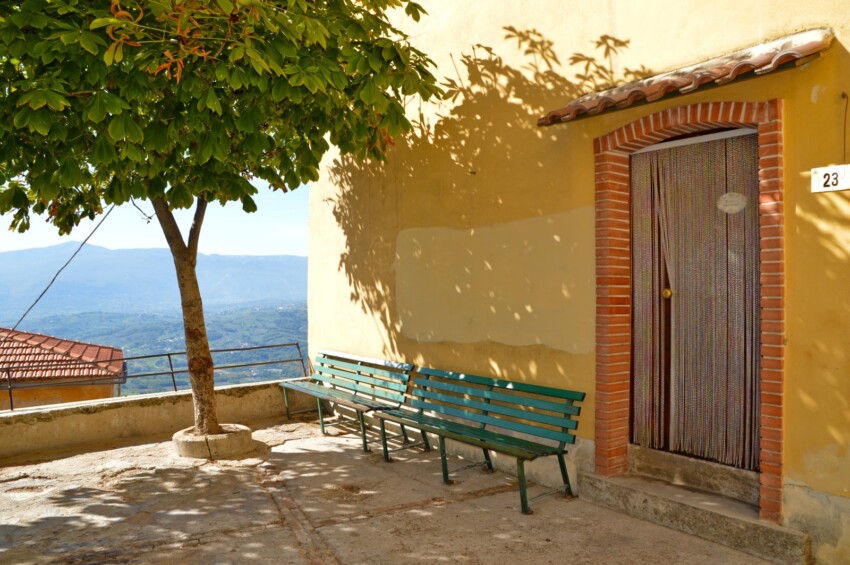
Perched on a rocky spur 587 metres above sea level, Castelcivita lies within the Cilento National Park. The village is immersed in wild nature and features houses arranged in cascade fashion following the contours of the land and small alleys that connect the various parts of the town.
The name of the village derives from the union of the settlement of Civita, which was located in the highest part of the hill, with Castelluccia, which was in the lower part. In the XIII century the village was a fortified centre, of which we can still admire the beautiful Angevin tower, which currently houses the Museum of Rural Civilisation.
The main attraction of the town are certainly the Castelcivita Caves, which are a complex of karstic cavities also known as “Spartacus’s caves”. According to legend, the Roman gladiator Spartaco took refuge in these caves whilst organising the slave uprising against Rome. These cavities rich in stalactites and stalagmites extend for several kilometres within the Alburni Mountains massif, but currently only just over 1.5 km are open to visitors.
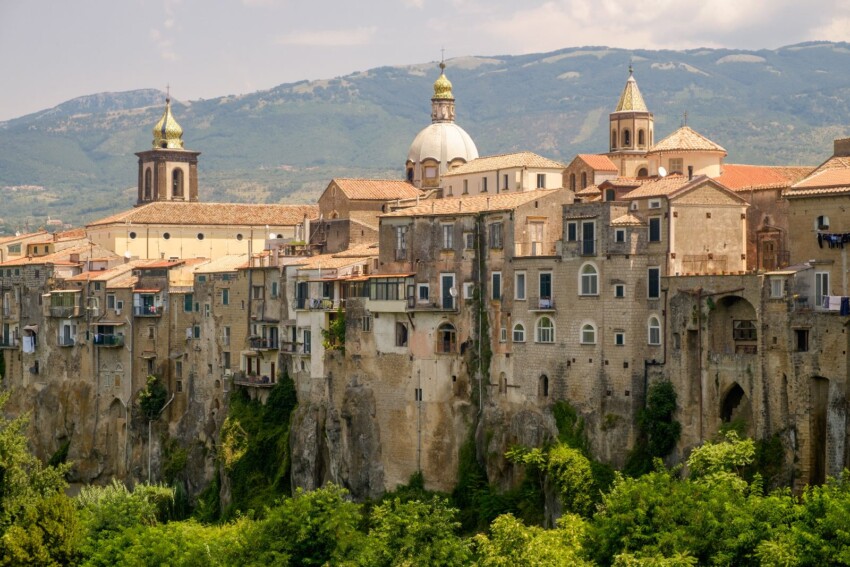
Located on a wonderful tufa terrace between two watercourses, Sant’Agata de’ Goti is divided into two parts, one of Roman foundation and the other more modern and built from the late XIX century onwards.
Not to be missed is a visit to the beautiful church of the Annunziata, dating back to the XIII century with XIV century frescoes, and the Cathedral of the Assumption, founded in 970, which houses a Romanesque crypt with arches on finely decorated capitals. The Ducal Castle, founded by the Lombards, was later modified by the Normans who transformed it into a true defensive fortress. During the Renaissance period the building lost its defensive role and was adapted as a noble residence, which on the first floor still preserves a cycle of XVIII century frescoes by Tommaso Giaquinto.
Between the XVIII and XIX centuries, other magnificent residences also arose here, rich in finely decorated hanging gardens, such as Palazzo Viscardi, Palazzo Picone and two Palazzo Mustilli, one of which still preserves a rich archaeological collection of coins, vases, bronzes, jewellery and other artefacts found in this area.
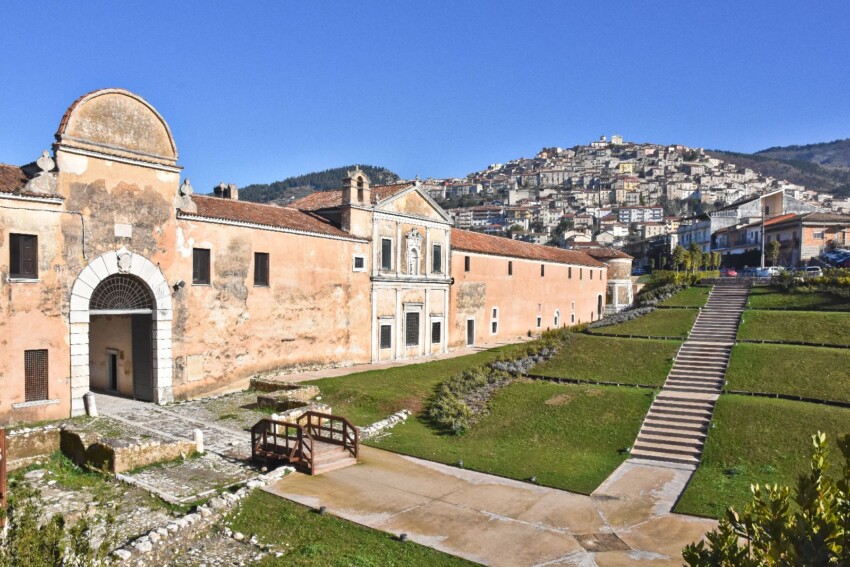
Located in the Vallo di Diano, Padula is a town of very ancient origins but famous for the presence of the Certosa di San Lorenzo, a building proclaimed a UNESCO World Heritage site that is one of the largest charterhouses in Europe. The Certosa, founded in 1306, has managed to maintain its original structure over time despite undergoing expansion works in the 16th and 18th centuries.
The town also hosts other sites of historical and archaeological importance such as the Cosilinum excavations, a town founded by the Enotri around the XV century which studies reveal was the ancient Padula, and the Baptistry of San Giovanni or Baptistry of Marcelliano, which is considered one of the earliest settlements of Christianity in this area.
The historic centre of this town is characterised by the presence of numerous medieval buildings such as the Norman Castle, of which only some remains of the surrounding wall and tower remain in the garden of Palazzo Padula. The town is also home to several museums of great interest such as the Provincial Archaeological Museum of Western Lucania, the Padula Stone Museum and the Surname Museum dedicated to onomastics.
Trentinara is a small Italian village located within the Cilento National Park and Vallo di Diano that sits on a rocky ridge overlooking the Sele Plain. Located just a few kilometres from the ancient town of Paestum, Trentinara offers some of the most beautiful panoramic viewpoints throughout the Cilento.
The town’s urban layout is typically medieval with the main streets winding from the upper part towards the countryside. Among the various characteristic places not to be missed, we recommend a visit to the deconsecrated church of San Nicola, which dates back to the XI century and now houses the Museum of Crafts. Those who love trekking in nature can walk along the trails of Monte Vesole and admire the neviere, that is ancient cavities used for collecting snow which was then transformed into ice, thus serving the function of the modern refrigerator.
Also not to be missed in the town is the traditional Feast of Bread, an event that takes place every year in August in the oldest part of the village where typical local products are served and prepared in keeping with local culinary traditions.
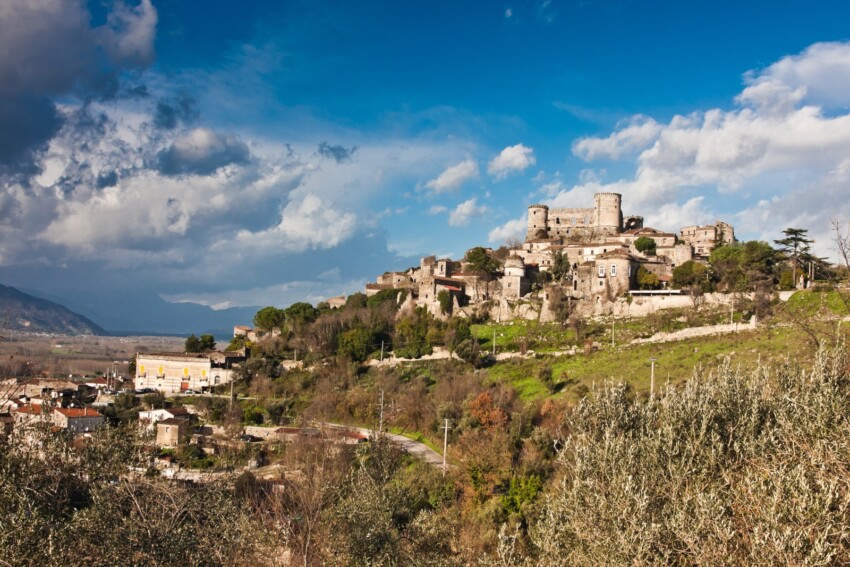
Vairano Patenora is an ancient town that stretches at the foot of the Matese massif, whose territories were probably inhabited since the Stone Age. The town has passed into history because on 26 October 1860, the meeting between King Victor Emmanuel II and General Giuseppe Garibaldi took place here, which marked the birth of Italian Unification.
Vairano is a village that can be discovered on foot by walking through its alleys and admiring nineteenth-century palaces and other ancient buildings. Not to be missed is a visit to the ancient Badia della Ferrara, a Cistercian abbey built between 1171 and 1179 that preserves a XIII century fresco which also depicts the future pope Celestino V. The town still retains the remains of an Aragonese castle built at the end of the XV century on the foundations of a previous Norman fortress.
In the following map you can see the location of the main places of interest mentioned in this article.
City Card allow you to save on public transport and / or on the entrances to the main tourist attractions.
 Hotel
Hotel  Budget accommodations
  Apartments
  Family Hotel
  Luxury Hotel
  Resorts